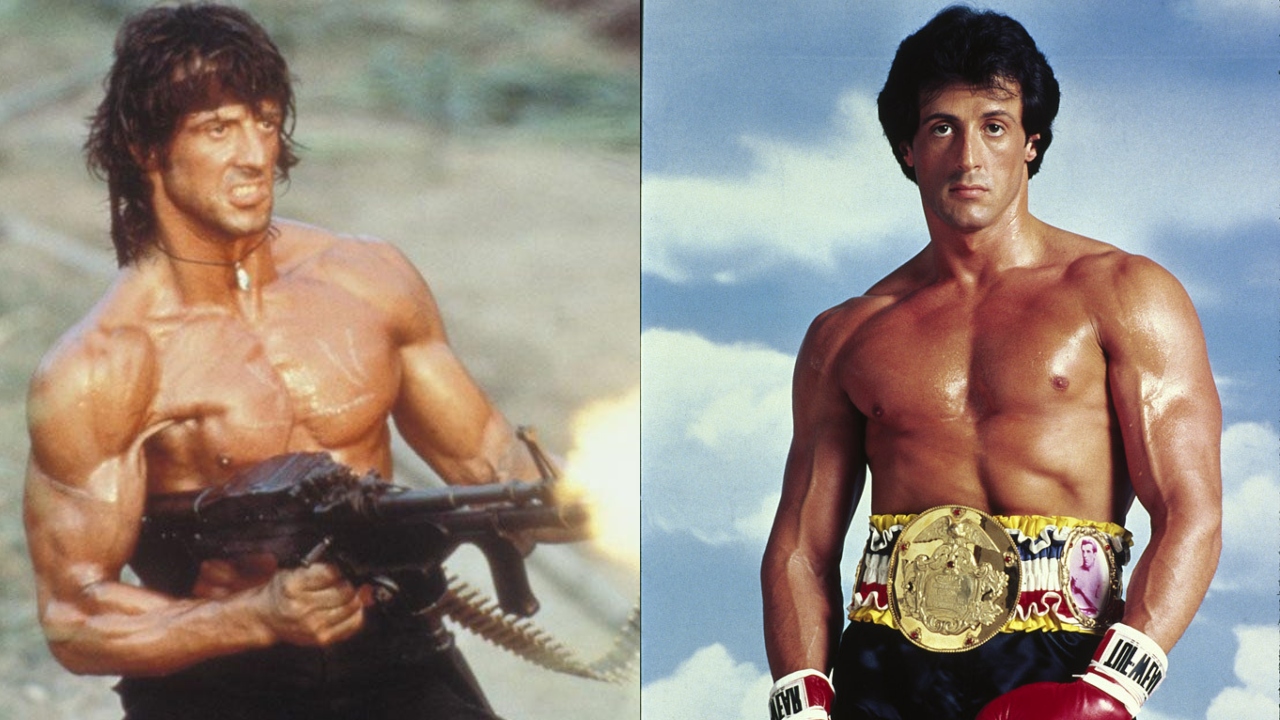
Sylvester Stallone didn’t just play characters; he built two distinct monuments to the human spirit that somehow became the exact same person in different clothes. If you look closely at the fearlessness shared by Rocky and Rambo, you aren’t just looking at muscles or 1980s machismo. You’re looking at a specific brand of psychological endurance. It’s the kind of grit that doesn't mind losing as long as it doesn't quit.
Think about the first time we meet them. Rocky Balboa is a "bum" from the streets of Philly, a guy who takes hits because he can't figure out how to avoid them. John Rambo is a drifter, a Congressional Medal of Honor recipient who can't even get a burger in a small town without getting harassed by a local sheriff. They both start from a place of total social insignificance. That's the secret sauce. Their bravery isn't born from being the strongest—it's born from having nothing left to lose.
The Psychological Core of the Fearlessness Shared by Rocky and Rambo
Most people think fearlessness is the absence of fear. That's wrong. If you watch First Blood or the original Rocky, these men are actually terrified. Rocky is scared he’ll just be another "neighborhood nobody." Rambo is terrified of the memories of Vietnam and the fact that his friends are all dead. The fearlessness shared by Rocky and Rambo is actually a form of radical acceptance. They accept that they are going to get hurt.
In the 1976 Rocky, the climax isn't about winning the fight. Rocky knows he can't beat Apollo Creed. He literally says it to Adrian the night before. His fearlessness is the decision to go the distance anyway. It’s the refusal to be knocked out. Similarly, Rambo in the woods of Washington state isn't trying to conquer an army for glory; he’s trying to survive a world that has rejected him. This isn't the cartoonish bravery of later sequels. It’s raw. It’s ugly.
The two characters share a "high pain threshold" philosophy. Rocky Balboa famously tells his son in the 2006 film that it ain't about how hard you hit, but how hard you can get hit and keep moving forward. That line could have easily been spoken by Rambo while he was stitching up his own arm in a cave. They share a bone-deep belief that the world is a cruel place, yet they choose to stand up in it regardless.
Survivalism vs. Sport: Two Sides of the Same Coin
Rocky Balboa is a survivalist in a boxing ring. John Rambo is a fighter in a survival situation.
When you look at the training montages—the meat-punching in Philly or the bow-making in the jungle—the preparation is identical. It’s monastic. Stallone, who wrote or co-wrote these scripts, infused them with a specific type of blue-collar stoicism. You see it in the way they handle physical trauma. Rocky’s eyes are swollen shut; he tells Mick to "cut me." Rambo is tortured in a POW camp or by Will Teasle’s deputies; he doesn't break.
This isn't just movie magic. It reflects a very real psychological trait called hardiness. Psychologists often define hardiness through three Cs: Challenge, Commitment, and Control.
- Challenge: Both men see every obstacle as a chance to prove they still exist.
- Commitment: Once they start, they are incapable of stopping. Rocky won't stay down. Rambo won't stop "the war" once it's brought to him.
- Control: They exert total control over their bodies when the world around them is chaotic.
Honestly, the fearlessness shared by Rocky and Rambo is a bit terrifying if you think about it. It’s an obsessive, almost pathological refusal to surrender. In Rambo III, he’s literally cauterizing a wound with gunpowder. In Rocky IV, he’s training in the Siberian snow with logs and stones. They reject modern comforts because comfort makes you soft, and soft gets you killed—either metaphorically in the rankings or literally in the field.
Why This Archetype Still Matters in 2026
We live in an era of CGI superheroes who are brave because they are invulnerable. Rocky and Rambo are the opposite. They are brave because they are incredibly vulnerable.
Every time Rambo bleeds, you feel it. Every time Rocky’s ribs crack, you hear it. That’s why the fearlessness shared by Rocky and Rambo resonates more than a guy in a cape flying through a building. There is a "meat and potatoes" reality to their courage. It’s accessible. You might not be a Green Beret or a Heavyweight Champion, but you know what it’s like to feel like the underdog. You know what it’s like to be afraid of a challenge but to go through with it because your dignity depends on it.
Critics often point out that Rambo became a symbol of American interventionism in the 80s, while Rocky became a symbol of the American Dream. That's true, but it misses the personal level. Beneath the politics, they are both stories about men trying to reclaim their humanity through physical struggle.
The Difference in Their Courage
It’s not a perfect mirror, though. Rocky’s fearlessness is social. He’s brave enough to love Adrian, brave enough to admit he’s a "ham-and-egger." Rambo’s fearlessness is more isolated. It’s a lonely kind of courage. He doesn't want to be a hero; he just wants to be left alone. But when he is pushed, his bravery manifests as a relentless tactical brilliance.
If Rocky is the heart, Rambo is the survival instinct.
Actionable Takeaways from the Stallone Archetypes
You don't need to step into a ring with Drago or take on a battalion to use the logic of these characters. The fearlessness shared by Rocky and Rambo is actually a blueprint for mental resilience in everyday life.
- Redefine Winning: Like Rocky in the first film, realize that "going the distance" is often more important than the trophy. Success is staying on your feet.
- Embrace the "Suck": Rambo thrives in the mud and rain because he accepts it’s part of the mission. When things get difficult, stop fighting the discomfort and start using it as fuel.
- Internalize Your Worth: Both characters are constantly told they are nothing. They ignore the external noise and rely on their internal "engine."
- Minimalism as Strength: Notice how both characters perform best when they have the least. Over-complicating a problem usually leads to paralysis. Strip it down to the basics: what is the one thing I need to do right now to survive?
The legacy of these films isn't the body count or the belt. It's the image of a man who is exhausted, bleeding, and outmatched, yet chooses to take one more step. That specific brand of fearlessness is what makes them timeless. It's not about being a superhero. It's about being a human who refuses to break.
To apply this today, look at the "insurmountable" task on your desk or in your life. Don't look at the end goal. Look at the next three minutes. Can you survive the next three minutes? Rocky could. Rambo could. You can too. Focus on the micro-victory of not quitting. That is where real fearlessness begins.