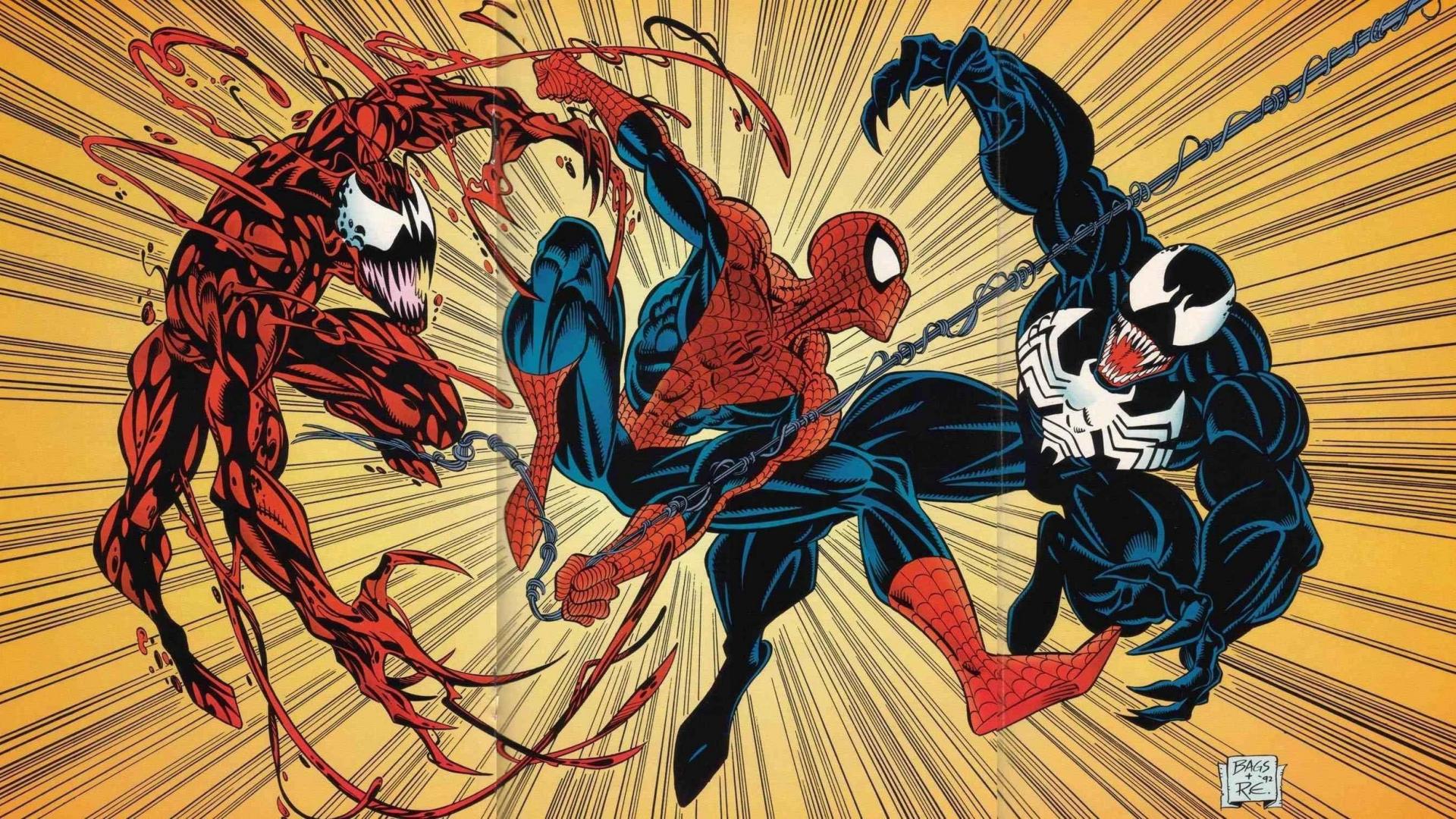
He wasn’t supposed to be a permanent fixture. Seriously. When that black goo first hitched a ride on Peter Parker’s back during the original Secret Wars in 1984, the editors at Marvel just thought they were giving Spidey a cool wardrobe change. They had no idea they were mid-wifing one of the most profitable, terrifying, and weirdly lovable anti-heroes in the history of the medium. Spider Man comics Venom isn't just a story about an alien suit; it’s a decades-long saga of rejection, codependency, and the kind of grudge that only a sentient space parasite can hold.
Most fans today know Eddie Brock from the movies, but the comic book origins are way grittier. Imagine being a disgraced journalist who blames a superhero for your career imploding. You're at the end of your rope, praying in a church, and suddenly, a discarded alien symbiote drops from the rafters to bond with your literal hatred. That’s how we got the sharp-toothed monster that first fully appeared in The Amazing Spider-Man #299. It wasn't just a physical threat. It was personal.
The Suit That Wouldn't Let Go
The symbiote started as a fan idea. Randy Schueller, a reader from Illinois, sent a letter to Marvel suggesting a black stealth suit made of unstable molecules. Marvel bought the idea for 220 bucks. Cheap, right? But when writer Roger Stern and later Tom DeFalco got their hands on it, they realized a "smart suit" was boring. It needed to be alive.
In the early Spider Man comics Venom arcs, the horror came from the violation of Peter’s autonomy. He’d wake up exhausted because the suit was taking his unconscious body out for "test drives" at night to fight crime. When Reed Richards of the Fantastic Four eventually poked the thing with a sonic blaster and revealed it was a living organism trying to permanently bond with Peter's soul, the vibe shifted from "cool power-up" to "body horror nightmare."
Peter rejected it. He used the loud clanging of a cathedral bell to rip the suit off. But the suit didn't die. It felt. It felt heartbreak. It felt the sting of being dumped. And it found a kindred spirit in Eddie Brock.
Why the 90s Obsession Happened
You can't talk about these comics without mentioning Todd McFarlane. Before he went off to start Image Comics and create Spawn, he redefined how we see the wall-crawler's villains. He took the symbiote and gave it that massive, hulking frame, the rows of shark-like teeth, and that prehensile tongue that has become the character's trademark. It was visceral. It looked like it smelled like oily rot.
Suddenly, every kid in 1991 wanted a copy of Venom: Lethal Protector. This was the moment the character shifted from "scary stalker" to "lethal protector." He moved to San Francisco.il He started protecting an underground city of homeless people. It was peak 90s edge—excessive muscles, chains, and a questionable moral compass.
Not Just Eddie Brock: The Symbiote’s Other Hosts
If you think Eddie is the only guy to wear the teeth, you've missed some of the best runs in Marvel history. The suit is a character itself, and it changes based on who is steering the ship.
- Mac Gargan (The Scorpion): This was the "hungry" era. Gargan didn't have Eddie's weird code of honor. He was a cannibalistic monster during the Dark Avengers run. It was gross. It was effective.
- Flash Thompson (Agent Venom): Honestly, this shouldn't have worked. Taking Peter Parker’s high school bully, turning him into a war hero who lost his legs, and giving him the symbiote as a government operative? It sounds like bad fan fiction. Instead, Rick Remender turned it into a heartbreaking story about addiction. The symbiote was the drug, and Flash was the recovering addict trying to use a monster for good.
- Cletus Kasady: Okay, he’s Carnage, but he exists because the Venom suit "gave birth" in a prison cell. This upped the stakes. It forced Spider-Man and Venom into an uneasy truce because Carnage was just pure, nihilistic chaos.
The "King in Black" and Modern Mythology
For a long time, the origin of the symbiote was just "it's an alien from Battleworld." Boring. Donny Cates and Ryan Stegman changed everything a few years ago. They introduced Knull, the god of the abyss who created the symbiotes (the Klyntar) as living weapons to kill the Celestials.
This turned Spider Man comics Venom into a cosmic epic. It wasn't just about a guy in New York anymore; it was about the fundamental darkness of the Marvel Universe. Eddie Brock went from a loser journalist to the "King in Black," the literal god of the symbiote hive mind. It’s a massive jump, but if you track the character’s growth from the 80s, it actually feels earned.
The relationship evolved from "I want to eat your brains" to "We are a father trying to raise a son (Dylan Brock) while fighting an ancient deity." It's surprisingly domestic for a comic book about a slime monster.
What Most People Get Wrong About the Symbiote
There is a huge misconception that the suit "makes you evil." That’s a movie trope (looking at you, Spider-Man 3). In the actual comics, the suit amplifies what is already there. If you're a hero like Flash Thompson, it struggles to be a hero with you. If you're a sociopath like Mac Gargan, it becomes a beast.
The symbiote actually wants to be loved. That sounds cheesy, but it’s the core of the character. It’s a needy, powerful entity that was traumatized by its first few hosts. When you read the modern runs, you see the suit communicating in broken sentences, showing fear, and expressing a genuine desire to protect the Brock family. It's more like a misunderstood dog with way too many teeth.
Essential Reading for the Venom Curious
If you're looking to actually dive into the back issues, don't just grab a random omnibus. Start with the "Birth of Venom" trade paperback to see the Peter Parker breakup. Then, skip the fluff and head straight to the 2018 Donny Cates run. It’s the definitive modern take. For something totally different, the Agent Venom era (beginning with Secret Avengers and his solo title) provides a military-thriller vibe that you won't find anywhere else in the Spider-verse.
How to Track the Value of Venom Comics
Because of the movies and the massive popularity of the character, certain issues have spiked in value. If you're digging through long boxes at a local shop or an estate sale, keep your eyes peeled for:
- The Amazing Spider-Man #252: First appearance of the black suit (tied with Marvel Team-Up #141).
- The Amazing Spider-Man #300: The first full appearance of Venom. A high-grade copy of this is the "holy grail" for many 90s collectors.
- Venom #3 (2018): First appearance of Knull. This modern key issue has exploded in price because it fundamentally changed the lore.
Check the "CGC" (Certified Guaranty Company) census if you’re serious about buying. A 9.8 grade vs. a 9.2 grade can mean a difference of thousands of dollars. The market is volatile, but Venom is a "blue chip" character. He isn't going away.
Moving Beyond the Surface
To truly appreciate the depth of the character, look into the Venom: Separation Anxiety and Maximum Carnage arcs. They represent the peak of the character's cultural saturation in the 1990s. While some critics find them over-the-top, they capture a specific moment in comic history where the "anti-hero" was king.
The nuance in the writing has only improved with time. We’ve moved past the "we will eat your lungs" dialogue and into a space where the symbiote explores themes of mental health, fatherhood, and redemption. It’s a weirdly human story for a character that started as a literal replacement for a torn shirt.
Actionable Next Steps for Collectors and Readers:
- Audit Your Local Shop: Look for "back issues" of The Amazing Spider-Man between #252 and #300; even mid-grade copies are holding value better than almost any other era.
- Digital Deep Dive: Use the Marvel Unlimited app to search for the "Planet of the Symbiotes" event if you want to understand the alien's biology without spending a fortune on physical copies.
- Check the Artist: When buying modern Venom books, prioritize those with art by Ryan Stegman or Clayton Crain; their depictions of the symbiote’s "fluidity" are considered the industry standard and generally more sought after by fans.
- Identify Firsts: Use a database like Key Collector Comics to verify if a "villain" Venom fights is a first appearance, as symbiote-related spin-offs (like Silence or Misery) are currently trending in the secondary market.