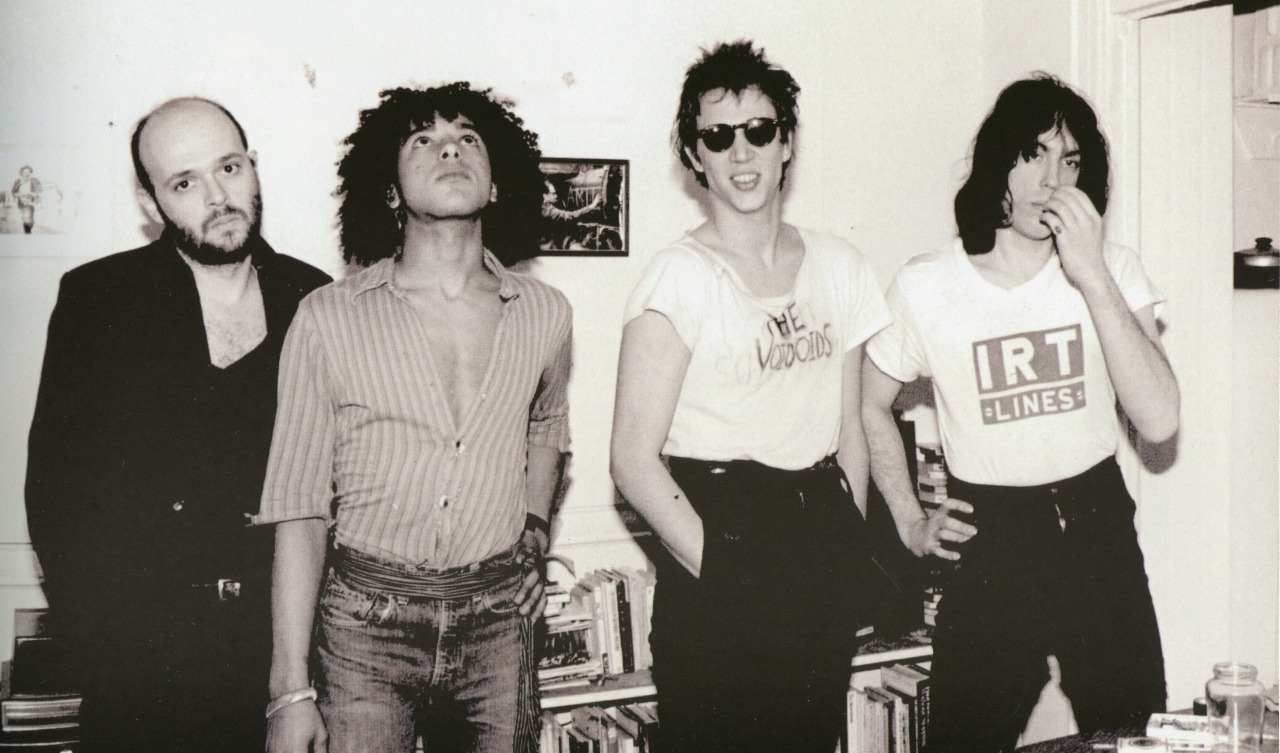
Honestly, if you look at a photo of a punk from 1977—the safety pins, the spiky hair that looks like it was hacked off with a dull steak knife, the "please don't touch me" stare—you’re looking at Richard Hell. He basically invented the aesthetic. But Richard Hell and the Voidoids were so much more than a fashion statement or a blueprint for Malcolm McLaren to export to London.
They were the smartest, jaggedest, and most musically unstable band in the original New York scene.
Most people think of punk as three chords and a lot of shouting. The Voidoids weren't that. They were jazz-obsessed, poetry-fueled, and led by a guy who actually dropped out of school to become a poet before he ever picked up a bass guitar. While the Ramones were busy perfecting the two-minute pop song, the Voidoids were busy deconstructing the very idea of a guitar solo. It was glorious.
The Birth of the Blank Generation
Richard Hell didn’t just appear out of thin air. He’d already been in the Neon Boys and Television with his childhood friend Tom Verlaine. Then he did a stint in the Heartbreakers with Johnny Thunders. By 1976, he was done being a sideman or a co-pilot. He needed his own thing.
That "thing" became the Voidoids.
The lineup was a weird mix of talent. You had Hell on vocals and bass, Marc Bell (who later became Marky Ramone) on drums, and two of the most inventive guitarists to ever step foot in CBGB: Ivan Julian and Robert Quine.
Quine was a total anomaly. He was older than the rest of the punks, usually wore a sport coat and sunglasses, and looked more like a tax attorney than a rock star. But when he played? It was like a swarm of angry bees in a blender. He and Julian created this "razor blade" guitar interplay that made Richard Hell and the Voidoids sound like nothing else on the Bowery.
What Everyone Gets Wrong About "Blank Generation"
The song "Blank Generation" is often misunderstood as a nihilistic anthem about having nothing in your brain. It's the opposite. Hell meant "blank" as in a space to be filled—a choice. It wasn't about being empty; it was about being unwritten.
"I belong to the blank generation and / I can take it or leave it each time."
That line isn't a cry for help. It's a declaration of independence. It was a rejection of the hippy-dippy leftovers of the 60s and the bloated arena rock of the mid-70s.
The Sound of High-Tension Wire
Their 1977 debut album, Blank Generation, is a masterclass in tension. Listen to "Love Comes in Spurts." The title sounds like a joke, but the music is frantic. It’s nervous. It feels like the whole song might fly off the rails at any second.
This wasn't just "loud and fast."
Julian and Quine were playing these complex, dissonant lines that owed as much to Albert Ayler’s free jazz as they did to Chuck Berry. They’d trade solos that sounded like they were trying to cut each other. It was aggressive, yeah, but it was also incredibly sophisticated.
- Robert Quine: The elder statesman who brought a twisted, intellectual edge to the guitar.
- Ivan Julian: One of the few Black musicians in the early NYC punk scene, bringing a rhythmic complexity that gave the band its swing.
- Marc Bell: A powerhouse drummer who provided the backbone for the chaos before he went on to join the Ramones.
Then there was the second album, Destiny Street (1982). Honestly, it’s a bit of a mess compared to the first one. Hell was deep into a heroin habit at the time, and you can hear the distraction. He’s gone on record saying he wasn't happy with it for years. But even a "messy" Voidoids record has moments of genius, like "The Kid with the Replaceable Head."
The Fashion Theft Heard 'Round the World
We have to talk about the look. Before Richard Hell, nobody in rock was wearing ripped T-shirts held together by safety pins. He started doing it because he was broke and because it looked "deconstructed."
Malcolm McLaren saw Hell perform with Television and the Heartbreakers and was floored. He tried to get Hell to come to England to front a band. Hell said no. So, McLaren took the look, the spiky hair, and the attitude back to London, gave it to the Sex Pistols, and the rest is history.
Hell doesn't seem too bitter about it these days, but it’s a fact: the "London Punk" look was born in the East Village.
Why You Should Care in 2026
It’s easy to dismiss old punk bands as museum pieces. But Richard Hell and the Voidoids still feel modern because they were so individualistic. They weren't trying to fit into a genre; they were trying to express a very specific, twitchy, poetic kind of urban anxiety.
If you’re a musician today, there’s a lot to learn from them:
- Don’t be afraid of dissonance. Beauty doesn't always have to be pretty.
- Personality beats technique. Hell wasn't the world's best singer, but you know exactly who it is the second he opens his mouth.
- Intellect is a weapon. You can be "punk" and still read French poetry. In fact, it makes the music better.
If you haven't listened to Blank Generation (the album) in a while, go back to it. Skip the hits for a second and listen to "New Pleasure" or "Betrayal Takes Two."
Practical Next Steps
- Listen to the "Destiny Street Repaired" version. Since Hell was so unhappy with the original 1982 production, he released a version in 2009 where he kept the original drums but had new guitar parts recorded by Marc Ribot and Bill Frisell. It’s a fascinating look at how an artist tries to "fix" their past.
- Read "I Dreamed I Was a Very Clean Tramp." This is Hell’s autobiography. It’s one of the best-written rock memoirs out there because, well, he actually knows how to write.
- Check out Robert Quine’s work with Lou Reed. If you dig the guitar work in the Voidoids, his playing on Reed's The Blue Mask is legendary.
The Voidoids didn't last long, and they didn't sell millions of records. But they left a jagged, permanent mark on the world. They proved that punk could be smart, weird, and technically proficient without losing its teeth.
They weren't just a band; they were a void that got filled with something incredible.