Hearthstone was in a weird spot back in early 2017. The Shaman class was basically terrorizing everyone with Tunnel Trogg and Totem Golem, and the community was desperate for something—anything—to shift the meta away from raw stats and toward something more... flavored. Then came the dinosaurs. But it wasn't just the Adapt mechanic or the introduction of Elementals that redefined the game. It was the Journey to Un’Goro quests.
These cards were a total gamble by Team 5.
If you weren't there for the launch, the concept was simple but terrifyingly ambitious: a 1-mana legendary spell that always started in your opening hand. It gave you a specific objective. If you finished it, you got a game-ending reward. It sounds like standard fair now that we’ve had multiple iterations of Questlines and Sidequests, but at the time, it was a fundamental shift in how people built decks. You weren't just playing cards anymore; you were playing a mini-game inside the match.
The polarized reality of Journey to Un’Goro quests
Let’s be real for a second. Some of these quests were absolute garbage, while others were so oppressive they had to be nerfed into the ground. Twice.
Take The Caverns Below. This was the Rogue quest. It required you to play four minions with the same name. Simple enough, right? Except that in a world with Shadowstep and youthful Brewmasters, Rogues were completing this by turn 4 or 5. The reward was Crystal Core, which made every single one of your minions a 5/5 for the rest of the game. Including Stonetusk Boar. Imagine a 1-mana 5/5 with Charge hitting your face repeatedly. It was miserable to play against. Blizzard eventually bumped the requirement to five minions, and then later changed the stats to 4/4, but the scar it left on the ladder remained.
Then you had the other side of the coin. The Last Kaleidosaur.
Poor Paladin.
To finish the Paladin quest, you had to cast six spells on your own minions. The reward was Galvadon, a dinosaur that let you Adapt five times. In theory, you’d create this untargetable, windfury, poisonous monster. In reality? You’d spend the whole game buffing a Silver Hand Recruit only for it to be hit by a Hex or Polymorph, leaving you with a hand full of useless spells and zero board presence. It was a "meme tier" card from day one. It’s a perfect example of how the Journey to Un’Goro quests weren't all created equal.
What made Awaken the Makers actually good?
Priest finally got a win here. Awaken the Makers asked you to play seven Deathrattle minions. This was back when N’Zoth, the Corruptor was still in Standard, so the synergy was disgusting. The reward, Amara, Warden of Hope, didn't just heal you. She set your health to 40.
Not 30. 40.
It was the ultimate "anti-aggro" tool. If you were playing a Face Hunter and the Priest dropped Amara, you basically just hit the Concede button. There was no coming back from that. It’s interesting to look back and see how this specific quest shaped the "Control Priest" identity for years. It gave the class a definitive win condition that wasn't just "steal your opponent's stuff and hope for the best."
Why the "always in your opening hand" mechanic was a double-edged sword
Designers like Peter Whalen have talked about the internal testing for these cards. The biggest hurdle was the 1-mana cost. By playing a quest on turn one, you were essentially starting the game with only four cards in your hand instead of five (or three instead of four if you went first).
That’s a massive disadvantage in a card game.
You were trading early-game tempo for a late-game nuke. This is why the Journey to Un’Goro quests that required cheap cards (like Rogue) or survived on high-value defense (like Priest) thrived, while others like the Hunter quest, The Marsh Queen, fell flat.
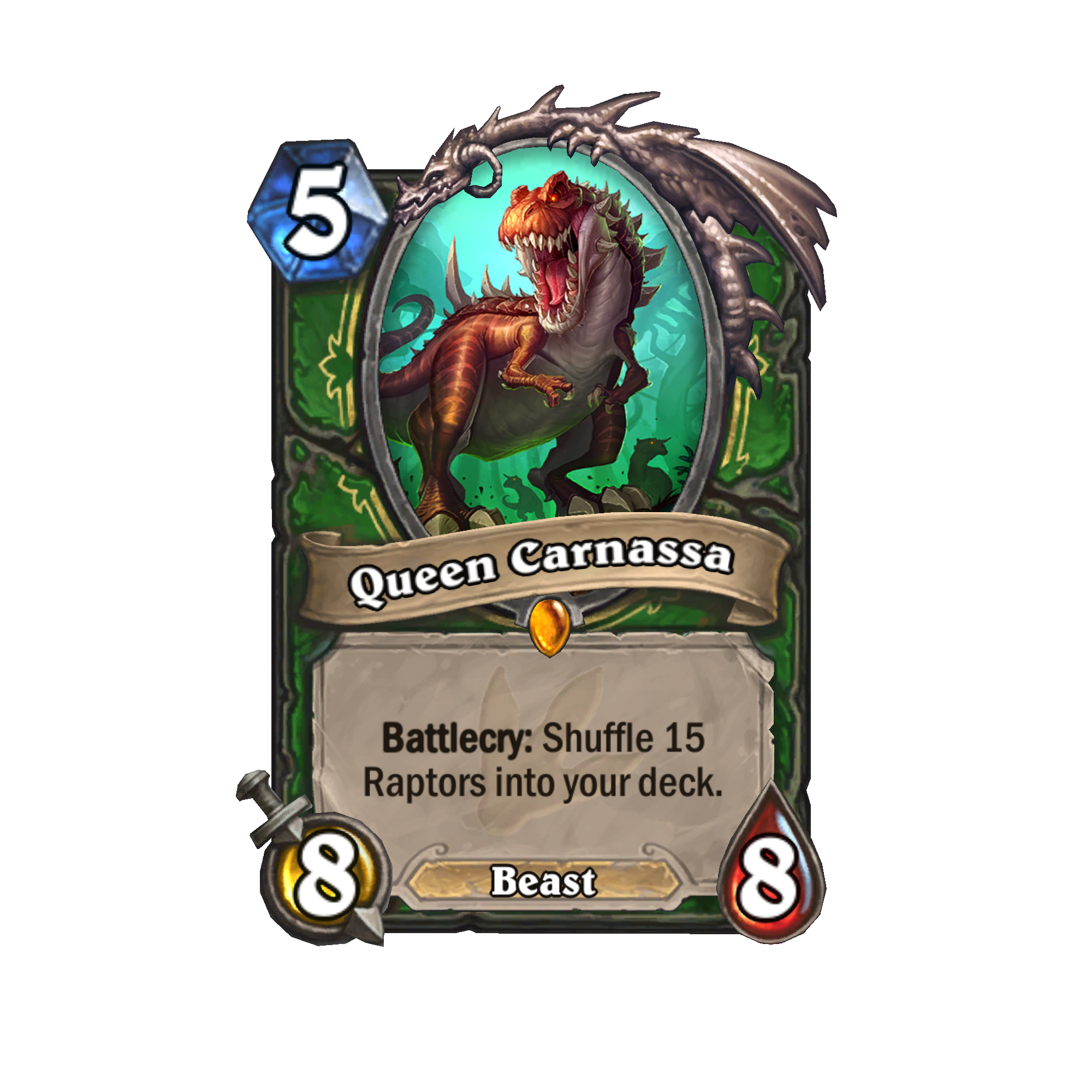
Hunter needed to play seven 1-cost minions. You’d think that would be easy for a class known for aggression. But by the time you filled your deck with enough 1-drops to finish the quest, you had no "meat" left in the deck. You’d get Queen Carnassa, shuffle 15 Raptors into your deck, and then... draw a 1/2 Firefly. It was a mechanical failure that taught Blizzard a lot about deck thinning and card draw.
The outliers: Mage and Warrior
We can’t talk about Un’Goro without mentioning Open the Waygate.
Exodia Mage.
This quest required you to cast six spells that didn't start in your deck. The reward was Time Warp: an extra turn. This led to the most polarizing deck in Hearthstone history. Players would stall with Frost Nova and Blizzard until they had the pieces for an infinite Fireball loop with Archmage Antonidas. It didn't matter if you had 100 armor; if the Mage got their extra turn, you were dead.
On the flip side, Fire Plume’s Heart for Warrior turned the class into a literal tank. Play seven Taunt minions, get Sulfuras, and change your Hero Power to "Deal 8 damage to a random enemy." It was simple. It was effective. It made every turn feel like a game of Russian Roulette for the opponent.
Building for the long haul: The legacy of Un’Goro
If you're looking to play these in Wild today, the power creep has been... unkind, to say the least. Most of the original Journey to Un’Goro quests are too slow for the current Wild meta, where games often end by turn 6. However, Awaken the Makers still sees occasional play in Reno Priest shells because 40 HP is still a lot of HP.
What really matters is how these cards paved the way. Without the Un’Goro experiment, we wouldn't have gotten the Uldum Reborn quests or the United in Stormwind Questlines. Blizzard learned that players love having a clear goal, but they hate it when that goal is either impossible to achieve or so easy that it breaks the game.
The nuance of Un’Goro was in its flavor. The jungle theme felt cohesive. The quests felt like actual expeditions. Even if you lost to an army of 5/5 Rogue tokens, you felt like you were part of a specific moment in Hearthstone's history.
How to use these mechanics in modern deckbuilding
If you are a collector or a returning player looking at your old Un'Goro collection, don't just dust everything. There’s a specific joy in the "Greedy" decks that these quests enable. Here is how you actually make use of that nostalgia without losing every single match on the ladder:
- Focus on Battlecry/Deathrattle loops: If you're playing the Priest or Shaman quests (Unite the Murlocs), you need to lean into modern card generation. Modern Murlocs are way faster than 2017 Murlocs. Use them to bridge the gap.
- Ignore the Hunter Quest: Seriously. Even in casual mode, The Marsh Queen is a trap. The reward just doesn't do enough in a world where every class has massive board clears.
- The Mage Quest is still a combo engine: Open the Waygate remains one of the most flexible combo pieces in Wild. You don't need Antonidas anymore; there are a dozen ways to abuse an extra turn with modern Mana Biscuit and Potion of Illusion tech.
- Check your Wild collection for "Generation" cards: The biggest buff to these old quests has been the sheer amount of "Discover" cards added to the game. Completing the Mage or Priest quests is significantly easier now than it was during the Year of the Mammoth.
The Journey to Un’Goro quests represent a time when Hearthstone was willing to be weird. They weren't perfect—some were downright broken—but they gave the game a sense of direction that defined the "Golden Age" for many players. Whether you're a veteran or a newcomer, understanding these cards is key to understanding how modern card games balance "fun" objectives with "competitive" reality.
Check your collection for Open the Waygate or Awaken the Makers specifically; these are the two that have stood the test of time and remain relevant in niche archetypes. Avoid crafting the Paladin or Hunter versions unless you are strictly playing for the "fun" factor in friendly matches.