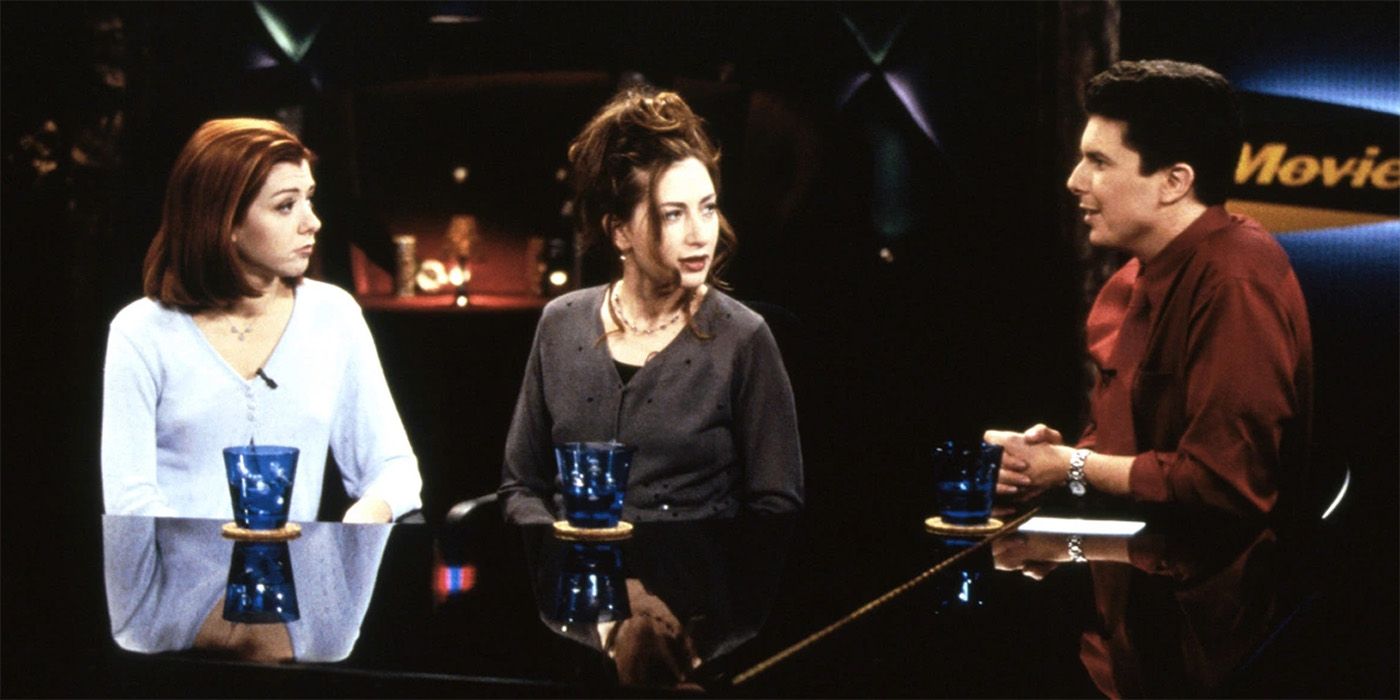
Friday nights used to feel different. Before the endless, paralyzing scroll of Netflix or the hyper-saturated world of TikTok, there was a specific comfort in turning on the TV and seeing a guy in a chef's hat standing in a kitchen with a somewhat bewildered comedian. We’re talking about Dinner and a Movie TBS, a show that basically pioneered the "lifestyle-meets-entertainment" genre before it was even a thing. It wasn't just a movie broadcast. It was an event.
You probably remember the premise. Paul Gilmartin and Annabelle Gurwitch (and later Janet Varney) would host a movie, but every commercial break, they’d be back in the kitchen whipping up a dish that was almost always a terrible, wonderful pun on the film's title. Beans and Privates for Saving Private Ryan? Yeah, they went there. It was cheesy. It was scripted but felt chaotic. Honestly, it was the peak of 90s and early 2000s cable.
The Secret Sauce of 90s Cable Branding
TBS wasn't always "Very Funny." Back then, they were trying to figure out how to keep people from changing the channel during the commercials of a movie they’d already seen fourteen times. Dinner and a Movie TBS was the solution. It turned a static viewing experience into a hangout.
The chemistry between Paul and Annabelle was the engine. They had this "divorced couple who are still best friends" energy that kept the kitchen segments from feeling like a boring Infomercial. They messed up recipes. They made fun of the movies they were showing. If the movie was a dud, the show was still good. If the movie was a classic, the show felt like a celebration.
Most people don't realize that the show ran for sixteen years. Sixteen! That’s a massive lifespan for a secondary programming block. It started in 1995 and didn't officially wrap up until 2011. Think about the transition of culture in that window. We went from The Fugitive on VHS to the dawn of the iPad, and through it all, these guys were still making "Lord of the Onion Rings."
Why the Puns Actually Mattered
The puns were the brand. You can't talk about Dinner and a Movie TBS without mentioning the food names. They were the ultimate "dad joke" before dad jokes were a meme category.
- Groundhog Cake for Groundhog Day.
- Gladiator Taters for Gladiator.
- Spear-Ribs for Spartacus.
It sounds ridiculous now, but it created a participatory element. Fans would write in. This was the early era of the internet—no Twitter, no instant feedback—so people were actually engaging with a cable network via snail mail and early web forums to talk about these recipes. It was "second screen viewing" before we had second screens. You’d watch the movie on the big tube TV and maybe have the recipe printed out from the TBS website if you were feeling particularly ambitious.
The Production Reality
If you look at the set, it looked like a kitchen, but it was basically a functional studio. Real chefs were behind the scenes ensuring that whatever Paul and Annabelle were "cooking" didn't actually poison anyone, though the hosts frequently joked about the quality of the meals.
Claudine Trotta was one of the culinary producers who actually had to make these puns edible. That’s a weird job description. Imagine being a trained chef and your task for the week is "make a dish that sounds like The Silence of the Lambs but tastes like something a suburban family would eat on a Friday night." They settled on "The Silence of the Clams," by the way.
The show worked because it didn't take itself seriously. In an era where Food Network was starting to become a behemoth with "serious" chefs like Emeril Lagasse, TBS went the opposite direction. They leaned into the mess.
What We Lost When It Left
When Dinner and a Movie TBS ended in 2011, it marked the end of an era for "appointment" cable. Streaming changed the math. Why wait until Friday at 8:00 PM to watch Miss Congeniality with a cooking segment when you can stream it at 10:00 AM on a Tuesday without commercials?
But streaming is lonely.
The magic of the TBS era was the collective experience. Thousands of people were all watching the same movie, laughing at the same puns, and collectively cringing at the same kitchen mishaps at the exact same time. It provided a curated experience. Today, we have too much choice. Back then, TBS chose for us, and usually, they chose pretty well.
The Legacy of the Format
You can see the DNA of this show everywhere now. The Dinner Party or various YouTube series where people cook while discussing pop culture? That’s just Dinner and a Movie TBS with a higher production budget and better cameras. Even the way "Movie Marathons" are hosted now owes a debt to the way Paul and Annabelle made a three-hour broadcast feel like a twenty-minute hang.
It also proved that personality matters more than the "content" itself. People weren't tuning in specifically for the movie—you could rent Caddyshack at Blockbuster for two bucks. They were tuning in for the vibes. They wanted to see if Paul would spill something or if Annabelle would land a particularly sharp jab at the film's lead actor.
How to Recreate the Vibe Today
If you’re feeling nostalgic, you can actually still find some of the old recipes archived in various corners of the internet. While TBS doesn't host the full database anymore, fans have kept the "puncakes" alive.
To do a DIY version, you don't need a cable subscription. You just need a bad movie, a clever (or terrible) pun, and some friends.
- Pick a movie that everyone has seen at least twice. The goal isn't to focus on the plot; it's to talk over it.
- Assign a dish based on a pun. If you're watching Top Gun, you're eating "Goose" (maybe just chicken, let’s be real). Watching Jurassic Park? "Clever Grill" steak.
- Keep the cooking simple. The show never aimed for Michelin stars. It aimed for "I can make this during a four-minute commercial break."
- Embrace the interruptions. Pause the movie. Talk about the scenes. Make fun of the fashion choices.
Dinner and a Movie TBS taught us that movies are better when they're shared, and even a mediocre film is great if you have a good meal and a better laugh to go with it. It was the ultimate "low stakes" television, and in a world that feels increasingly high stakes, that’s exactly what made it special.
If you're looking to dive back into that world, start by hunting down old clips on YouTube. There’s a specific kind of grainy, standard-definition comfort in those 1998 transitions that modern 4K streaming just can't replicate. Grab some snacks, find a classic flick, and don't forget the puns.