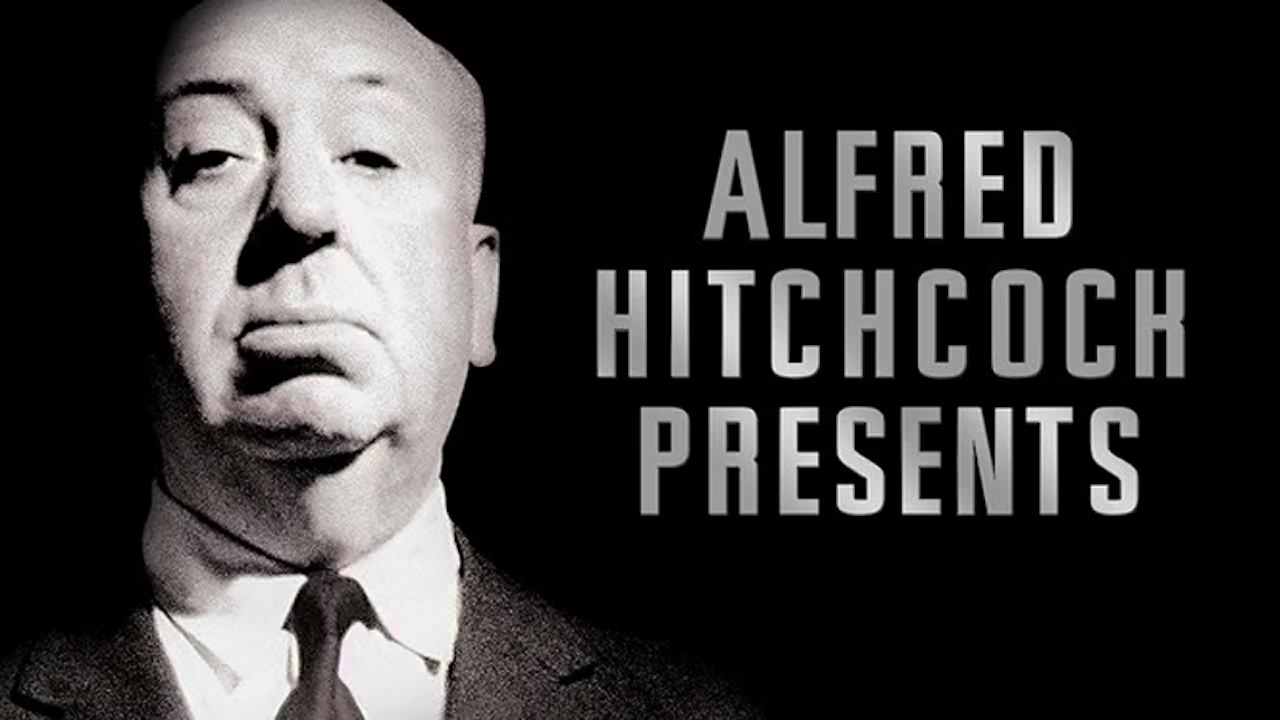
That silhouette. You know the one. A bulbous belly, a protruding lower lip, and a چند seconds of Gounod’s "Funeral March of a Marionette" playing in the background. Then, the man himself steps into his own outline. He stares into the lens with the deadpan expression of a tax collector and utters those four famous words: Alfred Hitchcock good evening. It sounds simple, right? But those four words basically changed how we look at television hosts forever.
Before Hitchcock showed up on CBS in 1955, TV was still trying to find its soul. Most hosts were either overly chipper salesmen or stiff-necked announcers. Hitchcock was different. He was morbid. He was funny. Honestly, he was kind of a jerk to his sponsors, which people absolutely loved. When he said "good evening," it wasn't a polite greeting; it was an invitation to watch something terrible happen to someone who probably deserved it.
The Accidental Birth of a Catchphrase
Interestingly, Hitchcock didn't even want to do television at first. He was a cinema giant. Moving to the small screen felt like a step down. But his agent, Lew Wasserman, saw the writing on the wall. The result was Alfred Hitchcock Presents, a show that ran for a decade and solidified the Alfred Hitchcock good evening trope as a piece of Americana.
The greeting itself was always delivered with a rhythmic, almost musical drop in pitch. "Good... eeev-ning." It set the stage for his macabre introductions. James Allardice, the man who wrote most of Hitchcock’s intros, understood something vital: the audience wanted to feel like they were in on a dark joke. Hitchcock would stand there, perhaps holding a noose or sitting in a guillotine, and treat the most horrific scenarios like they were minor inconveniences at a dinner party.
It’s easy to forget how radical this was. In the 1950s, television was sanitized. It was the era of I Love Lucy and Father Knows Best. Then comes this round, balding British man basically mocking the very concept of the "happy home." He brought the aesthetic of German Expressionism and the wit of a London pub to the American living room.
Why the "Good Evening" Intro Still Works Today
If you watch these clips on YouTube now, they don't feel dated. That’s rare. Most 50s TV feels like a museum piece, but Hitchcock feels like a modern troll. He pioneered the "breaking the fourth wall" meta-commentary that shows like Fleabag or Deadpool use today.
He’d finish his story and then return for the "epilogue." This was often a legal necessity. The networks were terrified that "crime doesn't pay" wasn't being emphasized enough. So, if a killer got away with it in the 25-minute episode, Hitchcock would reappear after the commercial and say, "Of course, the police caught Mr. Henderson two days later when he tripped over a stray cat." He’d say it with such a massive wink that you knew he thought the censors were idiots.
The Alfred Hitchcock good evening signature was the glue. It signaled to the viewer: "The scary stuff is over, but I’m still here to make fun of the detergent company that paid for this." He famously called his sponsors "the boring people" or "the medicine men." It was genius marketing because it made the audience trust him more than the product.
The Mechanics of the Silhouette
- The Drawing: Hitchcock actually drew the caricature himself. He was a former title card designer for silent films, so he had the chops.
- The Shadow: The way he stepped into the silhouette was a practical effect using backlighting.
- The Music: "Funeral March of a Marionette" was chosen because it sounded both playful and skeletal. It perfectly matched the vibe of the greeting.
More Than Just a Greeting
We have to talk about the "Presents" vs. "Hour" era. When the show expanded to The Alfred Hitchcock Hour, the intro became even more elaborate. But the core remained the same. That greeting was a brand. It was the first time a director became more famous than the actors in his projects.
You’ve got to realize that people tuned in specifically for the bookends. The middle part—the actual mystery—was sometimes secondary. Whether it was the famous "Lamb to the Slaughter" episode (where a woman kills her husband with a frozen leg of lamb and then feeds the evidence to the cops) or something more psychological, Hitchcock’s presence was the draw.
He was essentially the first "Influencer." He didn't just direct Psycho or The Birds; he marketed himself as the Master of Suspense. The Alfred Hitchcock good evening was the logo of that brand. It told the audience exactly what they were getting: high-quality thrills with a side of dry, British cynicism.
The Psychology of the Deadpan
Why do we love a host who seems to dislike us? Or at least, a host who seems bored by the conventions of polite society? Hitchcock’s "good evening" was the ultimate deadpan. He never smiled. He never looked excited. In a world of "buy this car!" and "smoke these cigarettes!", Hitchcock was the cool, cynical uncle who told you the truth: life is weird, people are murderous, and everything is a bit of a joke.
There’s a specific nuance to his delivery. He didn't say it like a question. He said it like a decree. He was claiming the night.
Critics like Robin Wood have often pointed out that Hitchcock’s public persona was a carefully constructed mask. The real Alfred was a deeply anxious, sensitive man with dozens of phobias (including a famous fear of eggs and the police). The "Good Evening" persona was his armor. It allowed him to control the narrative. By making fun of the darkness, he didn't have to be afraid of it.
Lessons for Content Creators and Storytellers
If you’re trying to build a brand today, you can actually learn a lot from how the Alfred Hitchcock good evening phrase was utilized. It’s about consistency.
- Vibe over Information: People didn't watch the intro to learn what the show was about. They watched it to feel a certain way.
- Anti-Marketing works: By mocking his sponsors, he made himself the "honest" broker in the room.
- Visual Language: The silhouette and the music did 90% of the work before he even opened his mouth.
It’s sort of funny how we’ve circled back to this. Short-form creators on TikTok and Instagram use "hooks" and "signatures" the same way. They just don't usually do it with a tuxedo and a 19th-century funeral march.
What Most People Get Wrong
People often think Hitchcock directed every episode of his show. He didn't. He only directed about 17 or 18 out of the hundreds of episodes produced. But because of that Alfred Hitchcock good evening intro, he gets the credit for all of them. That is the power of a perfect "front man." He lent his prestige to other directors like Robert Stevens and Norman Lloyd, and in exchange, he became the face of the genre.
Another misconception is that the "good evening" was just a greeting. In many episodes, he would actually vary the greeting based on the theme, though "good evening" remained the anchor. If the episode involved a desert, he might appear in a pith helmet. If it was about a shipwreck, he might be dripping wet. But he always came back to that baseline.
Actionable Insights for the Cinephile
If you want to truly appreciate the genius of the Hitchcock intro, you shouldn't just watch them as isolated clips. You need to see them in context.
- Watch "Lamb to the Slaughter": Notice how the dark humor of the episode is perfectly mirrored in his intro and outro.
- Study the "Epilogues": Look for the moments where he clearly mocks the "Production Code" of the era. It’s a masterclass in malicious compliance.
- Listen to the Pacing: Pay attention to how long he pauses after saying "evening." He lets the silence hang. He isn't afraid of dead air.
Hitchcock’s legacy isn't just about the "MacGuffin" or the "dolly zoom." It’s about the fact that he made the audience the protagonist. When he looked at the camera and said Alfred Hitchcock good evening, he was looking at you. He was acknowledging that you, the viewer, had a dark side too. And he was perfectly happy to feed it for a half-hour every week.
To really dive into this, start by tracking down the original broadcasts rather than the edited-for-syndication versions. The original commercials were often integrated into his bits, showing just how far he was willing to push the "boring people" who paid his salary. It’s a level of creative control that almost no one has in Hollywood anymore.
Experience the show as a curated gallery of the macabre. Don't just binge the episodes for the plot twists. Watch them to see a master at work, building a persona that has survived long after the man himself passed away. That silhouette is still one of the most recognizable shapes in the world, and that greeting is still the gold standard for how to start a story.