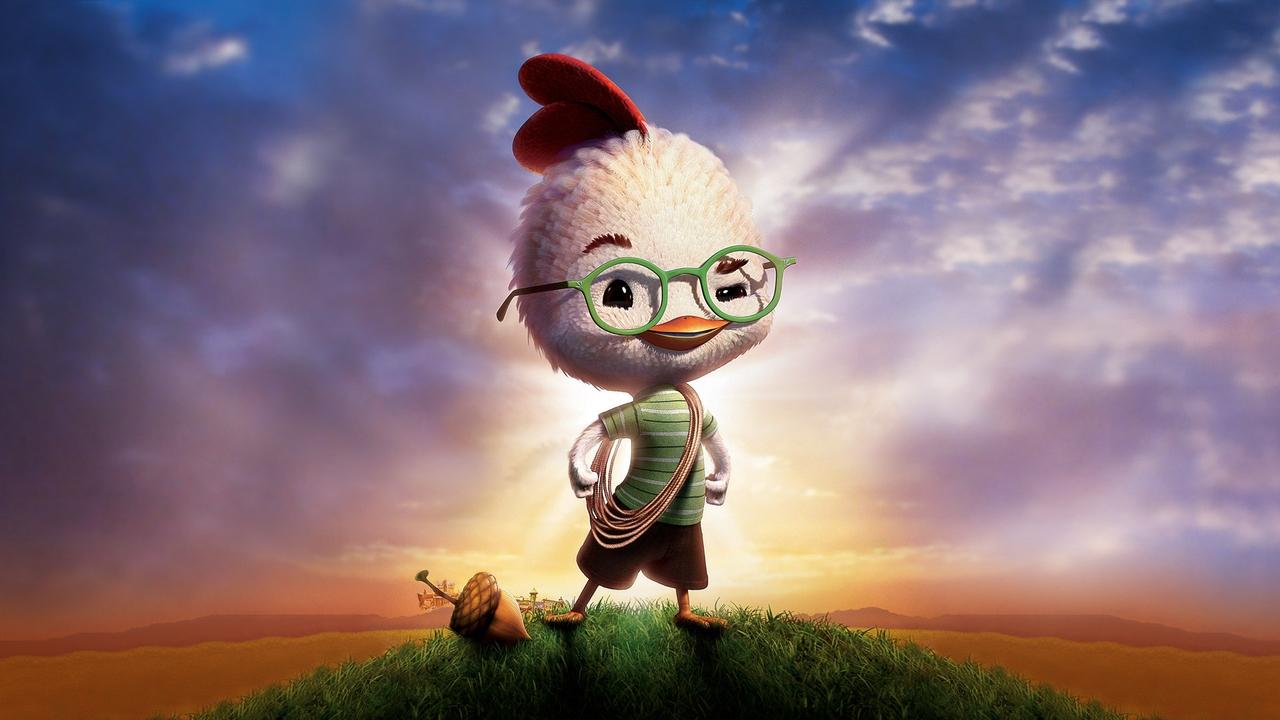
You’re sitting there, watching a nervous, bespectacled chick try to convince a whole town that a piece of the sky—which looks suspiciously like a stop sign—just beaned him on the head. You know that voice. It’s twitchy. It’s earnest. It’s got that specific, high-energy neurosis that feels like it belongs in a hospital hallway or a mid-2000s indie film.
So, who voices Chicken Little? Most people immediately scream out "Zach Braff!" and they’re right. But that’s only half the story. The history of this character is actually a bit of a mess, involving gender swaps, a legendary 1940s narrator, and even a "Batman" taking over the role for a movie-within-a-movie.
The Man Behind the Feathers: Zach Braff
In the 2005 Disney hit, the titular character is voiced by Zach Braff.
At the time, Braff was essentially the king of "sensitive guy" energy thanks to his lead role as J.D. on Scrubs. He didn’t just walk into the booth and talk, though. Braff has gone on record saying he campaigned hard for the part. He actually auditioned. He wanted that Disney legacy.
To get the sound right, he didn't just use his "J.D." voice. He leaned into a "character-y" version of a young boy. Think of it as Braff's natural register but pushed through a filter of childhood anxiety. It worked. He managed to make a character who is essentially a social pariah feel deeply relatable. Honestly, if you rewatch it now, you can see his facial expressions in the animation. The animators actually videotaped his recording sessions to steal his specific gestures and eyebrow movements.
A Surprising Gender Swap
Here’s a bit of trivia that usually wins pub quizzes: Chicken Little was almost a girl.
For the first two years of production, the character was female. They even had a different script. But then, Michael Eisner (the big boss at Disney at the time) stepped in. He felt that the "underdog" story worked better with a son trying to earn the respect of his father. They scrapped the "girl chicken" idea, and that's when Braff entered the picture.
It Wasn’t Always Zach Braff
While the 2005 movie is what everyone remembers, it wasn't Disney’s first crack at the "sky is falling" fable.
If you go back to 1943, Disney released a wartime short titled Chicken Little. In that version, the voice belongs to Frank Graham. He didn’t just voice the chicken, either. He voiced the narrator, the fox, and basically everyone else in the short. It was a very different vibe—darker, more of a propaganda piece about not believing everything you hear.
Then you have the weird "movie-within-a-movie" at the end of the 2005 film. In the final scene, the characters watch a Hollywood action-movie version of their own lives. In that meta-moment, "Action" Chicken Little is voiced by none other than Adam West. Yes, Batman himself.
The Rest of the Oakey Oaks Crew
You can't talk about who voices Chicken Little without mentioning the heavy hitters supporting him. The casting was honestly stacked:
- Garry Marshall voiced Buck Cluck (the dad). He and Braff actually recorded together, which is rare in animation. They wanted that real-time comedic chemistry.
- Joan Cusack played Abby Mallard (the "Ugly Duckling"). Her deadpan delivery is basically the glue of the movie.
- Steve Zahn was Runt of the Litter. He’s the nervous pig who loves 80s music.
- Amy Sedaris voiced the "villain" Foxy Loxy.
- Don Knotts gave us Mayor Turkey Lurkey. It was actually one of the legend's final roles before he passed away.
Why the Voice Matters Now
Interestingly, in 2026, we’re seeing a massive resurgence in interest for this specific era of Disney. The "Post-Renaissance" era, as nerds call it, was weird. It was experimental. Chicken Little was Disney’s first solo foray into fully computer-generated 3D animation without Pixar's help.
Braff recently mentioned in an interview that being Chicken Little is one of the "greatest honors" of his career. He’s even joked about the lack of merchandise for the character at Disney parks. He’s right—where is the love for the little guy?
The movie was a bit of a turning point. It showed Disney could do the "Dreamworks style"—snappy dialogue, pop culture references, and celebrity-heavy casts—while still keeping that core emotional heart. Braff’s performance is the reason that works. If the voice felt like a "celebrity cameo" and nothing else, the movie would have flopped. Instead, he gave us a character that felt like he actually had something to prove.
What You Should Do Next
If you're a fan of the voice work or just feeling nostalgic, there are a few things you can actually go do right now:
- Watch the 1943 Original: It’s only about 8 minutes long. It is wild to see how much the character changed from a wartime cautionary tale to a 3D action hero.
- Listen for the Improv: When you rewatch the 2005 movie, pay close attention to the scenes between Chicken Little and his dad. Since Zach Braff and Garry Marshall recorded in the same room, a lot of those stammers and overlapping lines aren't scripted. It’s pure improv.
- Check out the Video Games: If you really can’t get enough of the voice, Braff actually returned to voice the character in the Chicken Little video games and Kingdom Hearts II. Most actors hand that off to "sound-alikes," but he stuck with it.
Basically, Zach Braff didn't just voice a chicken; he defined a very specific era of Disney's growing pains. Whether you love the movie or think it’s a fever dream, you can't deny that the voice cast is what keeps it in the conversation two decades later.