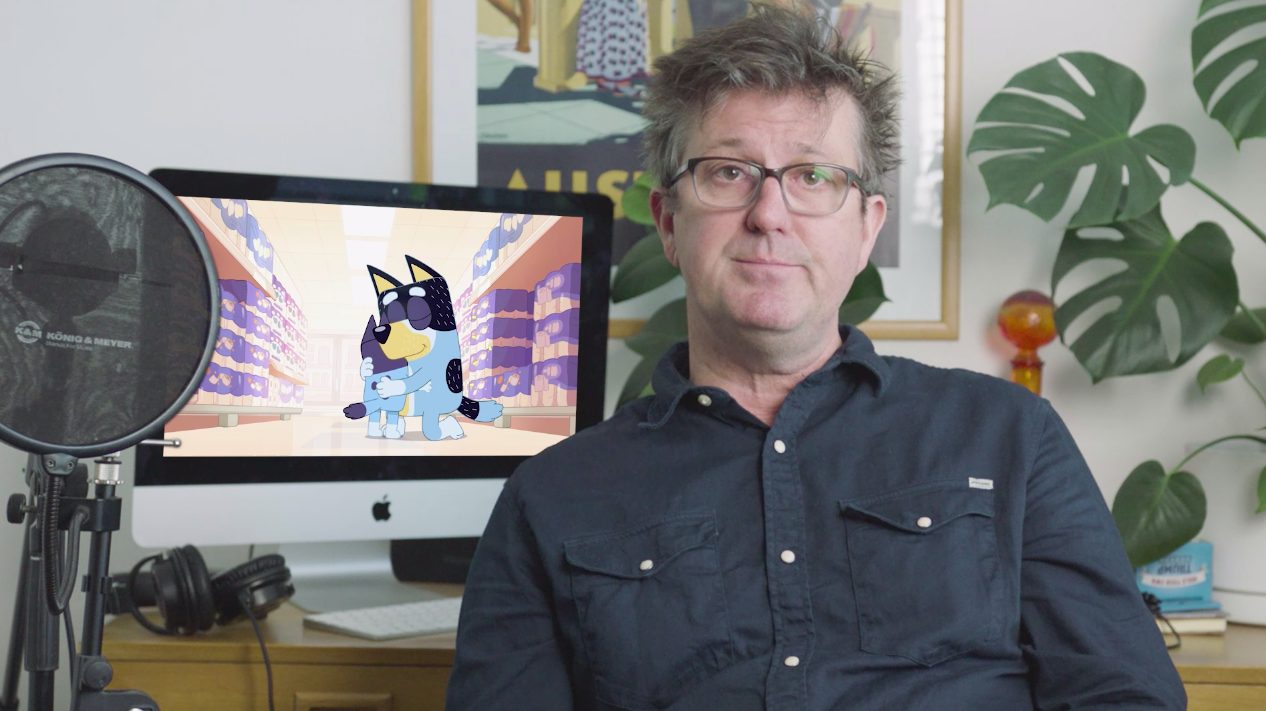
You’ve probably sat on your couch, watching a blue heeler pup learn a lesson about playing fair or dealing with "the dump," and wondered something specific. Who is actually behind that voice? It’s not a grown woman pretending to be a six-year-old. It doesn't sound like a typical "cartoon voice." It sounds like a kid. Because it is.
The mystery of who voice acts Bluey is one of the most guarded secrets in modern television. Ludo Studio, the powerhouse in Brisbane that produces the show, has a very strict policy. They don't credit the children. If you scroll through the end credits of a Bluey episode, you’ll see David McCormack (Bandit) and Melanie Zanetti (Chilli). You’ll see the names of the animators, the riggers, and the composers. But for Bluey, Bingo, and their legion of cousins and friends?
Nothing. Just silence.
Why the Bluey voice actors stay anonymous
Ludo Studio didn't do this to be edgy. It was a conscious choice to protect the kids. In an era where child stars often face intense public scrutiny or the weirdness of "fame" before they can even tie their shoes, the creators of Bluey—specifically Joe Brumm—wanted to keep things normal.
The kids who voice Bluey and Bingo are actually children of the production crew. They aren't professional actors. They aren't "industry kids" flown in from Sydney or Los Angeles. They’re just Brisbane youngsters who happen to have parents working on the biggest show in the world. By keeping their names off the IMDB page, Ludo ensures they can go to school, play at the park, and live a life that doesn't involve being hounded for autographs or chased by paparazzi. It’s a level of ethics you don't often see in the entertainment business.
Think about it. These kids have been doing this since 2018. They’ve grown up. If you listen closely to Season 1 versus Season 3, you can hear the subtle deepening of the voices. They're aging in real-time.
The adults in the room
While the kids remain a mystery, the parents are very much public. David McCormack, the voice of Bandit Heeler, is actually a bit of an indie rock legend in Australia. He’s the frontman of a band called Custard. He didn't even think he was "acting" when he started. He once told the press that he basically just talks. He doesn't do a "voice." He’s just a dad.
Melanie Zanetti, who voices Chilli, is a seasoned actress. Interestingly, for a long time, she and McCormack hadn't even met in person. Because of how animation works, they recorded their lines separately—often in different cities. They finally met years into the show’s success. Their chemistry is entirely a product of great direction and sharp editing.
Then you have the cameos. This is where the show gets really fun for the parents watching.
- Lin-Manuel Miranda voiced Major Tom the horse.
- Rose Byrne showed up as Chilli’s sister, Brandy.
- Robert Irwin (yes, Steve Irwin’s son) voiced Alfie the retail clerk.
- Natalie Portman even did a brief narration in a Whale Documentary episode.
But even with these A-listers popping in, they never overshadow the core cast. The kids remain the heart.
Dealing with the "aging out" problem
One of the biggest rumors swirling around the Heeler household involves what happens when the kids hit puberty. It's the "Stranger Things" dilemma. You can’t have a six-year-old character voiced by a fifteen-year-old with a cracking voice.
Recently, the massive 28-minute special "The Sign" sparked a lot of conversation. Fans were convinced the show was ending because the Heeler house was up for sale. But hidden under that plot was the reality of the voices. The kids are getting older.
Ludo has a few options here. They could pitch-shift the audio—basically using digital tools to keep the voices high. They could recast. Or, they could do what some suggest is already happening: letting the characters age slightly. However, the most likely scenario is that they have a pipeline of new "crew kids" ready to step in if the original voices become too mature for the roles. It’s a natural cycle.
The recording process is totally unique
Most cartoons use a "scratch track" and then have actors come in to hit precise beats. With Bluey, the process is a bit more organic. Because they are working with real children who aren't professional performers, the directors often have to "play" with them to get the right reaction.
They aren't just reading lines. They're being prompted to laugh, to squeal, to sound frustrated. This is why the show feels so authentic. When Bluey loses a game and sounds genuinely annoyed, it’s often because the child in the booth was reacting to a real interaction. It captures the cadence of actual childhood—the stutters, the weird pronunciations, and the genuine belly laughs that an adult actor just can't fake.
What we actually know about the kids
We know they are part of the "production family." We know they live in or around Queensland. We know they probably think it’s pretty cool but also just "work that mum or dad does."
There have been occasional leaks or "friend of a friend" stories on Reddit, but the Bluey fanbase is surprisingly protective. People generally don't want to dox the kids. There's a collective agreement that the magic of the show depends on Bluey being a real kid, not a celebrity.
How to spot the voice changes
If you're a Bluey superfan, try this:
- Watch "The Weekend" from Season 1.
- Immediately jump to "Cricket" or "The Sign" in Season 3.
- Listen to the "rasp" in Bluey's voice.
In the beginning, the voice is very light and airy. By the later episodes, there's a distinct gravelly quality that comes with a child's vocal cords developing. It adds a layer of bittersweet reality to the show. As the audience's children grow up, Bluey is growing up too.
Actionable insights for fans
If you're looking to dive deeper into the world of Bluey without infringing on the privacy of the cast, there are better ways to engage with the show's production.
- Follow the Ludo Studio blog: They often post behind-the-scenes looks at the animation process, which is just as fascinating as the voice acting.
- Listen to 'Behind Bluey': This is an official podcast where the creators discuss the "how" and "why" of specific episodes. They talk about the technical challenges of recording children without naming names.
- Check out Custard's music: If you want to hear more of "Bandit," David McCormack’s music is genuinely great 90s-style indie rock.
- Support the animators: Many of the artists who work on the show post their "dailies" or concept art on social media. This is where the visual soul of the show lives.
The identity of who voice acts Bluey is likely to remain a secret until the show eventually concludes. Even then, the creators might choose to keep it under wraps. It preserves the "Heeler" family as a real entity in our minds. For now, we should probably just enjoy the fact that in a world of over-exposed child stars, there are a few kids in Australia getting to be the most famous voices on earth while still having a totally normal Tuesday.
Next Steps for You
If you want to experience the evolution of the voices yourself, set up a "Then and Now" watch party. Watch the pilot episode and then the Season 3 finale back-to-back. You'll hear the history of the show in the voices before you even see it in the animation. It's a reminder that while the show is timeless, the people making it are growing up right alongside us.