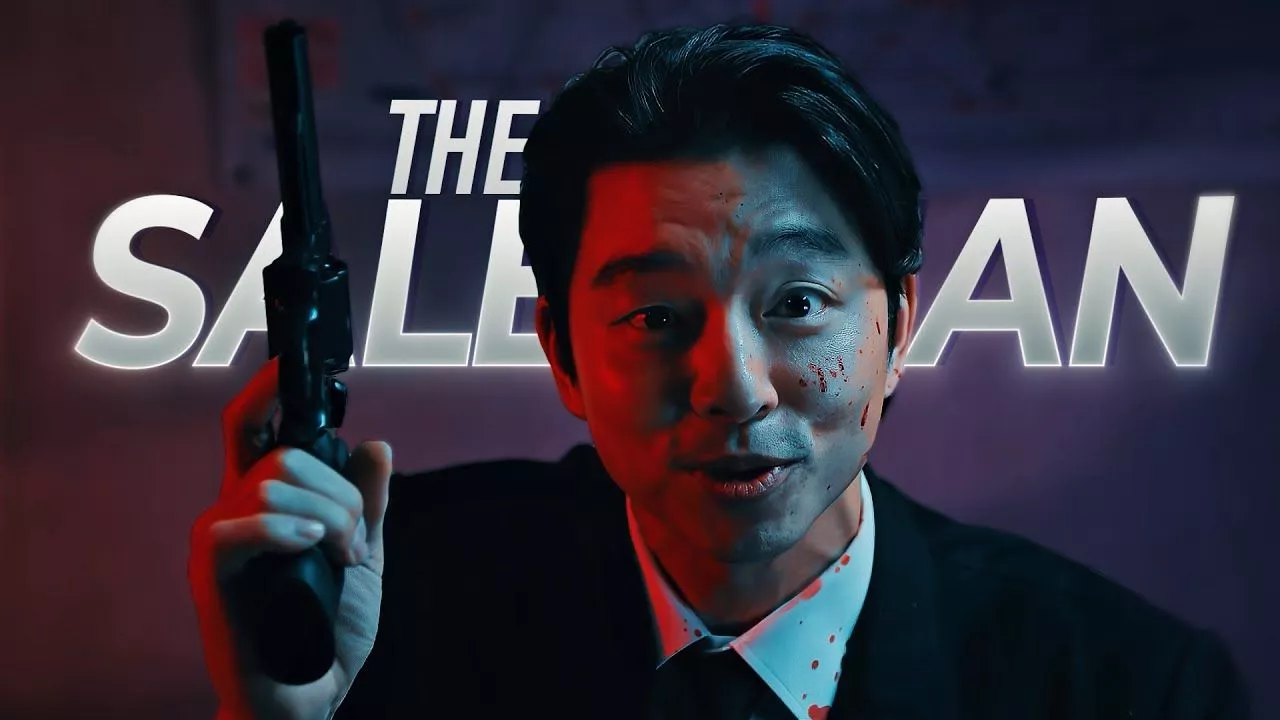
You know the scene. A tired, desperate Seong Gi-hun is sitting on a subway platform, head in his hands, when a man in a perfectly tailored suit approaches him. He looks like he’s stepped out of a high-end fashion magazine, clutching a leather briefcase and wearing a smirk that’s both inviting and deeply unsettling. He offers a game of Ddakji. He offers money. He offers a slap to the face.
The mystery surrounding who played the salesman in Squid Game became an overnight obsession for millions of viewers when the show dropped on Netflix. People weren't just curious because the character was charming; they recognized that face. It belonged to Gong Yoo, one of South Korea’s most elite A-list actors.
But why would a superstar of his caliber take such a small, arguably minor role? Honestly, it’s one of the most interesting casting stories in recent K-drama history. It wasn't about the screen time. It was about a long-standing friendship and a script that was too weird to pass up.
The Man Behind the Briefcase: Gong Yoo’s Career
Gong Yoo isn’t just some guy. In Korea, he’s a household name, often referred to as one of the "four public goods"—a tongue-in-cheek way of saying he’s a national treasure who shouldn't belong to just one person.
Before he was the guy slapping people in subway stations, he was the lead in Coffee Prince, a 2007 drama that basically defined the Hallyu wave for a generation. If you haven't seen it, you're missing out on the pinnacle of early 2000s romantic comedy. Then there’s Guardian: The Lonely and Great God (often just called Goblin), where he played an immortal being searching for his bride. That show broke viewership records and solidified him as a dramatic powerhouse.
International audiences probably recognize him best from the 2016 zombie thriller Train to Busan. He played the workaholic father trying to save his daughter on a high-speed train. It was gritty, emotional, and visceral. So, when viewers saw him pop up in Squid Game, the shock wasn't that he was a good actor—it was that he was there at all.
Why Did Gong Yoo Take the Role?
Director Hwang Dong-hyuk and Gong Yoo go way back. They worked together on the 2011 film Silenced (also known as The Crucible), a harrowing, true-story drama about abuse at a school for the hearing impaired. That movie was so impactful it actually led to real-world legislative changes in South Korea.
When Hwang was developing Squid Game, he reached out to Gong Yoo for a cameo. Most actors of his status might turn down a role that only appears in two episodes. Gong Yoo did the opposite. He liked the concept. He liked the director. More importantly, he liked the idea of being the "Recruiter."
He’s the face of the organization for the outside world. While the Front Man hides behind a mask and the guards wear pink jumpsuits, the Salesman is the only human connection the players have to the game before they enter the arena. He’s the bait. He’s handsome, well-dressed, and polite, which makes the horror of what he’s selling even more jarring.
The Mystery of the Salesman’s Identity
There are dozens of fan theories about who this character actually is. Is he a former winner? A former guard who got promoted? Some people think he’s the son of the old man, Oh Il-nam.
Director Hwang has actually addressed some of this. In various interviews, he’s mentioned that the Salesman was someone who earned the trust of the organization and eventually moved up the ranks to work "on the ground." He’s a "trustworthy" face. That’s why his appearance is so vital. If a creepy, disheveled guy approached you in a subway station and asked you to play a game for money, you’d run. But if Gong Yoo asks? You stay. You listen. You might even let him slap you for 100,000 won.
The Impact of the Ddakji Scene
The game of Ddakji—flipping paper tiles—is a childhood staple in Korea. By using a world-famous actor to play a children's game with high stakes, the show immediately established its core theme: the corruption of innocence.
Watching Gong Yoo calmly check his watch while Gi-hun gets increasingly frustrated is a masterclass in understated acting. He doesn't need to scream or threaten. His power comes from his composure. He knows Gi-hun is going to lose. He knows Gi-hun is desperate. He’s essentially a devil at the crossroads, offering a deal that seems too good to be true.
The blue and red tiles he carries have also sparked massive debate. A popular theory suggests that the color tile a player chooses determines their role in the game—blue for player, red for guard. However, Netflix and the director haven't officially confirmed this, and in the show, we only see players who chose blue. It’s those little details, delivered by a charismatic actor, that keep the "Squid Game" lore alive years after the initial release.
What’s Next for the Salesman in Season 2?
Netflix has confirmed that Gong Yoo is returning for Squid Game Season 2. This is huge.
The teaser trailers have already shown him back in his suit, back on the subway, and back with his briefcase. This suggests we might get more backstory on how he was recruited or why he does what he does. Is he a true believer in the system, or is he just a high-level employee doing a job?
We saw Seong Gi-hun spot him again in the final moments of Season 1. Instead of getting on his flight to see his daughter, Gi-hun turns back. He wants revenge. He wants to take down the people running the show. This sets up a direct confrontation—or at least a tense reunion—between the player and the man who recruited him.
Gong Yoo’s Versatility
It’s worth noting that Gong Yoo’s career hasn't slowed down. Between seasons of Squid Game, he starred in The Silent Sea, a sci-fi series set on a lunar base. He’s constantly switching genres. He can do romance, he can do action, and he can do chillingly cold recruiters.
His involvement in Squid Game helped bridge the gap between "niche" K-drama fans and a global mainstream audience. When people asked who played the salesman in Squid Game, they were often led down a rabbit hole of his previous work, discovering the depth of South Korean cinema along the way.
Actionable Insights for Fans and Viewers
If you’re diving back into the world of Squid Game or discovering Gong Yoo for the first time, here is how you can get the full experience:
- Watch Silenced (2011): To see the chemistry between Gong Yoo and Director Hwang Dong-hyuk, this film is essential. It’s heavy, but it shows why they trust each other as creators.
- Don't Skip the Cameos: In Korean dramas, cameos are often more than just "Easter eggs." They usually represent a deep industry connection. Pay attention to the actors who appear briefly—they are often the biggest stars in the country.
- Analyze the Body Language: When re-watching the salesman scenes, look at Gong Yoo’s hands and posture. He never loses his "service industry" politeness, even when he’s being cruel. This is a specific acting choice that highlights the corporate nature of the Squid Games.
- Follow the Season 2 News: Since the Salesman is confirmed to return, watch the trailers for the "red vs. blue" motifs. If the theory about the tiles is true, his interactions with new characters will be the first clue.
Gong Yoo’s role as the salesman proved that you don't need a lot of screen time to leave a permanent mark on pop culture. He took a few minutes of film and turned it into an icon of modern suspense. Whether he’s a villain, a victim of the system himself, or just a man doing his job, the Salesman remains the most human—and therefore the most terrifying—part of the game.