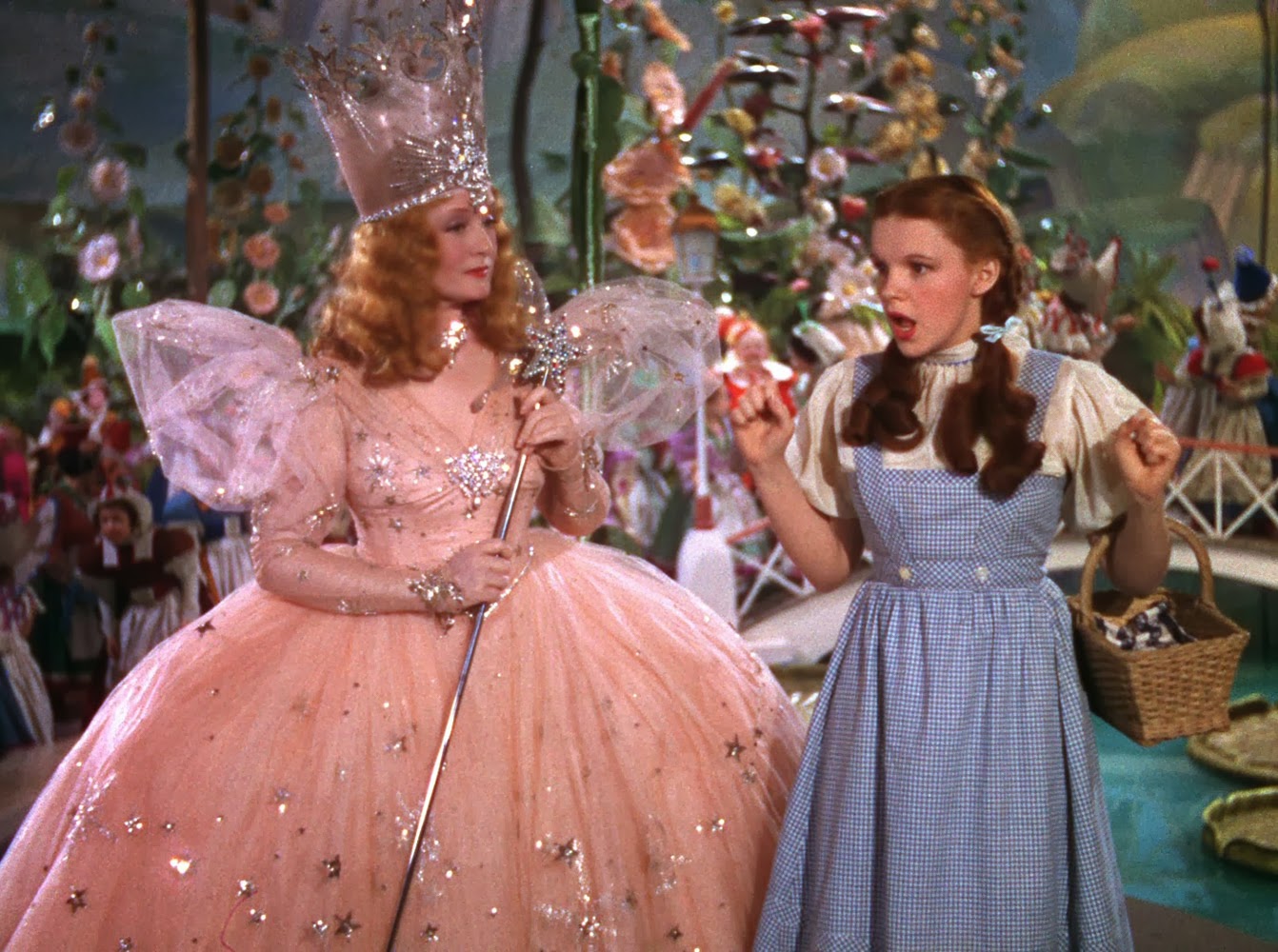
Everyone remembers the bubble. That shimmering, iridescent sphere descending onto the Technicolor flowers of Munchkinland is one of the most iconic entrances in cinema history. But the woman inside that bubble, the good witch in Wizard of Oz actress Billie Burke, wasn't just a bit player in a fantasy flick. She was Hollywood royalty who almost didn't get the part because she was "too pretty" or "too old," depending on which studio executive you asked at the time.
It’s wild to think about.
Glinda the Good Witch is the moral compass of the 1939 classic. She’s the one who tells Dorothy she’s always had the power to go home. Yet, behind the pink tulle and that massive star-tipped wand, Billie Burke was navigating a career transition that would have terrified most modern influencers. She was 54 years old when she played Glinda. In 1939, being 54 in Hollywood was usually a one-way ticket to "grandmother" roles or obscurity. Instead, Burke became immortal.
The Woman Behind the Wand: Why Billie Burke Was the Only Choice
When we talk about the good witch in Wizard of Oz actress, we’re talking about a woman who had already been a massive stage star on Broadway long before she ever stepped foot on an MGM soundstage. Born Mary William Ethelbert Appleton Burke in 1884, she was the daughter of a circus clown. Maybe that’s where she got the whimsy.
She had this voice. You know the one. High-pitched, slightly fluttering, almost like a bird that’s had a bit too much nectar. It wasn't an act, or at least, not entirely. It was her "thing." By the time The Wizard of Oz started casting, Burke was known for playing "feather-brained" socialites. MGM producer Mervyn LeRoy needed someone who could feel ethereal but also grounded enough to handle the munchkins.
Initially, the studio toyed with the idea of making Glinda a younger, more traditional "fairytale" princess. But they realized the movie needed a mother figure, not a peer. Dorothy needed a guide. Burke brought a specific kind of sophisticated warmth that bridged the gap between a magical deity and a concerned aunt.
The Pink Dress That Almost Ruined Everything
Let’s get into the costume. That dress is a masterpiece of costume design by Adrian, the legendary MGM designer. It was huge. I mean, genuinely massive. It was so wide that Billie Burke couldn't sit down properly between takes. She had to lean against a specially constructed "leaning board" to keep the silk and tulle from wrinkling or tearing.
The dress actually served a dual purpose. It wasn't just for Glinda; it was originally designed for a different movie altogether. Adrian had created a similar flamboyant look for the 1936 film The Great Ziegfeld, which, ironically, was a biopic about Burke's late husband, Florenz Ziegfeld Jr. Talk about a small world.
Burke’s performance is often simplified as "just being nice," but look closer at her eyes in the scene where she confronts the Wicked Witch of the West (Margaret Hamilton). There’s a steeliness there. Hamilton and Burke were actually friends off-camera, but on-camera, Burke had to project a level of calm authority that made you believe she could actually protect Dorothy from a fireball-throwing hag.
The Mystery of the "Two" Good Witches
Wait, wasn't there a witch from the North and a witch from the South?
If you’ve read L. Frank Baum’s original books, you know Glinda is actually the Good Witch of the South. In the books, the Good Witch of the North is a much older, less glamorous woman named Tattypoo. Seriously. For the 1939 movie, the screenwriters basically did a "fusion dance" and combined the two characters into one.
This is why some Oz purists get annoyed. They feel the good witch in Wizard of Oz actress was given too much credit or that the plot was oversimplified. But from a cinematic perspective, it was a stroke of genius. It gave the audience a consistent ally for Dorothy throughout the journey. Could you imagine if a random new witch showed up at the very end to tell Dorothy about the slippers? It would have felt like a cheap deus ex machina.
By using Billie Burke's Glinda at the beginning and the end, the movie creates a narrative loop. She is the Alpha and the Omega of Dorothy's journey.
Life After the Bubble: The Legacy of Billie Burke
Burke didn't just retire after Oz. She kept working well into her 70s. But she was always Glinda to the public. She once joked that she had signed more autographs for children who thought she could actually fly than for her dramatic roles.
She lived a life that was honestly more dramatic than the movies. Her husband, Flo Ziegfeld, was a notorious philanderer and a high-stakes gambler. When he died in 1932, he left her with massive debts—nearly $40,000, which was a fortune back then. Most people would have crumbled. Burke just went back to work. She took every role she could get, worked her tail off, and paid back every single cent.
That’s the "Good Witch" energy right there. Integrity.
Why We Are Still Obsessed With Glinda Today
The good witch in Wizard of Oz actress left a blueprint for how we view "good" magic. Before Burke, witches in folklore were almost always hags—think the Brothers Grimm or the actual Wicked Witch. Glinda changed the visual language of magic. She made it sparkly. She made it pink.
Without Billie Burke, do we get Glinda in Wicked? Probably not. Kristin Chenoweth and Ariana Grande both owe a huge debt to the specific "breathiness" and regal posture that Burke pioneered. They are riffing on her original jazz, basically.
The staying power of the character is also tied to the mystery. Why didn't she tell Dorothy about the slippers right away? Some fans think Glinda is actually the villain, or at least a master manipulator. They argue she sent a child through a dangerous forest to assassinate her political rival (the Wicked Witch). It’s a dark take, but it shows how much depth people project onto Burke’s performance. She played it with such a knowing smile that you can read almost anything into her motives.
How to Spot the Influence of the "Good Witch" in Modern Media
If you’re looking to see how the good witch in Wizard of Oz actress continues to impact pop culture, you don't have to look far.
- The Costume Design: Any time you see a "good" magical character in a massive ballgown (think Anne Hathaway in Alice in Wonderland), that’s a direct nod to Adrian’s work on Burke.
- The Voice: The high-society, slightly detached vocal fry of modern "mean girls" or "princess" characters is often a warped version of Burke’s 1930s mid-Atlantic accent.
- The "Mentor" Archetype: Glinda is the precursor to characters like Obi-Wan Kenobi or Dumbledore—the powerful entity who knows the answer but makes the protagonist find it themselves.
Finding the Magic: Practical Next Steps
If you’re a fan of the 1939 film or just curious about the history of Hollywood, there are a few things you should actually do to appreciate the work of the good witch in Wizard of Oz actress beyond the surface level.
First, go watch Dinner at Eight (1933). It’s a pre-Code movie where Billie Burke plays a frantic socialite. You’ll see the "Glinda voice" in its original, comedic form. It’s a masterclass in comic timing and shows that she wasn't just a lady in a bubble—she was a sharp, technical actress.
Second, check out the biographical archives at the Museum of the City of New York if you're ever in the area. They house a significant amount of Ziegfeld and Burke memorabilia. Seeing the sheer scale of the theater world she came from puts her "fairytale" role into perspective.
Finally, read Burke’s autobiography, With a Feather on My Nose. It’s a remarkably honest look at the transition from silent films to talkies and the struggle of aging in an industry that prizes youth above all else. She explains, in her own words, how she handled the fame of The Wizard of Oz while dealing with the very real pressures of being a single mother and a widow in the public eye.
Billie Burke passed away in 1970, but as long as people are following the yellow brick road, she’s still the woman in the bubble. She’s the proof that you don't need to be the lead to be the legend. You just need the right wand, the right dress, and a voice that sounds like a flute.
Key Takeaways for Oz Enthusiasts:
- Context Matters: Understanding that Burke was a 54-year-old stage veteran changes how you view her "princess" performance. It wasn't ingenue luck; it was seasoned craft.
- Character Evolution: Recognize that the movie Glinda is a composite character. If you want the "real" Glinda, you have to go back to the L. Frank Baum texts.
- Appreciate the Craft: Look at the technical constraints of the 1930s—heavy costumes, hot lights, and primitive special effects. What Burke did while maintaining a serene expression was physically grueling.
The story of the good witch in Wizard of Oz actress is ultimately a story of resilience. She took a role that could have been a footnote and turned it into a cultural icon. Next time you see that bubble float down, remember the woman who had to lean against a board just to keep her dress from falling apart. That’s the real magic.