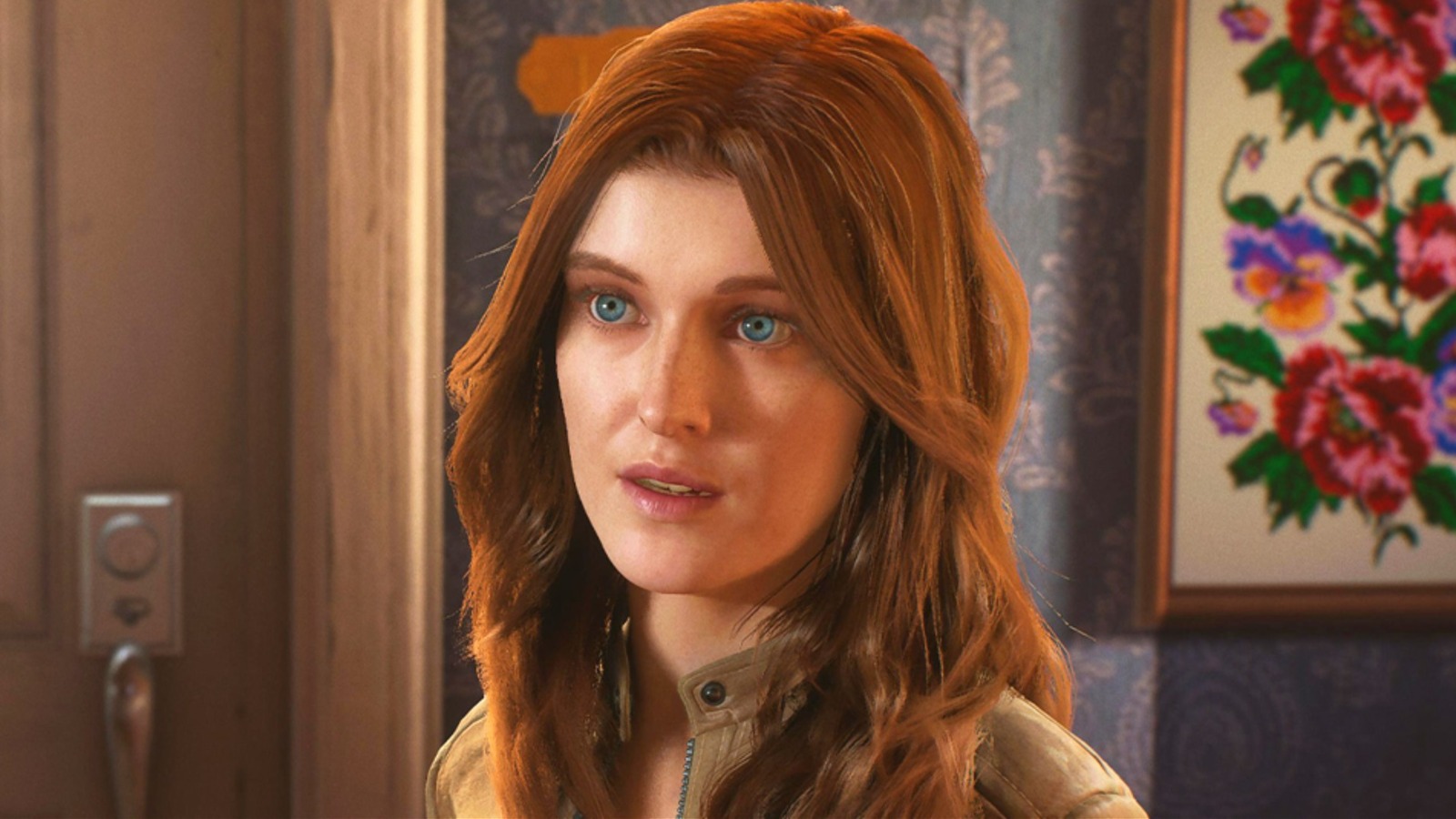
You know the hair. That bright, comic-book red. Whether she’s hanging upside down in the rain or standing in a white wedding dress watching a superhero swing away, Mary Jane Watson is basically the heartbeat of the Spider-Man mythos. But if you ask three different people who played Mary Jane in Spider-Man, you’re going to get three very different, very passionate answers.
It’s complicated.
Between the Raimi trilogy, the "Amazing" reboots, and the Marvel Cinematic Universe (MCU), the role has shifted, evolved, and—in one famous case—was completely cut from the final film. We aren't just talking about a love interest. We’re talking about an actress who had to ground a guy who fights green goblins on gliders.
Kirsten Dunst: The Blueprint
Kirsten Dunst didn't just play MJ. For an entire generation of moviegoers, she was MJ. When Sam Raimi’s Spider-Man dropped in 2002, the superhero genre was still finding its legs. Dunst brought a certain "girl next door" vulnerability mixed with a very real, very messy sense of ambition.
She wasn't a perfect character. Honestly? That's why it worked. In the first film, she’s the popular girl with a hidden, painful home life. By the second, she’s a struggling actress. By the third, things get even rockier.
Think about that alleyway kiss. It’s arguably the most famous kiss in cinematic history. Dunst had to film that while it was pouring rain, with Tobey Maguire hanging upside down and water rushing up his nose. It looked magical on screen, but the reality was a soggy, cold mess. That’s the magic of Dunst’s performance; she made the heightened drama of a comic book world feel like a tangible, high-stakes romance.
Critics like Roger Ebert noted at the time that Dunst and Maguire had a chemistry that felt "genuine," even when the plot got a bit campy. She appeared in all three of Raimi’s films:
- Spider-Man (2002)
- Spider-Man 2 (2004)
- Spider-Man 3 (2007)
Her MJ was defined by a specific type of yearning. She wanted to be seen for who she was, not just the face on a billboard or the girl saved by a masked man. It’s a performance that has aged interestingly, especially as fans debate whether MJ was "toxic" or just a realistic portrayal of a twenty-something trying to navigate life in NYC while her boyfriend is constantly late because he’s fighting a literal Octopus.
The Shailene Woodley Mystery
Here is a bit of trivia that usually wins pub quizzes: Shailene Woodley was technically Mary Jane Watson.
Sort of.
During the production of The Amazing Spider-Man 2 (2014) starring Andrew Garfield, Woodley was cast as MJ. She actually went to set. She filmed scenes. There are even paparazzi photos of her on the back of a motorcycle and hanging out at a cafe with Garfield’s Peter Parker.
Then, she vanished.
Director Marc Webb decided to cut her entirely from the film. The reasoning was actually pretty sound from a storytelling perspective: the movie was already bloated with villains, and the relationship between Peter and Gwen Stacy (played by Emma Stone) was the emotional core. Webb felt that introducing MJ would distract from Gwen’s tragic arc.
Woodley has been cool about it in interviews over the years, basically saying she understood the creative choice. But it leaves a massive "what if" in the franchise. Her version was supposed to be a bit more "rough around the edges," a biker-chick vibe that would have been a stark departure from Dunst’s more theatrical take.
Zendaya and the "MJ" Reimagining
Then came the MCU. When Zendaya was cast in Spider-Man: Homecoming (2017), her character was shrouded in secrecy. She was just "Michelle." She was sarcastic, observant, and stayed on the periphery of Peter’s life.
Then came the end of the movie.
"My friends call me MJ."
That line launched a thousand Reddit threads. Some purists were annoyed because her name wasn't Mary Jane Watson—it was Michelle Jones (later revealed as Michelle Jones-Watson). But Zendaya’s version became a massive hit because she reflected a modern sensibility. She wasn't a damsel. She didn't need saving in the traditional sense. She was the smartest person in the room.
Zendaya’s MJ is defined by her dry wit and her fierce loyalty. In Spider-Man: Far From Home and the massive Spider-Man: No Way Home, we see her evolve from a cynical loner to Peter’s anchor. Her performance is incredibly subtle. Watch her eyes in the final scenes of No Way Home—the way she looks at Peter when she doesn't know who he is anymore is gut-wrenching.
She didn't need the bright red hair to be MJ. She captured the spirit of the character: the one person who truly knows Peter Parker behind the mask.
Voice Actresses: The Mary Janes You Didn't "See"
If we’re being thorough about who played Mary Jane in Spider-Man, we have to talk about the performances that didn't happen in front of a camera.
For many, the definitive MJ isn't in a movie at all. It’s Sara Ballantine from the 1990s Spider-Man: The Animated Series. That show ran for five seasons and tackled some of the most iconic MJ storylines, including her "disappearing" into another dimension (it was a weird show, but we loved it).
Then there’s the gaming world. Laura Bailey voiced MJ in the massive PlayStation hits Marvel's Spider-Man and Spider-Man 2. In these games, MJ isn't an actress; she’s an investigative journalist for the Daily Bugle. It’s a role that actually lets players step into her shoes during stealth missions. Bailey brings a level of grit and professional capability to the character that feels like a natural evolution for 2024 and beyond.
Why the Casting Always Sparks Debate
Why do people care so much?
It’s because Mary Jane represents the "normal" life Peter Parker can never quite have. When casting directors look for an actress, they aren't just looking for someone who looks good in a red wig. They’re looking for someone who can balance the "Tiger, you hit the jackpot" confidence with the reality of being in love with a guy who might not come home for dinner because he’s pinned under a building.
Dunst brought the romance.
Zendaya brought the intellect.
Bailey brought the agency.
Every era gets the MJ it needs. In the early 2000s, we wanted the cinematic grandiosity of a rain-soaked kiss. By the late 2010s, we wanted a partner who was an equal, someone who could help solve the multiverse-ending problems.
The Future of Mary Jane
As we look toward the next Spider-Man trilogy in the MCU, the question of who will play Mary Jane remains a bit of a mystery. Zendaya is still very much in the picture, but the "spell" at the end of No Way Home has reset the board.
There are always rumors. Will they introduce a more comic-accurate Mary Jane Watson to compete with Michelle Jones? Unlikely. Marvel knows they have gold with Zendaya. However, the Multiverse has proven that multiple versions of these characters can exist simultaneously.
If you're looking to catch up on these performances, here is the best way to track the evolution of the character through the years:
- The Sam Raimi Trilogy (2002–2007): Watch for the classic romantic chemistry. This is the "standard" version most people think of.
- The 90s Animated Series: If you can find it on Disney+, this gives the best "comic book" feel for her personality.
- The MCU "Home" Trilogy: This is where the character is modernized for a new generation.
- Insomniac’s Spider-Man Games: This is the version to look at if you want to see MJ as a proactive hero in her own right.
Ultimately, the role of Mary Jane is a mantle. It changes. It adapts. But whether it’s the red hair or the "Tiger" nickname, the character remains the essential soul of the Spider-Man story.
To really understand the impact of these portrayals, your best bet is to do a back-to-back viewing of 2002's Spider-Man and 2021's No Way Home. You’ll see two vastly different actresses playing a character with the same job: keeping Peter Parker human.
Go watch the 2002 film first. Pay attention to how the camera treats Dunst—it’s very much a "spectacle" approach. Then jump to No Way Home. Notice how Zendaya is integrated into the action and the "guy in the chair" dynamic. It’s a masterclass in how Hollywood’s view of female leads has shifted over two decades.
Actionable Insight: If you're a collector or a fan of the lore, track down The Amazing Spider-Man issues #42 and #43. These are the classic "face it, Tiger" debut issues. Comparing the original 1960s source material to Dunst and Zendaya reveals exactly how much creative liberty—and respect—each actress brought to the silver screen.