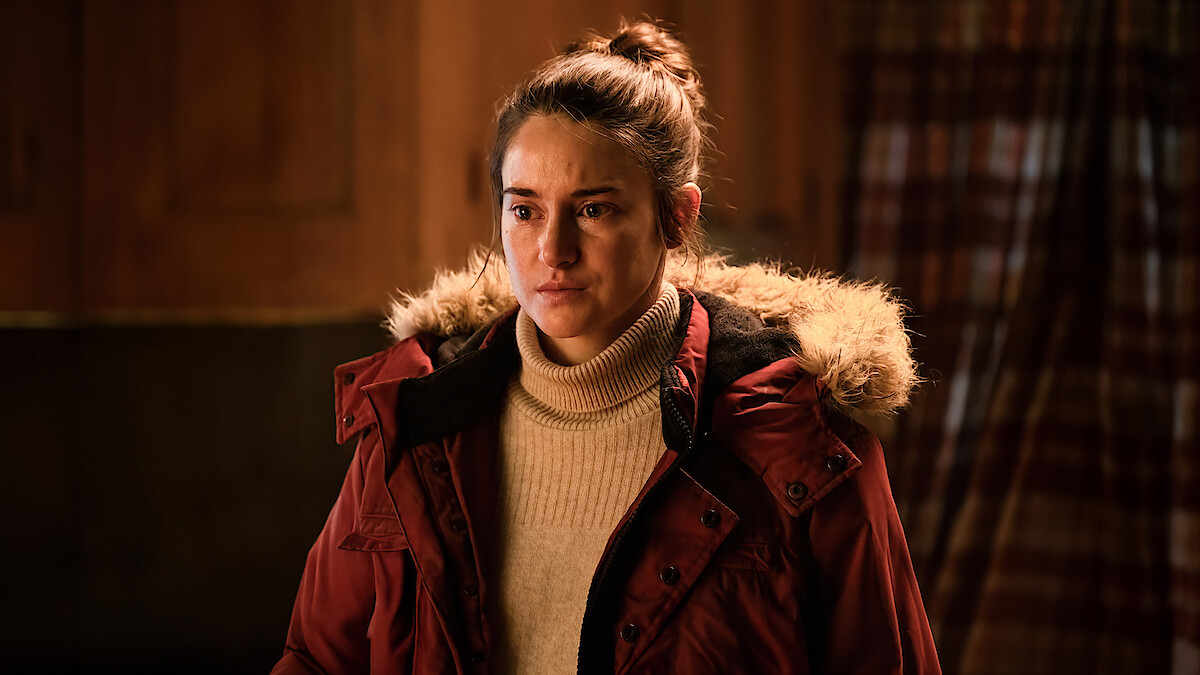
Damian Szifron’s 2023 police procedural didn't exactly reinvent the wheel, but it sure spun it with a certain grim, heavy-handed elegance. It’s a movie that lives or dies on its atmosphere. If you've spent any time scouring streaming platforms lately, you’ve probably seen the thumbnail: a gritty Shailene Woodley looking cold and tired. That's basically the vibe. But when people look up the cast of To Catch a Killer, they aren’t just looking for a list of names they could find on IMDb. They’re looking for why these specific actors—some of whom are massive stars and others who are character actors you’ve definitely seen in "that one thing"—were chosen to anchor such a bleak story about a mass sniper in Baltimore.
The film follows Eleanor Falco, a beat cop with a messy past, who gets recruited by the FBI because she thinks like the killer. It's a trope. We’ve seen it in Silence of the Lambs and Mindhunter. Yet, the chemistry between the leads keeps it from feeling like a total retread.
The Core Duo: Woodley and Mendelsohn
Shailene Woodley plays Eleanor. Honestly, it’s a role that requires her to be vibrating at a frequency of "barely holding it together" for two hours. Woodley also produced the film, which explains why she seems so deeply invested in the character's internal damage. She isn't playing a super-cop. Eleanor is someone who has been rejected by the FBI for failing her psych evaluations. She has self-harm scars. She’s lonely. Woodley plays this with a very quiet, internal intensity that makes you forget she was the face of the Divergent series.
Then you have Ben Mendelsohn as Geoffrey Lammark.
If you know Mendelsohn, you know he’s the king of the "complicated professional." Whether he’s a villain in Star Wars or a tired detective in The Outsider, he has this way of looking like he’s the only person in the room who actually knows what’s going on, even if it’s killing him. In the cast of To Catch a Killer, he is the anchor. Lammark is the FBI’s chief investigator, and his relationship with Eleanor is more like a weary mentorship than a typical boss-subordinate dynamic. He sees her trauma not as a liability, but as a lens. He’s cynical, gay, married to a man who clearly worries about him, and constantly fighting the bureaucratic nonsense of the Baltimore PD. Mendelsohn brings a rhythm to the dialogue that feels lived-in. He mumbles. He snaps. He’s brilliant.
Jovan Adepo and the Supporting Weight
Jovan Adepo plays Mackenzie. You might recognize him from Babylon or his incredible turn in Watchmen. In this film, he’s the third point in the primary triangle. While Eleanor is the "gut instinct" and Lammark is the "strategy," Mackenzie is the "procedure." He’s a solid, capable federal agent who doesn't necessarily have the demons the other two possess. This is a thankless role in many scripts, but Adepo gives it enough weight that you care when he’s on screen. He represents the competent side of law enforcement that is constantly being hamstrung by politics.
The movie spends a lot of time on the friction between these three and the city's power players.
- Ralph Ineson appears as Dean Possey. If you’ve seen The Witch, you know that voice. It’s a deep, gravelly rumble that could shake a building. Ineson is a master of being menacing without saying much.
- Rosemary Dunsmore plays Mrs. Possey.
- Michael Cram shows up as Spencer.
The casting of the "villain" or the antagonist force is where the movie gets interesting. Without spoiling the specific identity of the shooter too early for those who haven't seen it, the film makes a very deliberate choice to cast someone who looks... normal. Unremarkable. The cast of To Catch a Killer succeeds because it doesn't lean into the "movie monster" aesthetic for its killer. It leans into the tragedy of a person who has been chewed up and spat out by society.
Why the Baltimore Setting Matters for This Cast
The movie was actually filmed in Montreal, which is a classic Hollywood trick, but it’s meant to be Baltimore. The cast has to sell that gritty, East Coast, "everything is slightly broken" feel.
Baltimore is a character in itself.
It’s a city with a lot of history, a lot of pain, and a lot of corruption. When you watch the scenes involving the police commissioners and the mayor’s office, the actors—like José Zúñiga as Commissioner Duncan—have to play a specific type of fatigue. They aren't "evil." They're just bureaucrats who are more worried about the city's image and the upcoming parade than they are about the actual mechanics of a manhunt. Zúñiga is great at this. He’s a guy who has clearly spent thirty years climbing a ladder and doesn't want Shailene Woodley’s "hunches" to knock him off of it.
The Performance Style: Why It Ranks High for Fans
People keep coming back to this movie on streaming because it feels "adult." There are no quips. There’s no post-modern irony. It’s a straight-faced thriller.
The actors were clearly told to keep it grounded. Woodley’s performance is particularly devoid of vanity. She looks pale, her hair is often a mess, and she’s frequently bundled in oversized coats. It's a physical performance. She’s trying to disappear into the environment.
Compare this to Mendelsohn. He’s often stationary. He sits in chairs and directs traffic. He uses his voice as a tool. The contrast between her kinetic, nervous energy and his stillness is what makes the middle hour of the film work. Even when the plot slows down to discuss ballistics or trash collection—yes, there is a whole sequence about how trash is processed—the actors keep the stakes high.
Noteworthy Minor Roles
Often, in these types of films, the "victims" are just faces on a screen. Szifron spends a little more time showing the aftermath. The actors playing the families and the bystanders in the opening New Year's Eve massacre have to do a lot of heavy lifting with very little screentime.
Then there’s the character of the shooter’s father, played briefly but effectively. These small roles fill out the world. They make the Baltimore of the film feel populated by people with actual lives, rather than just NPCs waiting to be shot.
Technical Nuance and Director's Vision
Damian Szifron previously directed Wild Tales, which was a brilliant, darkly comedic anthology. You can see some of that darkness here, though the comedy is almost entirely drained out. He uses the cast of To Catch a Killer to explore the idea of "the system" vs. "the individual."
The cinematography by Javier Julia complements the actors by using very wide shots that make them look small against the city, and very tight close-ups that highlight every flinch. When Eleanor is talking about her own history of self-harm, the camera doesn't blink. Woodley has to carry that moment entirely with her eyes. It’s a risky scene that could have felt manipulative, but she makes it feel like a confession.
Common Misconceptions About the Movie
Some critics felt the movie was a bit too "Edgar Allan Poe" in its gloom. They aren't entirely wrong. But to say the acting is "one-note" misses the point.
- "Shailene Woodley is too young for the role." She was about 30 during filming. That's actually the perfect age for a beat cop who is staring down the barrel of a dead-end career because she can't get out of her own way.
- "Ben Mendelsohn is just playing himself." If "himself" means a highly competent, deeply tired man with a hidden well of empathy, then sure. But the nuance he brings to his character’s home life—shown in brief, domestic glimpses—adds layers you don't usually get in a generic thriller.
- "The ending is unrealistic." The ending is a choice. It’s a thematic conclusion rather than a strictly "realistic" one. The actors, particularly the one playing the killer toward the end, have to sell a very specific philosophy.
How to Watch and What to Look For
If you’re planning a rewatch or seeing it for the first time because you’re interested in the cast of To Catch a Killer, pay attention to the background.
Look at how the other cops treat Eleanor.
Look at the way Lammark handles the press conferences.
The movie is a masterclass in "character through action." There aren't many long monologues explaining who these people are. You find out who they are by how they react when a sniper starts taking out people from a high-rise.
Actionable Insights for Film Buffs
If you enjoyed the performances in this film, there are a few things you should do to deepen your appreciation for this style of "broken detective" cinema:
- Check out Shailene Woodley in Big Little Lies. It’s a completely different vibe, but it shows her range in playing women who are harboring secrets.
- Watch Ben Mendelsohn in Animal Kingdom (the 2010 film). It is arguably his best work and shows a much more terrifying side of his acting capability.
- Look into Jovan Adepo’s work in Fences. Standing toe-to-toe with Denzel Washington is no small feat, and he nails it.
- Research the filming locations. Comparing how they turned "French-speaking Montreal" into "Gritty Baltimore" is a fun exercise in production design.
The cast of To Catch a Killer managed to take a script that could have been a standard "straight-to-DVD" procedural and elevated it into something that feels like a heavy, 1970s-style character study. It’s not a fun watch, but it is an effective one.
To get the most out of your viewing experience, try to watch it in a dark room without distractions. The sound design—specifically the way the gunshots are mixed—is incredibly jarring and is meant to be felt as much as heard. The actors’ performances are designed to exist within that oppressive auditory space. Take note of the silence. In many of the best scenes, no one is talking at all. They are just observing, reacting, and trying to survive a city that seems to want them to fail.