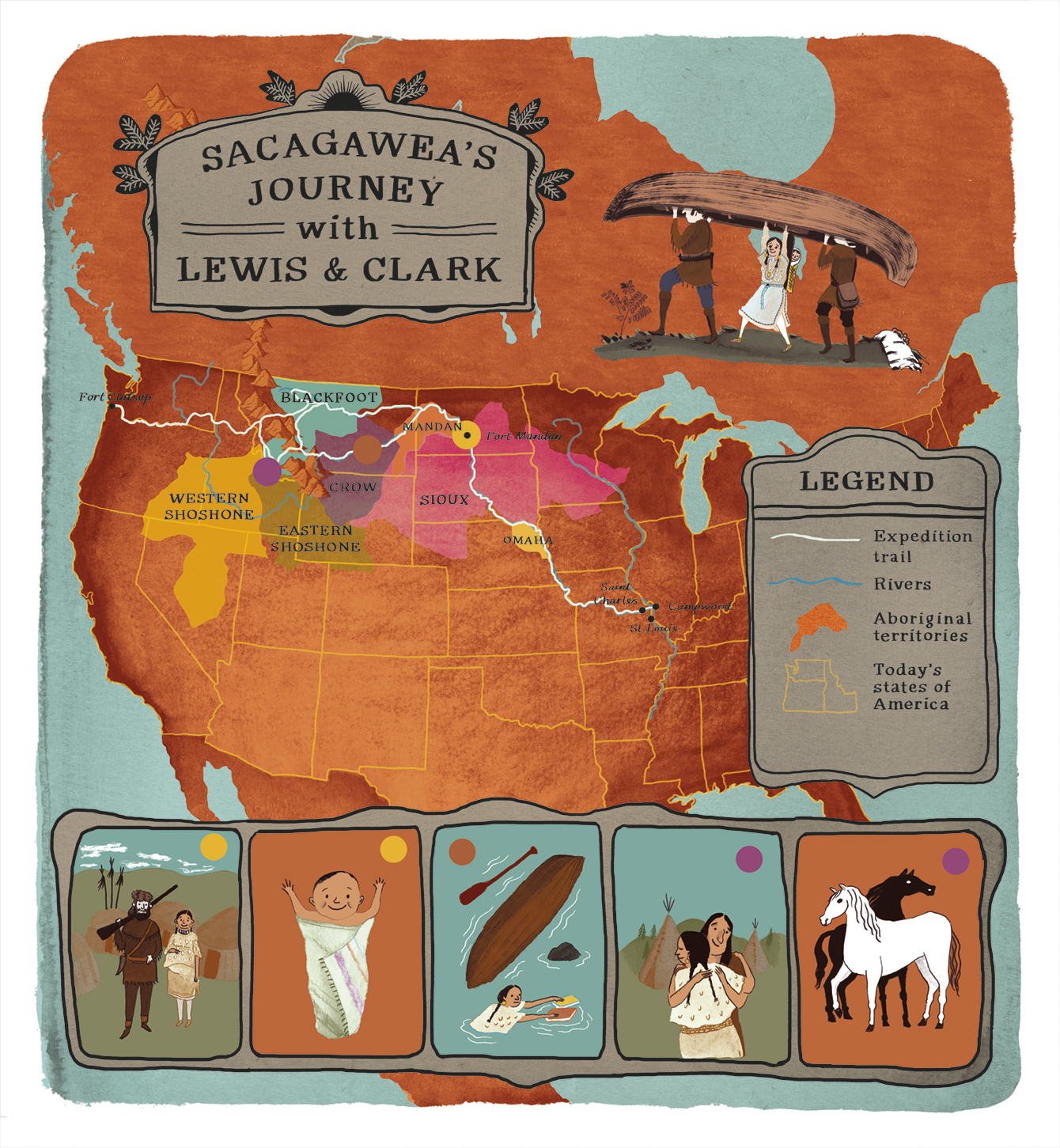
When we think about the Lewis and Clark Expedition, the image that usually pops into our heads is that of a stoic young Shoshone woman with a baby on her back, guiding a bunch of weary explorers through the wilderness. It’s a powerful image. But if you start digging into the actual journals of the Corps of Discovery, you realize the family dynamic was a lot more complicated—and way less romantic—than the statues make it look. So, who did Sacagawea marry? The answer is Toussaint Charbonneau.
He wasn't some dashing explorer. He was a French-Canadian fur trader who, honestly, has a pretty rough reputation in the history books. By the time he met Sacagawea around 1804, Charbonneau was already living among the Hidatsa people in what we now call North Dakota. He didn't meet her at a social dance or through a mutual friend. He essentially "acquired" her.
How the Marriage Actually Happened
Most people assume there was a wedding. There wasn't. At least, not in the way we think of them today. Sacagawea had been captured by a Hidatsa raiding party years earlier, taken far from her Shoshone home in the Rocky Mountains. Charbonneau either won her in a gambling game or purchased her from the Hidatsa. It’s a grim reality that clashes with the "Disney-fied" version of the story we often get in elementary school.
She was one of his two wives. Both were Shoshone.
When Meriwether Lewis and William Clark rolled into Fort Mandan in the winter of 1804, they weren't looking for a guide; they were looking for an interpreter. They hired Charbonneau because he spoke Hidatsa. But the real "get" was his wife. They realized she spoke Shoshone, which was the key to getting horses when they eventually hit the mountains. So, the "marriage" became a core component of American expansion logic.
Was it a "Good" Marriage?
Historians like Stephen Ambrose have spent a lot of time dissecting Charbonneau’s character. Let’s just say he wasn't exactly husband of the year. Clark once had to chew him out for hitting Sacagawea. In his journals, Clark noted that he had to intervene during a dispute where Charbonneau struck her. It gives you a glimpse into the power dynamic.
She was a teenager. He was likely in his 40s.
Despite this, they functioned as a unit for the duration of the trip. She gave birth to their son, Jean Baptiste Charbonneau—nicknamed "Pomp" by Clark—just before the expedition headed west. Imagine trekking across the continent, digging for edible roots, navigating rapids, and negotiating with tribal leaders, all while caring for a newborn and dealing with a husband who, by many accounts, was prone to panic in a crisis.
The Mystery of the Later Years
After the expedition ended in 1806, the couple’s life didn't just fade into a happy sunset. They actually stayed with Clark for a bit in St. Louis. Clark grew incredibly fond of "Pomp" and even offered to educate the boy, essentially becoming his patron. Charbonneau tried his hand at farming there, but he hated it. He was a man of the woods, not the plow.
He took Sacagawea back up the Missouri River to work for the Missouri Fur Company.
This is where the history gets a bit murky. Most scholars, including those at the National Park Service, believe Sacagawea died in 1812 at Fort Manuel of "putrid fever." A clerk at the fort, John Luttig, recorded the death of the "wife of Charbonneau, a Snake [Shoshone] squaw." However, if you go to the Wind River Reservation in Wyoming, there’s a long-standing oral tradition that she actually left Charbonneau, lived among the Comanches for a while, and eventually returned to her people, living until 1884.
Which one is true?
Honestly, the 1812 record is the most widely accepted by academic historians because of the legal documents that followed. After 1812, Clark legally became the guardian of Jean Baptiste and a daughter named Lisette. You don't usually appoint a guardian if the mother is still in the picture.
Charbonneau’s Long Life
While Sacagawea’s story ends (possibly) in her 20s, Charbonneau lived forever. He kept working as an interpreter and guide well into his 80s. He was a bit of a fixture on the frontier. Prince Maximilian of Wied-Neuwied met him in the 1830s and described him as a man who still had a lot of energy but a questionable reputation.
He lived through the transition of the West from a vast, indigenous-controlled territory to a colonized frontier. He saw the fur trade peak and then crumble. But through all those decades, his primary claim to fame remained the fact that he was the man who married the woman who saved the expedition.
Why This History Matters Right Now
Understanding who did Sacagawea marry isn't just about trivia. It changes how we view her agency. If she was married to a man who was often incompetent or abusive, her actions on the trail—saving the expedition's journals when their boat capsized, or recognizing landmarks in her homeland—become even more heroic. She wasn't just a passenger; she was a survivor.
- The Language Barrier: Charbonneau spoke French and Hidatsa. Sacagawea spoke Hidatsa and Shoshone. For the Americans to talk to the Shoshone, the chain went: English to French (Charbonneau), French to Hidatsa (Charbonneau), Hidatsa to Shoshone (Sacagawea).
- The Financial Side: Charbonneau was paid $500.33 for his work on the expedition. Sacagawea received nothing.
- The Legacy of Pomp: Their son became one of the most well-traveled men of his era, spending years in Europe and speaking multiple languages.
Actionable Next Steps for History Buffs
If you want to move beyond the surface-level story of Sacagawea and her husband, here is how you can actually engage with the history:
- Read the Original Journals: Don't take a textbook's word for it. Go to the University of Nebraska-Lincoln’s digital project and search for "Charbono" (the way they spelled it). Read the entries from May 1805 to see how she saved the expedition's supplies.
- Visit the Sites: If you’re ever in North Dakota, head to the Knife River Indian Villages National Historic Site. This is where they lived when they met Lewis and Clark. It gives you a physical sense of the earth-lodge culture she was part of.
- Explore the Oral Traditions: Look into the work of Dr. Grace Raymond Hebard. While her "long-life" theory is controversial among modern historians, her research at the Wind River Reservation preserves indigenous perspectives that the written journals often ignore.
- Examine the Guardianship Papers: Research the 1813 court records in St. Louis where William Clark signed for the guardianship of the Charbonneau children. It’s a sobering piece of paper that grounds the legends in hard, legal reality.
The marriage of Sacagawea and Toussaint Charbonneau wasn't a romance; it was a survival strategy in a world that was rapidly changing. By recognizing the man she married, we don't diminish her—we actually see just how much she had to overcome to become the icon she is today.