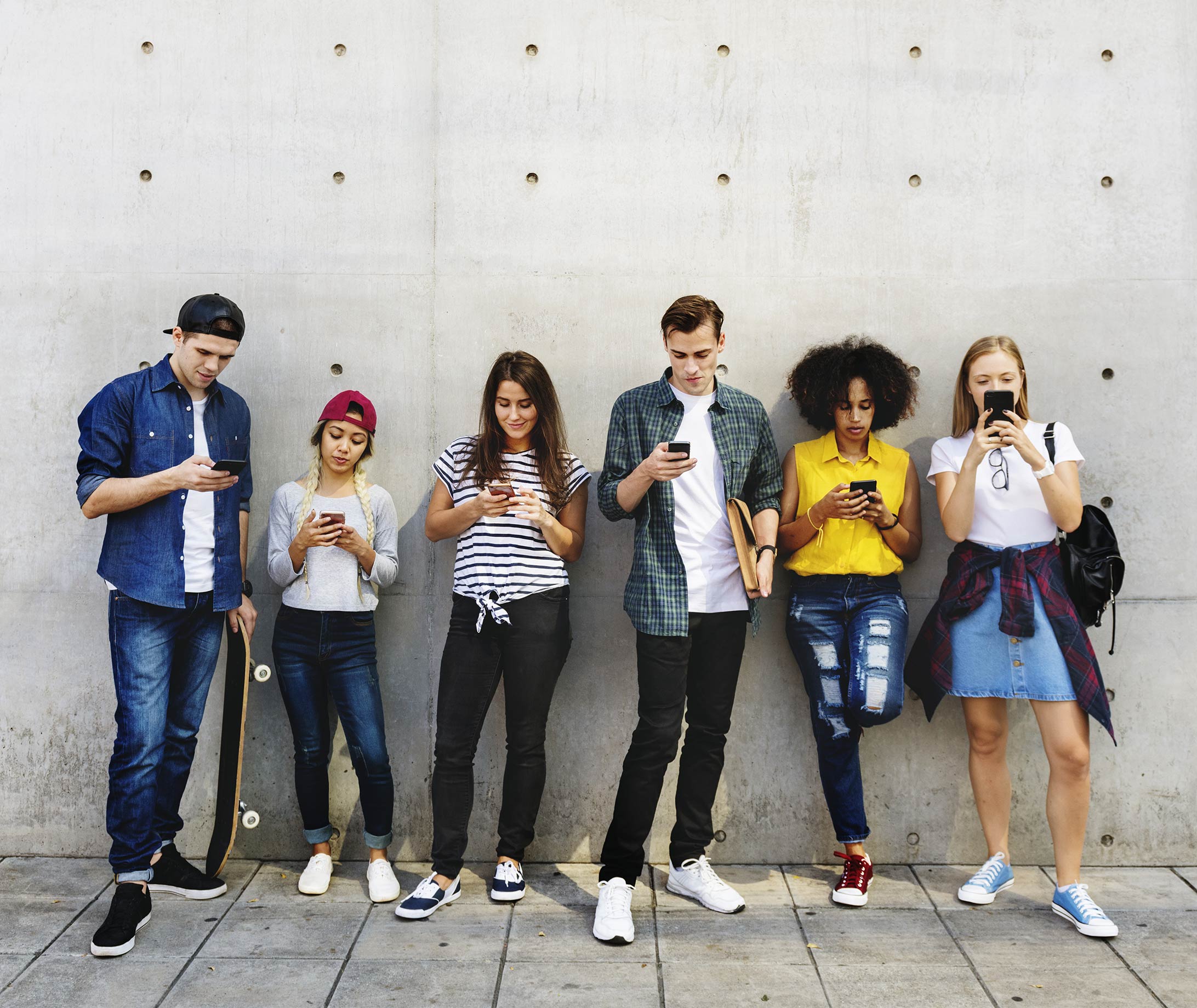
You’ve probably seen the memes. Middle-aged managers complaining about "quiet quitting" or TikToks of twenty-somethings explaining why they won’t use a thumbs-up emoji because it feels aggressive. It’s easy to dismiss them as just the next batch of kids making life difficult for everyone else. But honestly, if you want to understand who are Gen Z people, you have to look past the stereotypes of broccoli haircuts and slang like "rizz" or "skibidi."
Gen Z—roughly defined by Pew Research Center as those born between 1997 and 2012—is the first generation to never know a world without the internet in their pocket. They aren't just "digital natives." They are digital dependents. This isn't a dig; it’s a biological reality of how their brains wired themselves during formative years. They grew up with the Great Recession as a backdrop and a global pandemic as a graduation present. That does things to a person’s psyche.
The "True Digital" Identity
When we talk about who are Gen Z people, we’re talking about a group that views the barrier between "online" and "offline" as totally porous. For a Boomer, you "go on" the internet. For a Zoomer, you just are on it. It’s like oxygen.
This has created a weirdly specific type of hyper-awareness. They see everything. A kid in a small town in Ohio can watch a revolution happening in real-time in the Middle East on their FYP (For You Page). They see the wealth of influencers and the simultaneous collapse of the housing market. It leads to a high level of cynicism. According to a 2023 report by Deloitte, nearly half of Gen Zs feel stressed or anxious all or most of the time. You would be too if your childhood was punctuated by climate change warnings and school shooter drills.
They are incredibly pragmatic. Unlike the Millennials who were told they could be anything and then hit a wall of student debt, Gen Z entered the fray with their eyes wide open. They don't want the "dream job" as much as they want stability and a paycheck that actually covers rent.
Why the Workplace is Shaking
Business owners are losing their minds trying to figure out how to manage these people. Honestly? It's not that complicated. Gen Z just refuses to participate in the "hustle culture" that burned out their parents. They saw their parents get laid off after 20 years of loyalty and decided that loyalty is a scam.
If you’re wondering who are Gen Z people in a professional context, they are the ones asking for boundaries. They want a "work-to-live" balance, not the other way around. This isn't laziness. It’s a survival mechanism. They value transparency. If a company claims to be "eco-friendly" but spends millions on lobbying against climate bills, Gen Z will find out within five minutes of scrolling through Reddit or TikTok. And they will call it out.
The Loneliness Paradox and Mental Health
Despite being the most "connected" generation in human history, Gen Z is statistically the loneliest. Vivek Murthy, the U.S. Surgeon General, has been ringing the alarm bells on this for years. When your primary mode of communication is a screen, you lose the subtle cues of human interaction. You lose the "third places"—the malls, the parks, the diners—that have been replaced by Discord servers and group chats.
They talk about mental health constantly. It's not a taboo. To a Gen Z person, saying "I’m having a panic attack" is as casual as saying "I’m hungry." This openness is a double-edged sword. On one hand, they are getting help earlier. On the other, they risk pathologizing every normal human emotion.
They also care deeply about authenticity, or at least the appearance of it. Think about the shift from the perfectly curated, high-saturation Instagram feeds of 2014 to the "photo dumps" and blurry, "ugly" aesthetic of 2024. They are tired of the fake. They want something that feels real, even if that "realness" is carefully performed.
Diversity is the Default
For older generations, "diversity and inclusion" were initiatives. For Gen Z, it’s just the baseline. This is the most racially and ethnically diverse generation in U.S. history. One in four Gen Zers identify as Hispanic, according to Pew.
Their view of gender and sexuality is also incredibly fluid. A Gallup poll from 2024 showed that nearly 30% of Gen Z adults identify as something other than strictly heterosexual. This isn't a trend to them; it's an evolution of how we understand human identity. If you're trying to market to them or hire them, and you don't understand that inclusivity is a non-negotiable requirement, you've already lost them.
Money, Consumption, and the "De-influencing" Trend
How do who are Gen Z people spend their money? They don't buy "stuff" the same way. They buy into brands that align with their values. Or, increasingly, they aren't buying at all. The "de-influencing" trend—where creators tell you what not to buy—is huge. They are skeptical of corporate greed.
But they are also humans. They still shop at fast-fashion giants like Shein while simultaneously posting about the environment. It's a contradiction. They know it’s bad, but they are also broke. Navigating that cognitive dissonance is a core part of the Gen Z experience.
They are also incredibly entrepreneurial. Side hustles aren't just for extra beer money; they are a hedge against an unstable economy. Whether it's selling vintage clothes on Depop, freelancing on Upwork, or trying to make it as a content creator, they want multiple streams of income. They don't trust a single employer to take care of them.
Real Talk: Slang and Communication
If you want to feel old, look up a Gen Z slang dictionary. But the words aren't just nonsense. They are a way of signaling "in-group" status.
- Cap/No Cap: Lying or not lying.
- Delulu: Delusional (often used in a self-deprecating way).
- Bet: Okay, or a challenge accepted.
- Ate: Did something really well.
They use lowercase letters in texts because uppercase feels "loud" or "aggressive." They use the skull emoji to mean they are laughing (dying of laughter). It's a visual language that moves faster than traditional linguistics can keep up with.
The Political Power Shift
Gen Z is starting to vote. And they aren't voting like their parents. They are leaning heavily into progressive issues, particularly climate change, reproductive rights, and gun control. In the U.S., they were a deciding factor in several recent elections.
They don't wait for permission to be heard. They use social media as a megaphone. Look at Greta Thunberg or the Parkland students. These weren't kids waiting for an adult to hand them a microphone. They built their own.
However, there is a growing divide. While Gen Z women are becoming increasingly progressive, some data suggests Gen Z men are tilting slightly more conservative, or at least feeling alienated by modern progressive discourse. This "gender gap" is something sociologists are watching closely. It’s not a monolith.
Pragmatic Activism
Unlike the idealism of the 1960s, Gen Z activism is often very practical. They want policy changes. They want divestment. They want specific, measurable outcomes. They are less interested in "awareness" (they are already aware of everything) and more interested in "accountability."
Actionable Insights for Connecting with Gen Z
If you are a parent, a boss, or just someone trying to understand who are Gen Z people, here is the reality:
- Drop the Fluff: They can smell a corporate script from a mile away. If you messed up, admit it. If the job is going to be hard, say so. Transparency is the only currency they value.
- Visual Over Text: If you’re trying to explain something, a 60-second video is better than a 6-page PDF. Their brains process visual information at an incredible speed.
- Prioritize Mental Health: This isn't a "perk" anymore; it's a requirement. Providing "wellness days" or actually encouraging people to log off at 5:00 PM will buy you more loyalty than a ping-pong table in the breakroom.
- Acknowledge Individualism: They don't want to be "Employee #402." They want to know how their specific skills and interests fit into the bigger picture.
- Use Digital Tools for Connection, Not Just Surveillance: Use platforms like Slack or Discord to foster actual community, not just to track who is at their desk.
Gen Z is a generation shaped by crisis, connected by fiber optics, and driven by a desperate need for something authentic in a world that feels increasingly simulated. They aren't trying to be difficult. They are trying to survive and thrive in a landscape that looks nothing like the one their parents grew up in. Understanding them requires letting go of how things "used to be" and looking at the world through a smartphone lens—cracked screen and all.