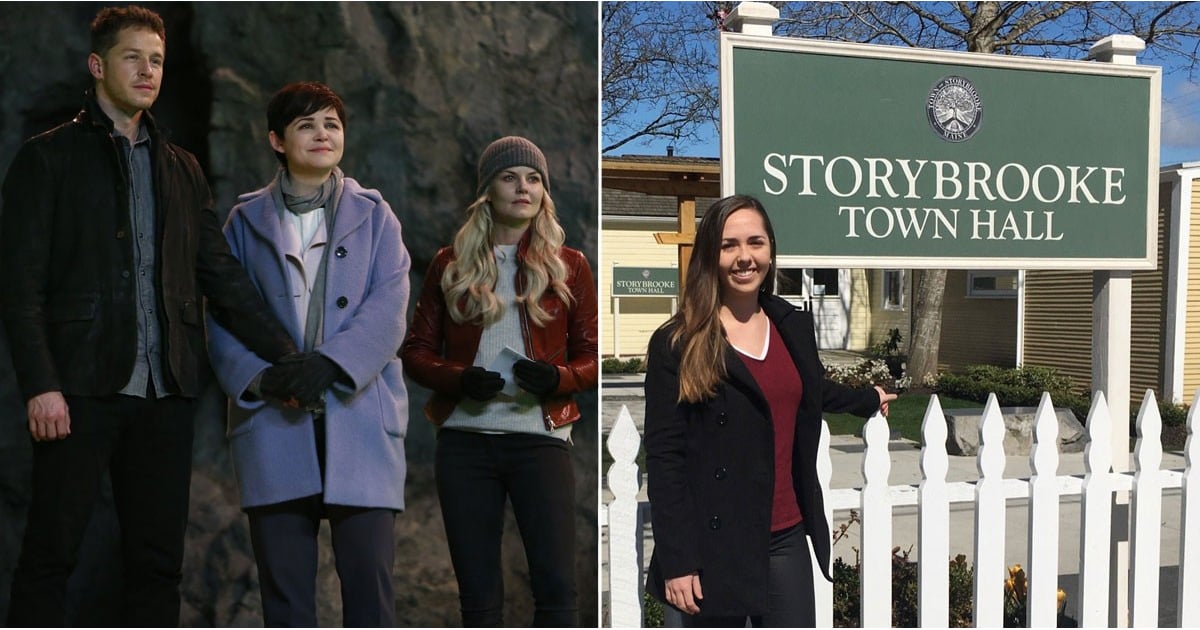
You know that feeling when you're watching a show and the setting feels so specific, so lived-in, that you’re convinced the town must actually exist? For fans of ABC’s hit fairy-tale drama, that place is Storybrooke. But if you’re looking for Maine on a map to find Granny’s Diner, you're going to be driving for a very long time. Where the TV show Once Upon a Time was filmed isn't actually in New England at all. It’s tucked away in the Pacific Northwest, specifically in a charming little fishing village called Steveston in Richmond, British Columbia.
It’s funny how television magic works.
The production team didn't just find a backdrop; they basically colonizers a small Canadian town for seven years. Walking down Moncton Street in Steveston feels like a fever dream for a "Oncer." You expect to see Regina’s black Mercedes-Benz pull up at any second or Mr. Gold to step out of his pawn shop with a cryptic warning.
The Real-World Storybrooke: Steveston Village
Steveston isn't some backlot at Disney Studios. It’s a historic salmon canning site that has its own grit and salt-air personality. When the location scouts were hunting for the perfect vibe, they needed something that felt isolated but cozy. Something timeless. Steveston fit the bill because it’s preserved a lot of its early 20th-century architecture.
During filming, the crew would descend on the town and perform a massive "skinning" of the storefronts. They didn't just put up a few signs. They literally changed the face of the street. The Steveston Coffee Co. became Storybrooke Coffee, and the local post office was frequently used as the exterior for the Storybrooke Free Public Library.
One of the most iconic spots is The Cannery Cafe, which served as the exterior for Granny’s Diner. Fans still flock there today. Honestly, the food is great, but don't expect Red to serve you in a waitress uniform. While the exteriors were all Steveston, the interior of Granny’s was actually a set built on a soundstage at Bridge Studios in Burnaby. This is a common trick—use the real world for the "wow" factor of a character walking through a door, then cut to a controlled studio environment for the actual dialogue.
Why British Columbia Was the Perfect Enchanted Forest
If you’re wondering where the TV show Once Upon a Time was filmed for those lush, foggy forest scenes, you have to look further into the BC wilderness. Most of the Enchanted Forest sequences weren't shot in a studio with green screens, though there was plenty of CGI for the massive castles.
The production made heavy use of Robert Burnaby Park and Central Park in Burnaby. These parks have that specific temperate rainforest look—massive Douglas firs, thick ferns, and a natural mist that settles in the morning. It gave the show that moody, ethereal aesthetic without needing a massive lighting budget.
If you remember the scenes where Snow White or Prince Charming are galloping through the woods, they were likely in Fort Langley Community Park or near the Seymour Conservation Reserve. The terrain is rugged. It’s damp. It’s quintessentially Canadian. Interestingly, the crew often had to deal with real-world weather issues that didn't always fit the "fairytale" vibe, like sudden torrential downpours that turned the Enchanted Forest into a muddy swamp.
The Architecture of Power: Regina and Gold’s Domain
Let's talk about the houses. Regina Mills, the Evil Queen herself, lived in a house that perfectly reflected her "Mayor" persona—stately, cold, and imposing. That house is a real residence located in the New Westminster area of Vancouver. It’s known as the Charles Murray Residence on 5th Avenue. It’s a beautiful Colonial Revival home, and while it looks massive on screen, it’s tucked away in a surprisingly normal residential neighborhood.
Then there’s Mr. Gold’s Pawn Shop. This is perhaps the most scrutinized location in the show's history. The exterior used for Gold's was a building on Moncton Street that actually housed an antique shop/gift gallery during the show's run. The production would swap out the window displays for all those magical Easter eggs we spent years pausing our DVRs to identify.
- The Clock Tower: This is one of the few things that wasn't "real." In Steveston, there is no massive clock tower looming over the street. The production built a small version of the base, and the rest was added digitally in post-production.
- The Town Hall: The exterior is actually the Steveston Museum and Post Office. It’s a tiny building compared to how "big" it feels on the show.
- The Rabbit Hole: This underground bar was filmed in various basement locations and sets, often utilizing the darker corners of the Vancouver wharf areas.
Season 7 and the Seattle Shift
Everything changed in the final season. The show underwent a soft reboot, moving the action from the quaint Storybrooke to the urban neighborhood of "Hyperion Heights." This required a total change in scenery.
Instead of the salty air of Steveston, the crew moved into the Mount Pleasant and Gastown areas of Vancouver. These neighborhoods provided the brick buildings, trendy cafes, and "big city" feel needed to simulate Seattle. It was a polarizing move for some fans, but it allowed the show to tap into a different side of British Columbia's versatility.
The Troll Bridge in Season 7 wasn't some mystical construction; it was the Gaoler’s Mews area in Gastown. This part of Vancouver is actually haunted, according to local legends, which fits the vibe of the show perfectly. The shift in location was a logistical choice as much as a creative one—it’s much easier to film in the city center than to keep commuting an entire crew out to a fishing village every day for years on end.
The Logistics of Magic
Filming a show like this is a nightmare for a city's traffic department. When people ask where the TV show Once Upon a Time was filmed, they usually don't think about the local residents of Steveston. For months at a time, their main street was blocked off. Local businesses were compensated for closures, but the influx of "Oncers" (the fans) was a double-edged sword.
On one hand, the tourism was a massive boost. On the other, it’s hard to run a quiet bakery when there are fifty people outside waiting to see Jennifer Morrison or Lana Parrilla. The cast was known for being incredibly gracious, often spending their breaks signing autographs for fans who had flown in from as far away as Brazil or Italy just to stand on a sidewalk in Canada.
Planning Your Own Storybrooke Tour
If you’re a die-hard fan, you can actually visit these spots. Most of them are within a 45-minute drive of downtown Vancouver.
Start in Steveston. Grab a coffee at the Steveston Coffee Co. (the "Storybrooke Coffee" signs are gone, but the vibe remains). Walk down to the Gulf of Georgia Cannery, which is a National Historic Site and worth a visit even if you don't care about Emma Swan.
Then, head over to New Westminster to see Regina’s house. Be respectful—it’s a private home, so don't go wandering onto the porch looking for a poison apple. Finally, hit the Burnaby parks. If you go on a slightly rainy, overcast Tuesday morning, the woods look exactly like the Enchanted Forest. It’s hauntingly beautiful.
Key Locations to Visit:
- Moncton Street (Steveston): The main drag of Storybrooke.
- The Cannery Cafe: The exterior of Granny's Diner.
- Garry Point Park: Used for many of the "shoreline" and lighthouse-adjacent scenes.
- Central Park, Burnaby: The primary "woods" location for fairytale quests.
- Fisherman’s Wharf: Where Captain Hook’s ship, the Jolly Roger, was often docked (though much of the ship work was done against a massive green screen in the Richmond shipyards).
The Legacy of the Location
There’s a reason why Once Upon a Time feels so grounded despite its wild premise. By choosing a real town like Steveston, the creators gave the show a soul. The weathered wood, the gray skies, and the actual history of the fishing village provided a weight that a Hollywood backlot just can't replicate.
Even though the show ended years ago, the "Storybrooke" identity is baked into Steveston's history now. You can still find "Storybrooke" posters in some shop windows, and the locals are usually happy to point you toward the exact spot where a character cast their last curse.
If you're planning a trip, check the local tourism boards for Richmond, BC. They often have maps specifically designed for fans of the show. It’s a surreal experience to see the "real" world through the lens of a fairytale, and honestly, it’s one of the few TV locations that actually lives up to the hype in person. Just don't expect the clock to start ticking the moment you arrive.
Actionable Next Steps for Fans
- Check the Weather: Vancouver is notoriously rainy. If you want those "Enchanted Forest" photos, visit between October and April. If you want the sunny, "Storybrooke Summer" look, July is your best bet.
- Public Transit: You don't necessarily need a car. The SkyTrain and local buses can get you to Steveston and New Westminster fairly easily from downtown Vancouver.
- Support Local: When visiting Steveston, make sure to buy your snacks and souvenirs from the local shops that hosted the crew for all those years. They're the ones who made the show possible.
- Download a Map: Use a dedicated fan-made filming location map (available on several "Once" fansites) to find the exact residential streets used for the characters' homes, as they are often miles apart from the "Main Street" sets.
Explore the streets, take the photos, but remember that while the show was about magic, the beauty of the British Columbia coast is very real.