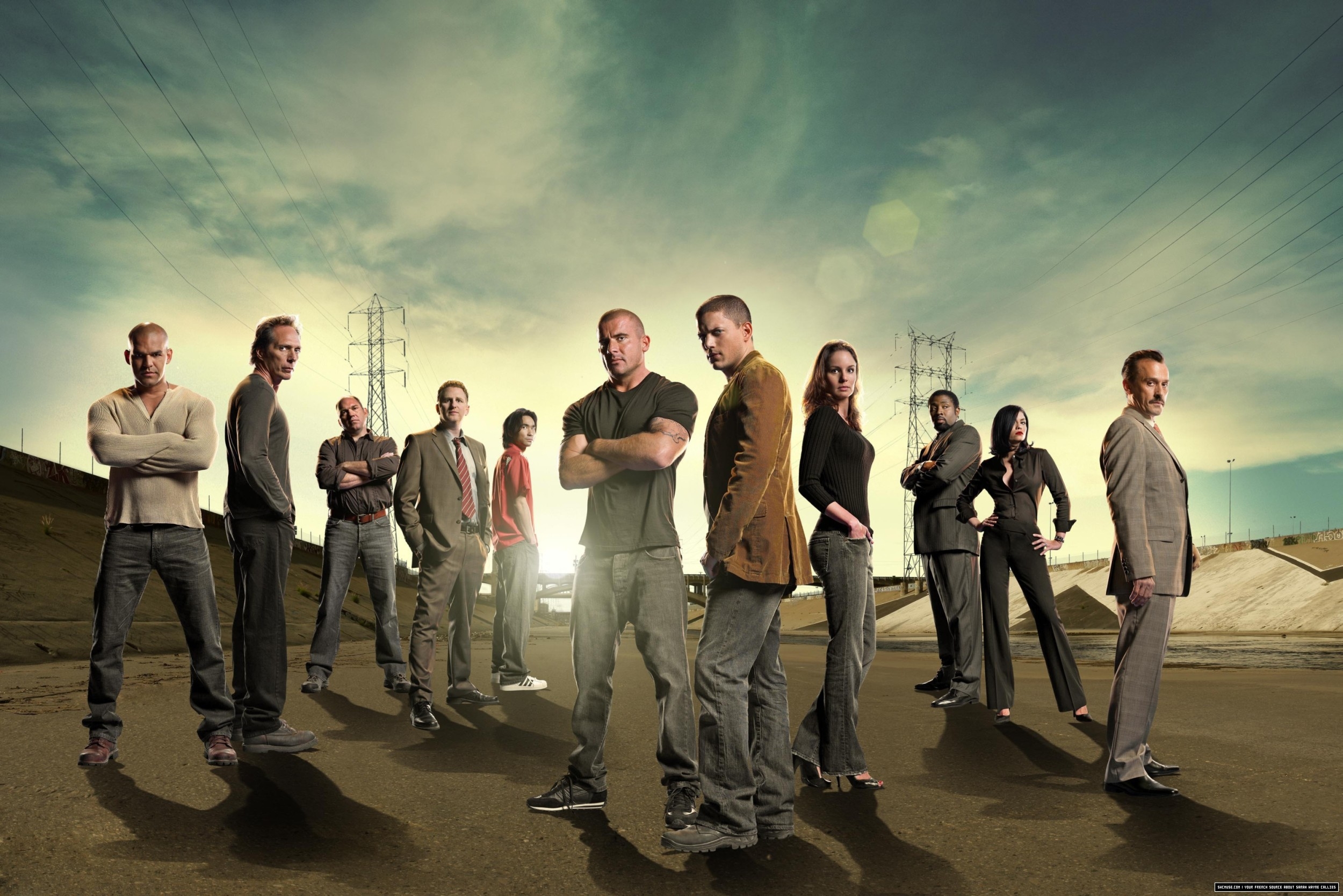
Fox didn't think it would work. In 2003, they actually turned down the pitch for a show about a genius structural engineer who tattoos a prison blueprint on his torso to break out his brother. They thought it was too niche. They were wrong. When Prison Break finally hit screens in 2005, it wasn't just the plot that hooked people; it was the specific, gritty chemistry of the actors in Prison Break. You had this weirdly perfect mix of veteran character actors and relative unknowns who somehow made a ridiculous premise feel like life or death.
Wentworth Miller and the Burden of Michael Scofield
Wentworth Miller wasn't the first choice for Michael Scofield. He actually cast just a week before production started. Think about that. The entire show rested on a guy they found at the eleventh hour. Miller brought this eerie, quiet intensity to Michael. He didn't scream; he whispered. That choice defined the show's DNA.
After the initial run ended in 2009, Miller’s career took some fascinating turns. He didn't just chase leading man roles in blockbusters. He wrote. Under the pseudonym Ted Foulke, he penned the screenplay for Stoker, a dark, psychological thriller starring Nicole Kidman. It was a move that surprised Hollywood. It proved he wasn't just a "pretty face with a tattoo." Miller later became a massive advocate for mental health and LGBTQ+ rights, famously coming out in 2013 in a letter protesting the Russian government's treatment of its gay citizens.
His reunion with Dominic Purcell in the CW’s "Arrowverse" as Captain Cold was a total 180. He was campy, loud, and clearly having the time of his life. It was a far cry from Fox River.
Dominic Purcell: More Than Just the Muscle
Dominic Purcell plays Lincoln Burrows with a specific kind of "bruised soul" energy. People often forget that Purcell is actually Australian. He spent years playing tough guys, but Lincoln was different because he was vulnerable. He was the "sink," the guy everything happened to.
Purcell and Miller have a real-life bond that is frankly rare in the industry. They’ve stayed close for two decades. When the 2017 revival happened, it was largely because the two of them were working together on The Flash and realized the fans were still obsessed. Purcell’s life hasn't been without drama, though. During the filming of the revival in Morocco, a set piece fell and broke his nose and skull. He posted photos from the hospital looking like he’d actually been in a prison riot. He’s tough. Honestly, probably tougher than Lincoln.
The Villains We Loved to Hate
You can't talk about the actors in Prison Break without mentioning Robert Knepper. His portrayal of Theodore "T-Bag" Bagwell is legendary. And terrifying. Knepper took a character that, on paper, should have been a one-dimensional monster and made him... human? In a gross, unsettling way?
- Knepper actually based T-Bag’s "lip-licking" habit on his own father’s old habit of doing it when he was concentrating.
- He fought to keep the character's Southern flair subtle rather than a caricature.
- Post-show, Knepper showed up in Twin Peaks: The Return and The Hunger Games, usually playing variants of the "unsettling guy."
Then there's William Fichtner. He joined in Season 2 as Alexander Mahone. Fichtner is one of those "that guy" actors—you know his face from everything but might forget his name. He brought a frantic, pill-popping energy to the show that shifted the stakes. He wasn't a villain; he was a mirror of Michael. Watching two geniuses chase each other across the country was arguably the peak of the series.
Sarah Wayne Callies and the "Fan Power" Phenomenon
The story of Sarah Tancredi is wild. Fans of the show remember the trauma of Season 3 when Sarah’s head was—allegedly—found in a box. It was a brutal way to write off a lead. But the backlash was so intense, so visceral, that the producers had to pull a massive "never mind" and bring her back for Season 4.
Sarah Wayne Callies has had one of the most successful post-show runs. She went straight from the chaos of Prison Break to the cultural juggernaut that was The Walking Dead. Playing Lori Grimes made her one of the few actors to have a lead role in two of the biggest genre shows of the 2000s and 2010s. She’s also moved into directing and podcasting, showing a level of career longevity that’s hard to pull off.
The Supporting Cast That Filled the Gaps
Amaury Nolasco (Fernando Sucre) was the heart of the show. Every drama needs a moral compass, even if that compass is currently robbing a liquor store to buy an engagement ring. Nolasco brought a warmth that balanced the coldness of Miller’s Scofield. Since the show, he’s popped up in Transformers and various procedurals, but he’ll always be Sucre to the fans.
Rockmond Dunbar as C-Note brought the perspective of a man just trying to get back to his family. It wasn't about the "conspiracy" for him; it was about his daughter. Dunbar’s performance was grounded in a way that made the more "conspiracy-heavy" later seasons feel real. He’s since had long stints on 9-1-1 and The Mentalist.
Why the Casting Worked (When It Shouldn't Have)
The show’s premise is, let’s be honest, kind of insane. But the actors in Prison Break grounded the high-concept nonsense. They treated the script like Shakespeare even when they were jumping off walls or out of airplanes.
Paul Adelstein’s Agent Paul Kellerman is a great example. He starts as a cold-blooded assassin and ends up as a Congressman. Only an actor with Adelstein’s specific "smarmy but likable" charm could have pulled off that redemption arc. He later went on to star in Private Practice, proving he could do "charming doctor" just as well as "government hitman."
Wade Williams and the Redemption of Brad Bellick
Brad Bellick started as the most hated man on television. He was the corrupt, overweight guard who bullied inmates. By the time he sacrificed himself in Season 4, people were actually crying. That is entirely due to Wade Williams. He played the pathetic nature of Bellick so well that you couldn't help but pity him. Williams is a classically trained theater actor, and it showed in how he handled Bellick's descent from power.
Practical Insights for Fans and Rewatchers
If you’re heading back into a rewatch or just discovering the show for the first time, keep these things in mind about the cast:
- Watch the backgrounds. Many of the "inmates" in Fox River were actual former inmates of Joliet Prison, where the show was filmed.
- The Tattoo Logic. Wentworth Miller had to sit for 4.5 hours every time the full tattoo was applied. It wasn't one big sticker; it was a series of decals. If he was wearing long sleeves, they usually didn't bother applying it at all.
- The Shift in Tone. Notice how the acting style changes from Season 1 (gritty realism) to Season 4 (action movie). The actors had to pivot from being "cons" to being "secret agents."
The legacy of these actors is that they took a "pulp" show and gave it soul. While some have stayed in the limelight and others have retreated to more private lives or theater work, the collective impact of that original Fox River crew remains a high-water mark for mid-2000s television. They weren't just playing roles; they were building a world that felt dangerous, even when we knew, deep down, the plot was getting a little bit ridiculous.
To truly appreciate the show, look past the twists. Look at the faces. Look at the way Peter Stormare (John Abruzzi) could command a room just by standing still. That's where the real magic happened.
For those looking to keep up with the cast today, many remain active on social media, particularly Dominic Purcell and Sarah Wayne Callies, who often share behind-the-scenes memories. The best way to experience the evolution of these performers is to track their work chronologically—starting with their breakout roles in Prison Break and moving through their diverse filmographies in prestige drama and independent film. Focusing on the career trajectories of character actors like William Fichtner and Robert Knepper provides a masterclass in how to sustain a career in Hollywood long after the "big hit" has ended.