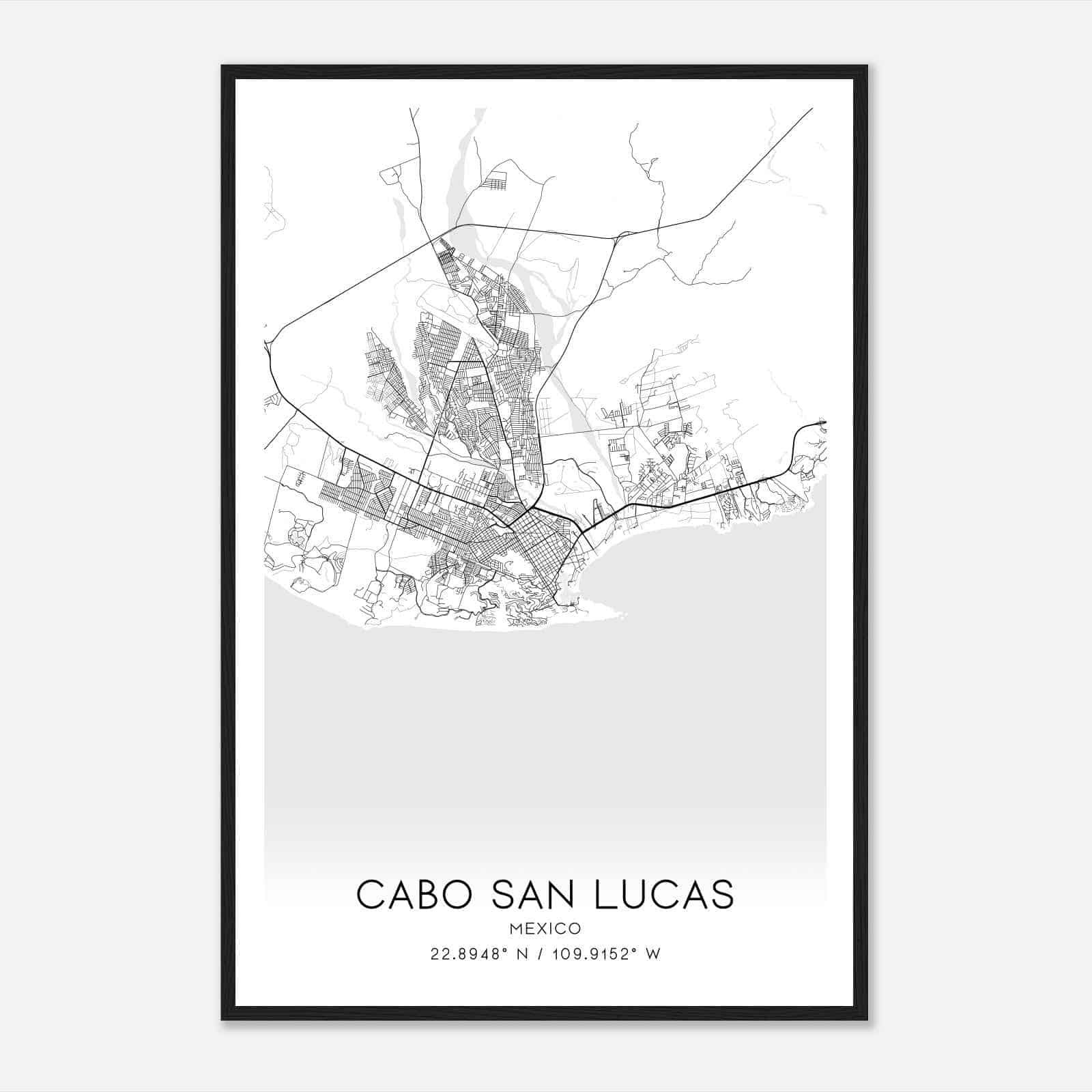
You're looking at a map, or maybe just staring at a flight booking screen, and you're wondering: what mexican state is cabo san lucas in? It's a fair question. Mexico is huge.
Cabo sits at the very tip of the world’s second-longest peninsula. It feels like the edge of the earth. Honestly, it kind of is. To be precise, Cabo San Lucas is located in the state of Baja California Sur.
Don't confuse it with Baja California. That’s a different state entirely. People mess this up constantly. They book a hotel in Tijuana thinking they can drive to Cabo for lunch. Spoiler: you can't. It's an 18-hour drive. Baja California Sur is the younger, southern sibling, and it's where the desert literally tumbles into the Sea of Cortez.
The Tale of Two Bajas
Mexico has 32 federal entities. Two of them share the "Baja" name. This is usually where the confusion starts for travelers. Back in the day, the whole peninsula was just one big territory. Then, in 1952, the northern part became a state. The southern half? It stayed a federal territory for a long time. It wasn't until 1974 that Baja California Sur officially became Mexico’s 31st state.
It's a young state. You can feel that energy when you're there. There’s this weird, beautiful mix of ancient indigenous history and brand-new luxury resorts.
When you're figuring out what mexican state is cabo san lucas in, you have to look at the "Sur." In Spanish, sur means south. It’s the bottom half of the finger-like peninsula that hangs off the west coast of mainland Mexico. If you look at a satellite image, it looks like a jagged needle pointing straight at the Pacific Ocean.
Why the Geography Changes Everything
The location isn't just a trivia point. It dictates your entire vacation. Because Cabo San Lucas is at the tip of Baja California Sur, it’s surrounded by water on three sides. This creates a specific microclimate.
It’s a tropical desert.
Think about that for a second. You have cacti that are hundreds of years old standing right next to white sand beaches. You’ve got the Pacific Ocean on the west and the Sea of Cortez (which Jacques Cousteau called "the world's aquarium") on the east. The point where they meet is called Land’s End. It's home to that famous stone arch, El Arco.
The state of Baja California Sur is actually one of the least densely populated areas in Mexico. Outside of the "Los Cabos" bubble, it’s wild. Rugged. Empty. You can drive for hours on Highway 1 and see nothing but cardon cacti, vultures, and the occasional dusty ranch.
Los Cabos vs. Cabo San Lucas
Let’s clear something up. People say "Cabo" and usually mean one of two things.
First, there’s Cabo San Lucas. That’s the town with the marina, the wild nightlife at Cabo Wabo, and the luxury malls. It’s the high-energy hub.
Then there’s San José del Cabo. This is the older, more "authentic" sister city about 20 miles to the northeast. It’s got a colonial town square, a mission church from the 1700s, and a thriving art district.
Together, they make up the municipality of Los Cabos.
If you’re staying at a resort on the "Corridor" (the highway connecting the two), you’re technically in the municipality of Los Cabos, within the state of Baja California Sur. Most visitors fly into SJD—Los Cabos International Airport. It's actually closer to San José, so be prepared for a 45-minute shuttle ride if your hotel is in the heart of Cabo San Lucas.
The Reality of the "Island" Feel
For a long time, people thought Baja was an island. Early Spanish maps actually showed it detached from the mainland. Even though we know better now, it still feels like an island.
Because it’s so isolated from the rest of Mexico by the Sea of Cortez, the culture in Baja California Sur is unique. The food is different. You’ll find incredible fish tacos, obviously, but you’ll also find damiana liqueur, made from a local desert shrub that’s supposedly an aphrodisiac.
The state capital isn't actually Cabo. It’s La Paz.
La Paz is about two hours north of Cabo San Lucas. It’s where the state government sits. It’s much more "Mexican" and less "touristy" than Cabo. If you want to swim with whale sharks or visit Balandra Beach (regularly voted the most beautiful beach in Mexico), you have to travel deeper into the state of Baja California Sur.
Getting Your Bearings
So, why does any of this matter for your packing list or your itinerary?
Since you’re in Baja California Sur, you’re in a desert. It doesn't get humid like Cancun or Puerto Vallarta. In the winter, the sun is hot, but as soon as it drops behind the mountains, the temperature plummets. I've seen tourists shivering in sundresses in January because they didn't realize the desert gets cold at night.
Also, the water.
The Pacific side of the state is notoriously dangerous for swimming. The currents are no joke. Most of the beaches in Cabo San Lucas are "look but don't touch" because of the rogue waves and undertow. If you want to swim, you head to Medano Beach or hop over to the Sea of Cortez side, where the water is calmer.
Realities of Travel in Baja California Sur
Let's talk about safety and logistics, because that's usually the "hidden" question when people ask what mexican state is cabo san lucas in.
Baja California Sur is generally considered one of the safer states in Mexico for international travelers. Because it’s a peninsula, it’s easier to control access points. The economy is heavily dependent on tourism, so the local and state governments put a lot of resources into keeping the Los Cabos area secure.
However, it is expensive.
Expect to pay "Cabo prices." Since almost everything—from the bottled water to the ribeye steaks—has to be trucked down the long peninsula or brought in by boat, the cost of living is higher than in Mexico City or Oaxaca.
Essential Logistics for Your Trip
- Time Zone: Baja California Sur uses Mountain Standard Time (MST). It’s usually an hour behind Mexico City.
- Currency: Pesos are king, but US Dollars are accepted almost everywhere in Cabo San Lucas. Just know you'll get a terrible exchange rate if you pay in USD at a local shop.
- Language: English is incredibly common in the tourist zones. But, honestly, learning "Gracias" and "La cuenta, por favor" goes a long way with the locals.
Beyond the Resort Walls
If you only stay in Cabo San Lucas, you're missing about 90% of what makes the state of Baja California Sur incredible.
Drive an hour north to Todos Santos. It’s a "Pueblo Mágico" (Magic Town) designated by the Mexican government. It’s an oasis full of palm trees, surfers, and art galleries. It’s where the Sierra de la Laguna mountains meet the Pacific.
Or go further north to Loreto. It was the first Spanish settlement on the peninsula. It feels like stepping back in time. The state is vast, and Cabo is just the tip of the iceberg—literally and figuratively.
Actionable Steps for Your Cabo Planning
Knowing what mexican state is cabo san lucas in is just the start. Here is how to use that geographical knowledge to actually have a better trip:
- Check your airport code: Make sure you are flying into SJD (Los Cabos International), not TIJ (Tijuana) or MXL (Mexicali). You'd be surprised how often people book the wrong "Baja" airport.
- Pack layers: Because it's a desert state, bring a light jacket or pashmina for the evenings, especially between November and March. The temperature swing is real.
- Book a car if you want to see the state: If you just want to drink margaritas by the pool, a shuttle is fine. But if you want to see the "Sur" in Baja California Sur, you need wheels. Driving Highway 1 is safe and straightforward during daylight hours.
- Differentiate the "Cabos": Look at your hotel's address. If it says San José del Cabo, you’re in the quiet, foodie, historic area. If it says Cabo San Lucas, you’re in the heart of the action. Choose based on your vibe.
- Verify your documents: You are entering Mexico. You need a valid passport. Even though Baja feels like a 51st US state sometimes because of all the expats, the immigration laws are strict. Ensure your passport has at least six months of validity left to avoid any headaches at customs.
Baja California Sur is a place of extremes. It's harsh and dry, but vibrant and luxurious. Once you understand the geography, the culture of the "South Cape" starts to make a lot more sense. You aren't just going to a beach; you're going to the end of a peninsula that has spent millions of years carving its own identity apart from the rest of the continent.