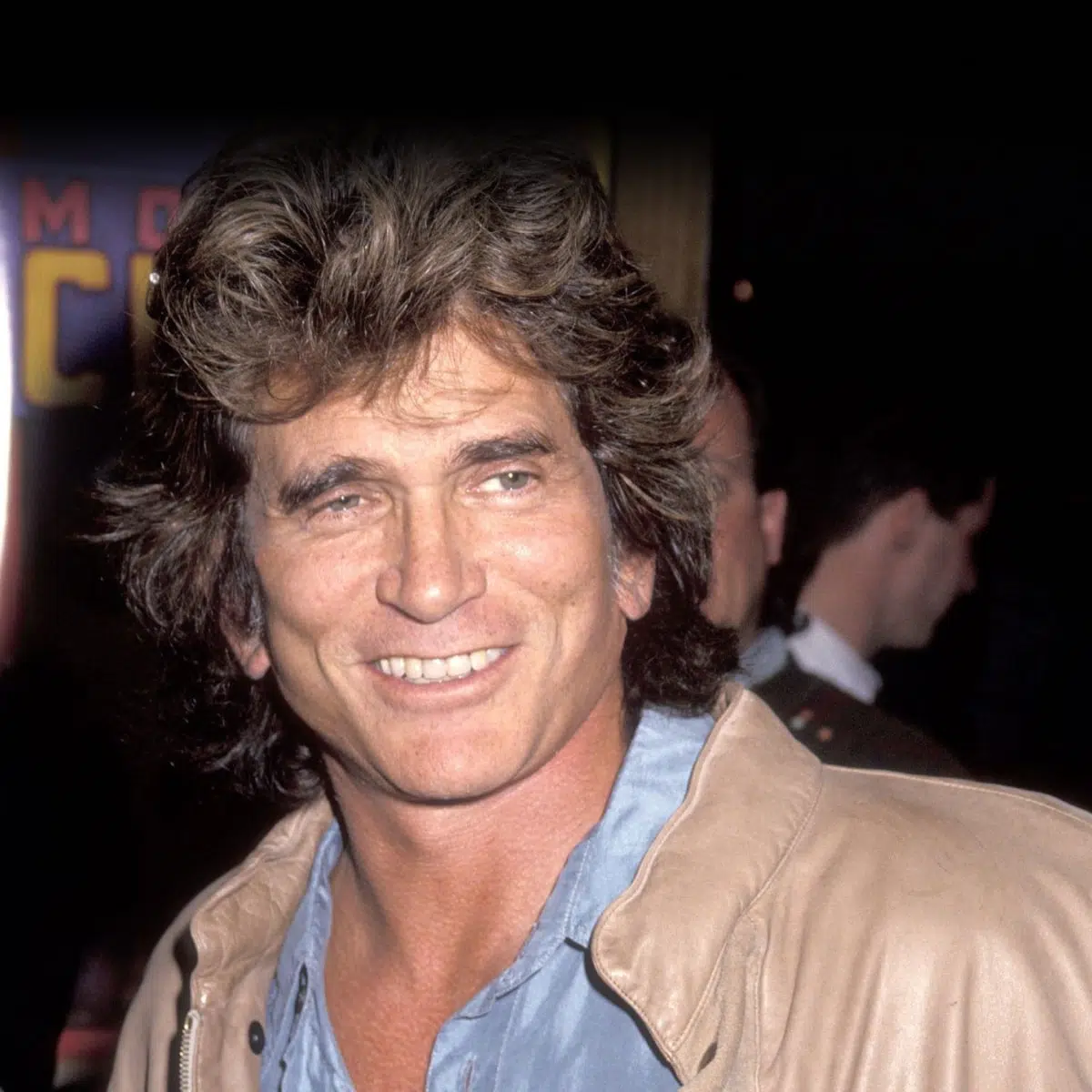
It’s one of those "where were you" moments for a certain generation of TV fans. You probably remember him as the indestructible Pa Ingalls, or maybe the charming Little Joe Cartwright. But the reality of when Michael Landon died is a story that still feels surprisingly raw, mostly because of how fast it all happened.
Honestly, the timeline is what trips people up. He was a fixture of American living rooms for three straight decades. It felt like he’d just be there forever, tossling that famous hair and giving out fatherly advice. Then, suddenly, he wasn't.
What Year Did Michael Landon Die?
Michael Landon died in 1991. Specifically, he passed away on July 1, 1991. He was only 54 years old.
If that sounds young, it’s because it was. He was right in the middle of developing a new series called Us. He had so much life left to give, which is why the news hit the public like a freight train.
The diagnosis came out of nowhere. In early April 1991, Landon started feeling some severe abdominal pain while on a skiing vacation in Utah. He thought maybe it was just a stomach bug or something he ate. It wasn't. By April 5, doctors at Cedars-Sinai Medical Center gave him the news: inoperable pancreatic cancer that had already spread to his liver.
The 1991 Fight: A Summer That Moved the World
Most celebrities at the time would have vanished into a private hospital wing. Not Michael. He was always a bit of a maverick. He actually held a press conference at his Malibu ranch just a few days after finding out.
He sat there, cracking jokes with reporters, trying to keep everyone else’s spirits up while his own world was collapsing. He famously told the press, "I think you have to have a sense of humor about everything."
The Final Appearance on Johnny Carson
If you want to see the true measure of the man, you have to look at May 9, 1991. That was his final appearance on The Tonight Show Starring Johnny Carson.
You've got to realize, he knew he was dying. He looked a bit thinner, sure, but he was still Michael Landon. He and Johnny riffed like old friends. He even used the platform to blast the tabloids for writing "death watch" stories that were hurting his family.
He didn't want pity. He wanted to live.
Why the Survival Rate Was So Low
Back in 1991, the medical world was basically a dark age for pancreatic cancer. The five-year survival rate was a measly 4%. Today, we’ve gotten that number up to around 13%, which still isn't great, but it shows just how impossible the odds were for him back then.
Landon didn't just stick to traditional chemo, either. He tried everything.
- He drank 13 glasses of carrot juice a day.
- He experimented with coffee enemas.
- He leaned heavily into holistic and alternative therapies.
He was a fighter. He wanted to see his nine children grow up. He had just walked his daughter Leslie down the aisle a few months before he got sick. The desperation to stay alive was palpable, but the disease was just too aggressive.
The Legacy Beyond the Date
When Michael Landon died in 1991, he didn't just leave behind a bunch of TV reruns. He left a blueprint for how to be a "multi-hyphenate" before that was even a buzzword.
Most people don't realize he wrote and directed a massive chunk of Little House on the Prairie. He wasn't just the face; he was the brain. He was a perfectionist—sometimes to a fault. There are stories of him being tough on set, but it came from a place of wanting the story to be perfect.
His Three Major Eras
- Bonanza (1959–1973): He spent 14 years as Little Joe. This is where he learned the ropes of the industry.
- Little House on the Prairie (1974–1983): This was his masterpiece. He took a series of kids' books and turned them into a weekly emotional powerhouse.
- Highway to Heaven (1984–1989): He played an angel. It sounds cheesy now, but at the time, it was revolutionary to have a show so focused on pure kindness.
It’s crazy to think that he was on NBC almost every week for 30 years. That kind of longevity is basically unheard of today.
Addressing the Rumors: Was it the Location?
Over the years, a bit of a "conspiracy" (if you want to call it that) has popped up. Some people point to the fact that Little House on the Prairie was filmed at Big Sky Ranch in Simi Valley, California.
The ranch was located near the Santa Susana Field Laboratory, a site that had a partial nuclear meltdown in 1959. Because several crew members and actors from the show eventually developed cancer, some fans wonder if the site was "haunted" by radiation.
Is it true? There’s no definitive proof. But it’s one of those things that keeps the discussion about his death alive decades later.
Actionable Takeaways: What We Can Learn Today
Michael Landon's death was a tragedy, but his "never give up" attitude changed how people talk about cancer. If you're looking for ways to honor that spirit or just stay informed, here’s what you can actually do:
- Support Research: Groups like the Pancreatic Cancer Action Network (PanCAN) were massively boosted by Landon’s openness. Donating or participating in their "PurpleStride" walks makes a real difference in moving that 13% survival rate higher.
- Listen to Your Body: Landon’s only symptom was a "stomach ache." If you have persistent abdominal pain or unexplained weight loss, don't wait. Get a scan. Early detection is the only real weapon against this specific cancer.
- Watch the Work: If you’ve only seen the memes, go back and watch an episode like "The Lord is My Shepherd" from Little House. You’ll see why he was so loved. The guy could make a stone cry.
- Tell Your Own Story: Landon went on Carson specifically so the tabloids couldn't control his narrative. If you’re facing a challenge, own it. Don't let others define your struggle for you.
Landon passed away at 1:20 p.m. on that July day in Malibu, with his wife Cindy by his side. His headstone says: "He seized life with joy. He gave to life generously. He leaves a legacy of love and laughter."
That's a pretty good way to be remembered.
For those interested in the history of television or the fight against pancreatic cancer, studying Landon's final months provides a masterclass in dignity and public transparency. You can find his full final interview with Johnny Carson on YouTube; it's well worth the watch for the dark humor alone.