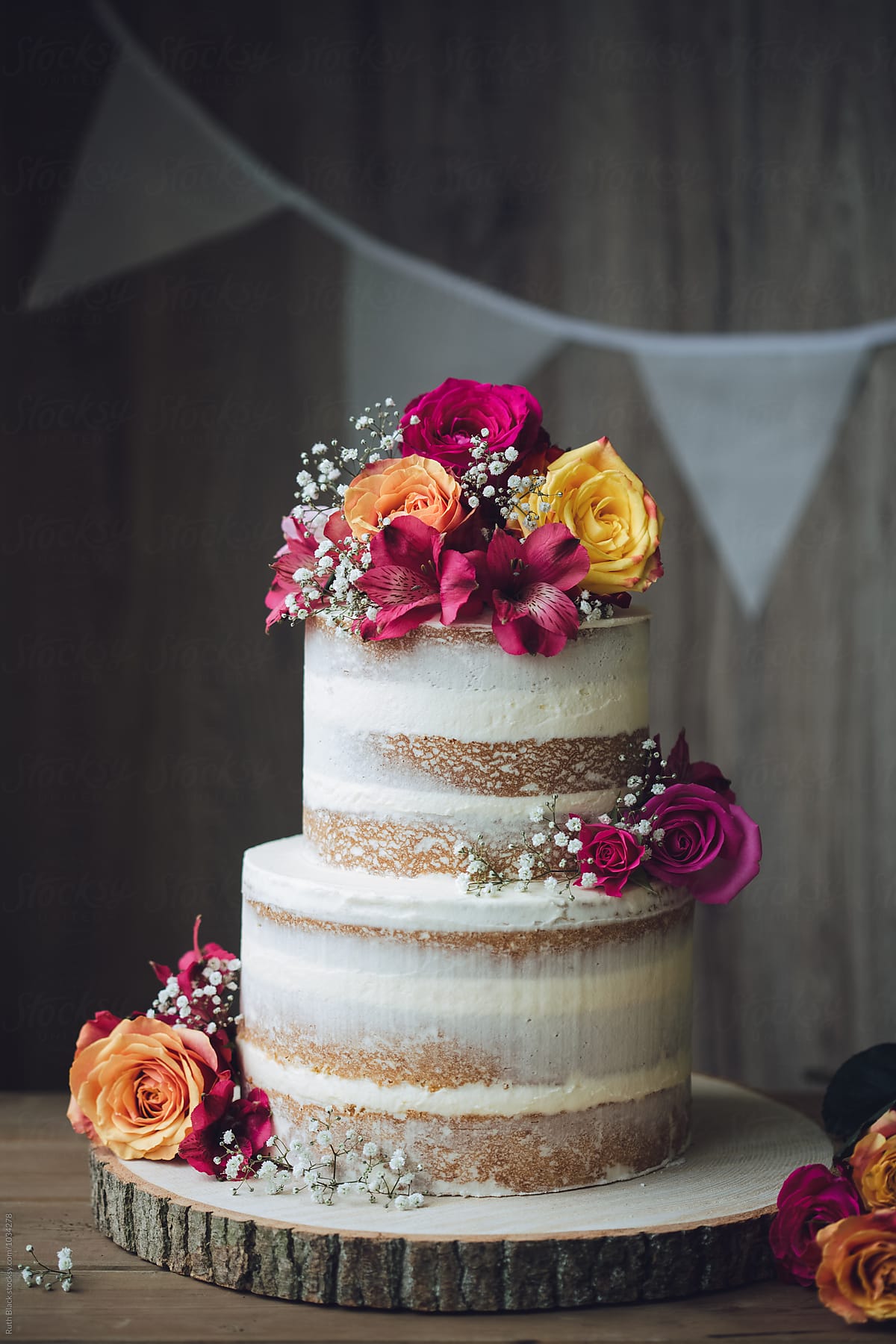
You’re standing there. The music is fading, the champagne is bubbling, and everyone is staring at the centerpiece of the room. It’s a gorgeous, multi-tiered wedding cake with fresh flowers cascading down the side like a floral waterfall. It looks perfect for Instagram. But then, the caterer starts sweating. Why? Because half those "beautiful" blooms are actually leaking toxic sap into the buttercream, and the other half are wilting into brown mush before the first slice is even cut.
I’ve seen it happen. Honestly, it’s heartbreaking.
Designing a wedding cake with fresh flowers isn't just about sticking stems into sugar. It’s a high-stakes balancing act between botany, food safety, and structural engineering. If you don't know the difference between a food-safe ranunculus and a poisonous sweet pea, you’re literally gambling with your guests' digestion. People think "natural" means "safe." It doesn't. Foxglove is natural. Lily of the valley is natural. Both can send someone to the hospital.
The Toxic Truth About "Pinterest-Pretty" Stems
Most people assume that if a florist sells it, it belongs on a cake. That’s a massive mistake. According to the American Society for the Prevention of Cruelty to Animals (ASPCA) and various botanical safety databases, many common wedding flowers are incredibly toxic to humans.
Take the hydrangea. It’s a wedding staple. It’s lush, it’s blue, and it’s packed with cyanide-like compounds. If you shove a hydrangea stem directly into a red velvet cake, you’re essentially marinating the dessert in low-grade poison.
Then there’s the "organic" myth. Just because a flower is grown without pesticides doesn't mean it’s edible. And just because it's "edible" doesn't mean it tastes good. Have you ever bitten into a marigold? It’s like eating a spicy, bitter lawn.
What You Can Actually Use
- Roses: The gold standard. They’re sturdy, safe (if pesticide-free), and handle being out of water for hours.
- Pansies and Violas: These are actually tasty. They have a slight wintergreen flavor.
- Orchids: Surprisingly resilient and generally safe for food contact.
- Lavender: It smells like a spa and looks delicate, though it can be "soapy" if people actually eat it.
The "Safety Barrier" Technique (And Why Most Bakers Hate It)
You can't just poke a flower into a cake. Period. Even if the flower is non-toxic, the stem has been sitting in floral foam, "flower food" chemicals, or dirty bucket water. Gross.
Professional bakers use a few different methods to create a wedding cake with fresh flowers without compromising the food. Some use "flower spikes" or "floral tubes." These are little plastic cones that hold a bit of water and keep the stem from ever touching the sponge. Others wrap the stems tightly in parafilm (florist tape) and then dip them in food-grade wax.
It’s tedious. It takes forever. But it’s the only way to ensure that the "fresh" part of the cake doesn't become the "food poisoning" part of the wedding.
Why Your Flowers Will Probably Wilt by 8 PM
Flowers are alive. Or they were. Once they’re cut and pinned to a dry, sugary surface, the clock starts ticking. A cake isn't a vase.
I’ve seen gorgeous peonies turn into sad, floppy rags because the venue was too hot or the cake was placed under a spotlight. Heat is the enemy. Sugar is also the enemy. The high sugar content in frosting can actually draw moisture out of the flower petals through osmosis, causing them to shrivel faster than they would in the open air.
If you’re dead set on a wedding cake with fresh flowers, you have to be strategic about timing. Your florist shouldn't be decorating that cake at 10 AM for a 6 PM reception. It needs to happen at the last possible second. Or, you need to choose "hardy" varieties like succulents, waxflowers, or thick-petaled tropicals that can handle the desert-like environment of a reception hall.
The Cost Factor: Florist vs. Baker
Here is where the drama usually happens. Who provides the flowers?
Most bakers prefer to work with their own sources, but couples often want the cake flowers to match the bridal bouquet exactly. This leads to a "hand-off" problem. If the florist drops off a bucket of blooms, who puts them on the cake?
If the baker does it, they’ll charge a "styling fee." They should. They’re taking on the liability of making sure those flowers don't kill anyone. If the florist does it, they’re poking holes in a cake they didn't bake, which can lead to structural collapses if they aren't careful. I once saw a five-tier cake lean like the Tower of Pisa because a florist shoved a massive dahlia stem right into a critical support dowel.
Avoiding the "Bush" Look
Design matters. A wedding cake with fresh flowers should look intentional, not like a shrub grew through the fondant.
Minimalism is usually better. A single, dramatic King Protea can look more modern and "expensive" than forty carnations scattered at random. Think about the "flow." You want the eye to move across the cake. Use "filler" flowers like baby’s breath or eucalyptus to create soft transitions between the hard edges of the cake tiers and the organic shapes of the blooms.
Also, consider the color bleed. Fresh berries or dark-colored flowers (like deep purple anemones) can leak dye onto white buttercream. By the time you cut the cake, you might have a giant blue smudge where your flower was sitting.
The Logistics of the "Last Minute"
If you're DIY-ing this, God bless you. You’ll need a plan.
- Wash the flowers. Gently. You’re looking for bugs. There is nothing quite like a caterpillar crawling out of a rose onto a bride’s plate.
- Dry them completely. Water droplets will melt your frosting.
- Seal the stems. Use floral tape or food-grade wax.
- Keep it cold. Store the decorated cake in a professional-grade fridge for as long as possible.
Beyond the Traditional Bloom
Lately, we’re seeing a shift toward pressed flowers. It’s a different vibe—more "cottagecore" and whimsical. Since the flowers are dried and pressed flat against the side of the cake, you don't have to worry about wilting or structural damage from heavy stems.
It’s a safer bet for outdoor summer weddings where a fresh lily wouldn't stand a chance in the humidity.
Actionable Steps for Your Cake Design
Before you sign a contract or buy a single stem, do these three things to ensure your wedding cake with fresh flowers is a success rather than a disaster:
Verify the "Edible" Status
Cross-reference your flower list with a reputable database like the California Poison Control System or the ASPCA toxic plants list. If your florist suggests something "trendy" that isn't on the safe list, veto it. Don't risk it for the aesthetic.
Specify the "No-Pesticide" Requirement
Standard wholesale flowers are sprayed with heavy fungicides and pesticides to keep them looking perfect during shipping. These chemicals are not food-safe. You must explicitly tell your florist that the cake flowers need to be organic or "food-grade." If they can't guarantee it, don't put them on the cake.
The "Transition" Plan
Decide exactly who is responsible for the floral placement and at what time it will happen. If the baker is doing it, ensure they have a photo of your bouquet so the styles match. If the florist is doing it, make sure the baker leaves a "kit" of extra frosting so the florist can hide any holes or mistakes made during the decorating process.
Choose Hardy Varieties
If your wedding is outdoors or in a warm climate, stick to succulents, orchids, or roses. Avoid hydrangeas, lilies, and poppies, which tend to weep or wilt within an hour of being out of water.
Structure Over Style
Remind whoever is decorating the cake to avoid the "central spine" of the cake. Poking stems into the center can hit the support pillars that keep the tiers from crushing each other. Flowers should be pinned into the outer layers of the cake or rested on the ledges of the tiers whenever possible.
By following these protocols, you ensure the cake remains the highlight of the night for the right reasons—its beauty and its taste—rather than becoming a cautionary tale about botanical hazards.