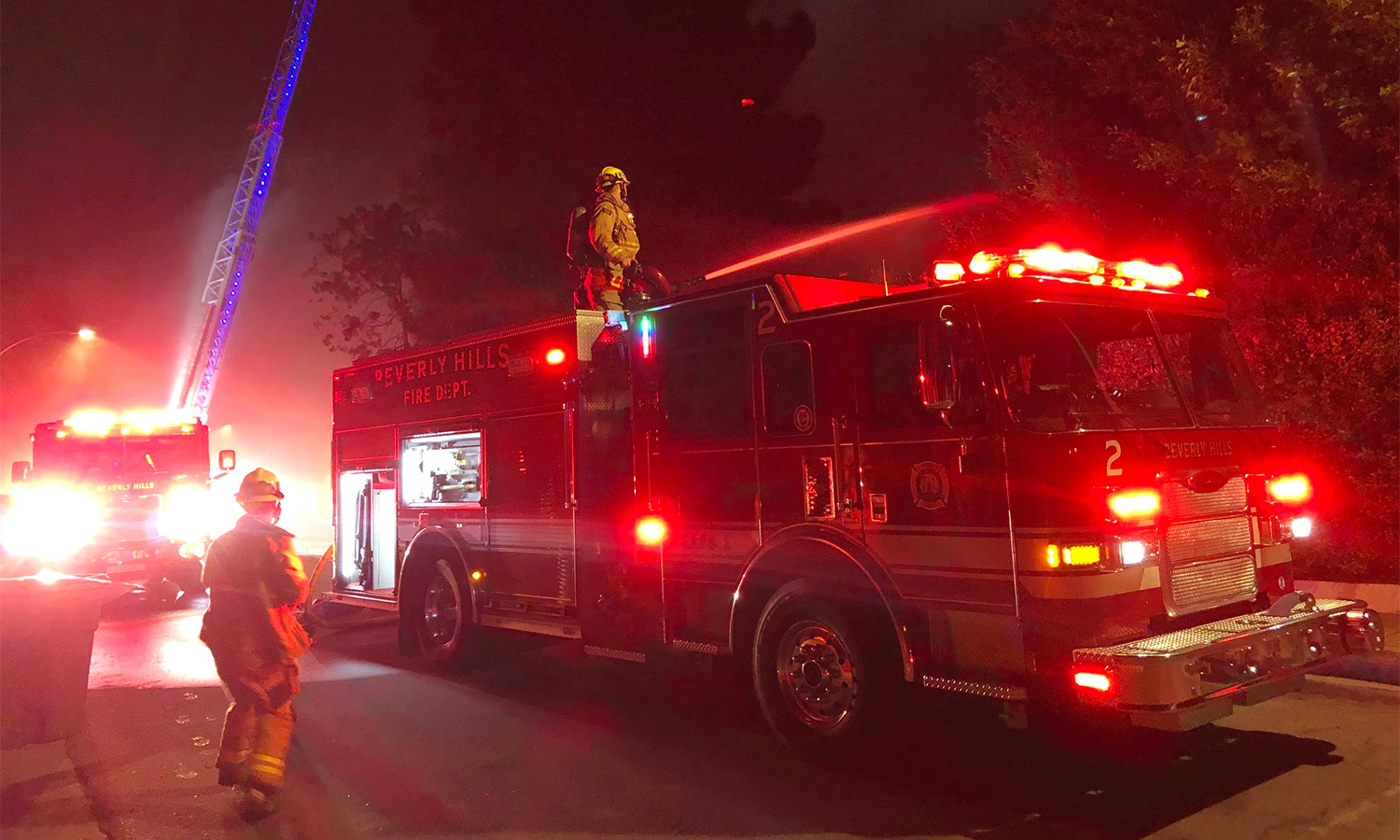
If you’ve ever driven down Sunset Boulevard or walked past the palm trees on Rodeo Drive, you know that Beverly Hills feels like a world of its own. It's pristine. It's expensive. It's iconic. But when the Santa Ana winds kick up and the hills of Southern California start to glow orange, that sense of security starts to feel a little thin. People always ask: was Beverly Hills affected by the fires? Honestly, the answer depends on whether you're talking about direct flames or the absolute chaos that follows a major Southern California wildfire.
California burns. It’s a harsh reality we live with every single year.
The Reality of Fire Lines in the 90210
Let’s get the literal answer out of the way first. Historically, Beverly Hills has been incredibly lucky. While neighborhoods like Malibu, Bel Air, and even parts of the Pacific Palisades have seen homes reduced to ash, the city of Beverly Hills itself—the incorporated part with the famous zip code—has rarely seen significant structural damage from recent major blazes like the Woolsey Fire or the Skirball Fire.
But luck isn't the only factor.
Geography plays a massive role here. Beverly Hills is tucked into a bit of a pocket. Most of the massive, devastating wildfires we see on the news tend to rip through the canyons further west or north, where the fuel load—the dry brush and chaparral—is much denser and the winds have more room to whip up speed.
However, the 2025-2026 fire season changed the conversation. You might remember the smoke. It was thick. It was everywhere. Even if a house isn't on fire, the "effect" of a fire is felt in the lungs of every resident from the Flats to the Trousdale Estates. During the most recent surges, the air quality index (AQI) in Beverly Hills hit levels that were frankly terrifying. We’re talking about "hazardous" ratings where you couldn't see the Hollywood sign from a balcony in the hills.
Smoke, Ash, and the Invisible Damage
Smoke doesn't care about property lines.
When the fires raged in the Santa Monica Mountains, Beverly Hills was blanketed in a fine, gray silt. This isn't just a nuisance for pool cleaners. It’s a massive economic and health hit. Businesses on Wilshire had to shut down their HVAC systems to prevent pulling in toxic particulates. High-end boutiques had to deal with the smell of smoke permeating luxury fabrics.
- The Health Toll: Local clinics reported a massive spike in respiratory distress calls.
- The Cleanup: Professional remediation companies were booked for months, scrubbing ash off limestone mansions and cleaning intricate ventilation systems.
- The Anxiety: You can’t put a price on the "pre-evacuation" jitters that happen every time the wind hits 50 mph.
Why Beverly Hills Stays (Mostly) Safe
Why haven't we seen a total catastrophe in the center of the city? It’s a mix of aggressive urban planning and sheer wealth. Beverly Hills has its own dedicated fire department, the BHFD, which is legendary for its response times. They don't just wait for the fire to come to them.
During Red Flag warnings, they pre-deploy resources. They’re out there patrolling the "Very High Fire Hazard Severity Zones" in the northern parts of the city. They look for dry brush. They cite homeowners who haven't cleared their defensible space. It sounds strict because it is. One unkempt hillside in Trousdale could funnel a fire right into the heart of the city.
Actually, the city's infrastructure is a huge shield. Unlike some of the winding, narrow dirt roads in Topanga Canyon, Beverly Hills has wide, paved streets that act as natural firebreaks. Most of the landscaping is manicured and irrigated. Lush, green lawns and hydrated succulents don't burn nearly as fast as the dead mustard seed you see on the side of the 405.
The Skirball Fire: A Close Call
Remember 2017? The Skirball Fire was a wake-up call for the entire "Platinum Triangle." It started right near the Getty Center. It was small—only about 422 acres—but it was terrifying because of where it was. It was right on the doorstep of Bel Air and Beverly Hills.
While Beverly Hills didn't lose houses, the evacuations nearby caused a total gridlock. You couldn't get in or out. The 405 looked like a scene from an apocalypse movie with flames licking the side of the freeway. This is the "hidden" way Beverly Hills gets affected. The city becomes an island. If the staff who run the hotels, the doctors at Cedars-Sinai, and the first responders can't get through the traffic or the closures, the city stops functioning.
Economic Ripples in the Hills
When the fires hit, the tourists stop coming. Simple as that.
The Beverly Hills Hotel and the Waldorf Astoria see cancellations. People don't want to fly into a smoke cloud for a luxury vacation. During the 2024 fires, hotel occupancy in the area reportedly dipped significantly. This affects tax revenue. It affects the hourly workers. It's a domino effect that proves you don't need a flame to be "affected" by a fire.
How Homeowners Are Changing Their Strategy
The insurance market in California is a mess. That’s no secret. Even in Beverly Hills, people are getting dropped by their carriers.
I’ve talked to real estate agents who say that "fire hardening" is now the number one request for renovations. We’re seeing people swap out wood shingle roofs for clay tile or metal. They’re installing ember-resistant vents. Some of the ultra-wealthy are even installing private, automated foam-sprinkler systems that can coat a house in fire-retardant goop at the touch of a button. It sounds like sci-fi, but when you’re protecting a $50 million asset, it’s just common sense.
What to Do if You Live or Work in the Area
Look, the "Big One" for fires in Beverly Hills hasn't happened yet, and hopefully, it never will. But being prepared isn't just for "preppers" anymore. It’s for everyone.
1. Track the AQI religiously. Don't rely on looking out the window. Use sites like AirNow.gov. If the index is over 150, stay inside. Your lungs will thank you.
2. Check your vents.
Most embers that burn down houses don't come from a wall of flame; they fly through the air and get sucked into your attic vents. Get 1/8-inch metal mesh screens installed. It's a cheap fix that saves homes.
3. Have a "Go Bag" that actually works.
Don't just throw some socks in a backpack. You need copies of your deeds, your insurance papers, and any hard drives with family photos. If the LAPD or BHFD says "go," you need to be out in three minutes.
4. Update your insurance.
Seriously. Do it today. Check if you have "replacement cost" coverage. With the cost of construction in Southern California skyrocketing, a policy from five years ago might only cover half of what it would cost to rebuild a luxury home today.
5. Manage your vegetation.
Defensible space is the law. Clear that brush. Remove the dead palm fronds. If you have "ladder fuels"—bushes that allow fire to climb up into the trees—get rid of them.
Final Thoughts on Fire Risk
Was Beverly Hills affected by the fires? Yes. Maybe not by the total destruction seen in Paradise or Malibu, but through the choking smoke, the economic shifts, and the permanent change in how we view the hills we call home. The city is resilient, but nature is unpredictable. Staying informed and proactive is the only way to live comfortably in the wildland-urban interface.
The next step is simple: check your property for "dead fuel." Walk your perimeter. Look for dry leaves in the gutters and dead wood in the bushes. Clearing that today is the best insurance policy you'll ever have.