You're driving down the street or scrolling through a travel blog and you see it. A flag with red white and blue vertical stripes. At first glance, you might think, "Oh, France." But then you look closer. Wait. Are those stripes going the right way? Is the red on the left or the right? Is there a crest in the middle that I missed?
It’s an easy mistake to make. Honestly, vexillology—the fancy word for studying flags—is a bit of a minefield because humans aren't always that creative with primary colors. We love red, white, and blue. We really love stripes. But the distinction between a "triband" and a "tricolor" or the specific order of those vertical bars changes everything from the national anthem being played to the history being honored.
The Heavy Hitter: France’s Iconic Tricolore
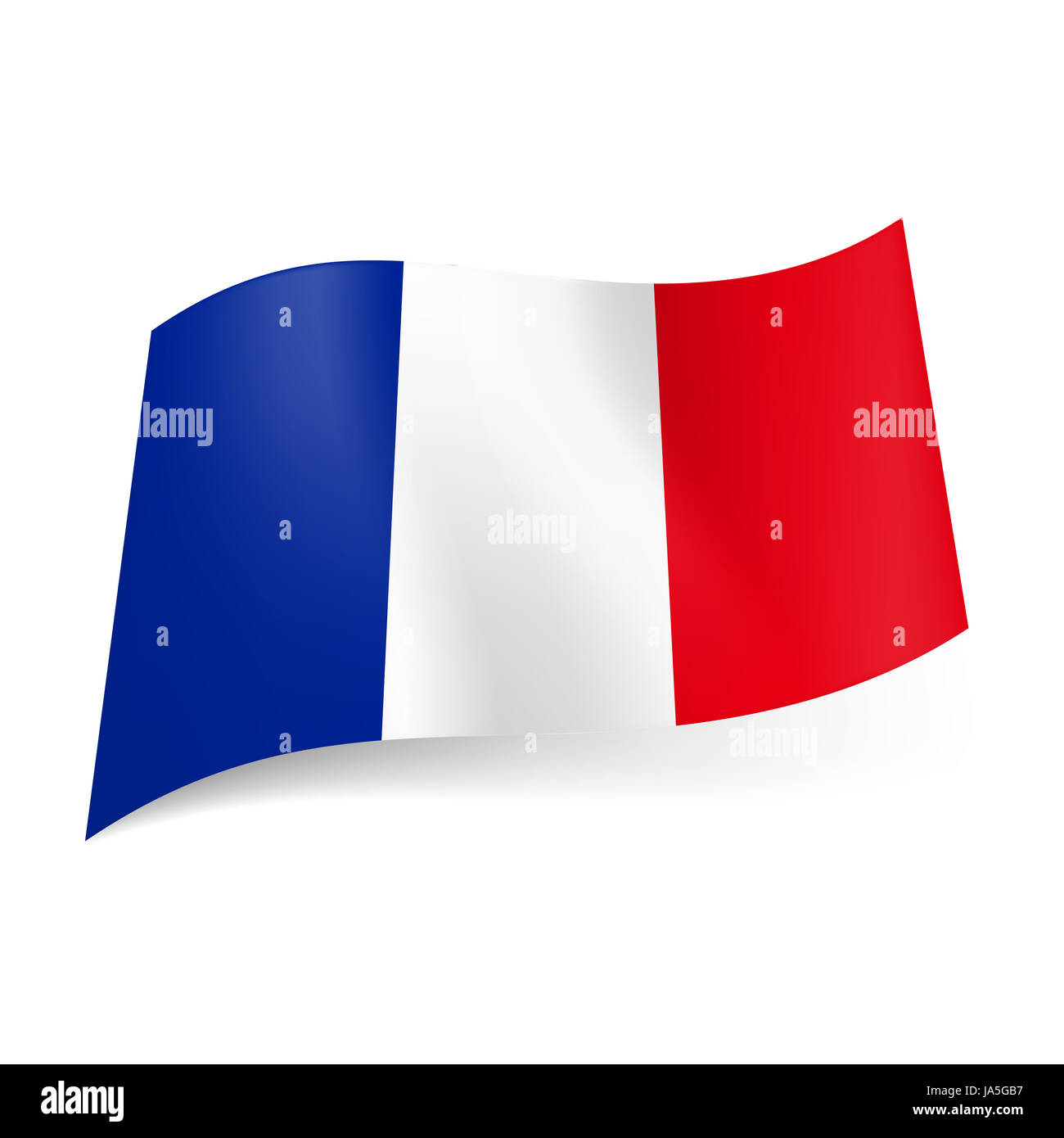
If you’re talking about a flag with red white and blue vertical stripes, 90% of the time, your brain is conjuring up the French Tricolore. It is the blueprint. Before the French Revolution, flags were messy things, usually covered in heraldry, fleur-de-lis, and complex royal symbols. Then 1789 happened. The revolutionaries wanted something clean. Something that represented the people rather than a king.
The design is blue on the hoist side (the side near the pole), white in the middle, and red on the fly. It wasn’t just a random choice. Blue and red are the traditional colors of Paris. White was the color of the House of Bourbon, the monarchy. By wrapping the king’s white in the city’s blue and red, they were symbolically "containing" the monarchy within the power of the people. Eventually, the king lost his head, but the colors stuck.
What’s wild is that for a brief period in the 1790s, the order was actually reversed to red, white, and blue. Can you imagine? It didn't last. By 1794, the current order became law. Even today, there’s a weird quirk. You might see a French flag where the blue is a deep navy and another where it’s a bright royal blue. Both are technically "correct," though President Macron famously switched the official palace flags back to the darker navy in 2020 to evoke the spirit of the French Revolution and the Resistance.
Don't Confuse It With the Netherlands or Luxembourg
Here is where people trip up constantly. If you rotate those stripes 90 degrees so they are horizontal, you’ve got the Netherlands. If you lighten the blue on those horizontal stripes, you’ve got Luxembourg. But we’re talking vertical.
There isn't actually a major, widely recognized sovereign country today that uses a vertical red, white, and blue flag in that exact order (Red-White-Blue) without any other symbols. If you see vertical red on the left, white in the center, and blue on the right, you might be looking at a specific maritime signal flag or a very specific regional banner.
The "T" flag in the International Code of Signals is a vertical tricolor of red, white, and blue (in that order). In the world of sailing, flying this means "Keep clear; I am engaged in pair trawling." So, if you're at the beach and see a red-white-blue vertical flag on a boat, they aren't celebrating a weird version of Bastille Day. They’re literally telling you to get out of the way because they’re dragging a massive net.
The "Almost" Contenders: Similar Vertical Designs
Sometimes the flag with red white and blue vertical stripes you're remembering actually has a few more bells and whistles.
Take Italy. It's green, white, and red. To a colorblind observer or someone looking through a heavy filters on Instagram, the green can easily look blue. Then there’s the flag of Iowa. Yes, the U.S. state. It looks remarkably like the French flag, but the center white stripe is much wider to accommodate a bald eagle carrying a ribbon. It’s a direct nod to the French history of the region—think the Louisiana Purchase—but it’s a distinct design.
What About New Orleans?
New Orleans has a fascinating flag. It’s a white field with three gold fleur-de-lis, but it’s bookended by a thin blue vertical stripe on the left and a thin red one on the right. It’s not a true vertical tricolor, but it hits all those visual notes. It’s a vibe. It tells a story of colonial roots without being a carbon copy of the Motherland.
Why Vertical Stripes Even Exist
Historically, vertical stripes were a bit of a middle finger to the old guard. Most royal flags used horizontal stripes. By turning them 90 degrees, revolutionary movements in the 18th and 19th centuries were visually shouting that they were breaking the old "order." It was a radical design choice.
Vertical stripes also have a practical benefit: they are easier to distinguish when the wind isn't blowing. On a flagpole with no breeze, a horizontal flag just looks like a bunch of crumpled colors. With vertical stripes, you can usually see at least two of the three colors even when the fabric is draped flat against the pole.
The Psychology of the Palette
Why are we so obsessed with these three colors?
- Red: Blood, sacrifice, courage, and the "heat" of the revolution.
- White: Peace, purity, or in many cases, the historical neutrality of the church or monarchy.
- Blue: Liberty, justice, or the sky.
When you put them in vertical bars, you get a sense of stability. Vertical lines in art and design represent strength and upward growth. Horizontal lines represent rest and calm. So, a flag with red white and blue vertical stripes usually signals a nation or an entity that wants to be seen as strong, upright, and revolutionary.
Common Misidentifications and How to Spot Them
If you're staring at a flag and you're not sure what you're seeing, check these three things immediately:
- The Hoist: Is the blue or the red touching the pole? If it's blue, and there are no symbols, it's France.
- The Proportions: Are the stripes equal? In the French flag, the stripes used to be unequal (30:33:37) to make them look equal when flying, but today they are almost always 1:1:1.
- The "Extras": Is there an eagle? Is there a coat of arms? Is there a sun? If there is any symbol in the white stripe, it’s not the French Tricolore. It could be anything from the flag of Missouri (which is horizontal anyway) to a specific historical regiment banner.
How to Correctly Use This Flag Imagery
If you're a designer or a hobbyist looking to use the flag with red white and blue vertical stripes, context is your best friend. Don't just slap a vertical tricolor on a graphic and hope for the best.
If you are trying to evoke a sense of "French-ness," make sure the blue is on the left. If you put the red on the left, you’re flying the signal for "Keep Clear," and people might wonder why you're obsessed with commercial fishing.
Moving Beyond the Basics
To truly master the identification of these flags, start paying attention to the specific shade of blue.
The French navy blue is hex code #002395. The lighter "royal" blue often used in digital media is #0055A4. It sounds pedantic, but these details matter to the people who live under those flags.
If you're still confused, look at the surrounding context. Is there a baguette? Probably France. Is there a bald eagle? Likely Iowa. Is there a giant net full of tuna? Definitely a maritime signal.
Next Steps for Flag Enthusiasts
To get better at identifying these at a glance, you should check out the Vexillology Wiki or the Flags of the World (FOTW) database. They contain thousands of obscure regional and historical variations that explain exactly why a certain town in the middle of nowhere might be flying a vertical tricolor. You can also download a "Flag Quiz" app—it sounds dorky, but it’s the fastest way to train your brain to stop confusing France with the Netherlands.
Start by looking at the flags in your own local government buildings. You'll be surprised how many "secret" vertical stripes are hiding in plain sight in city and state banners.