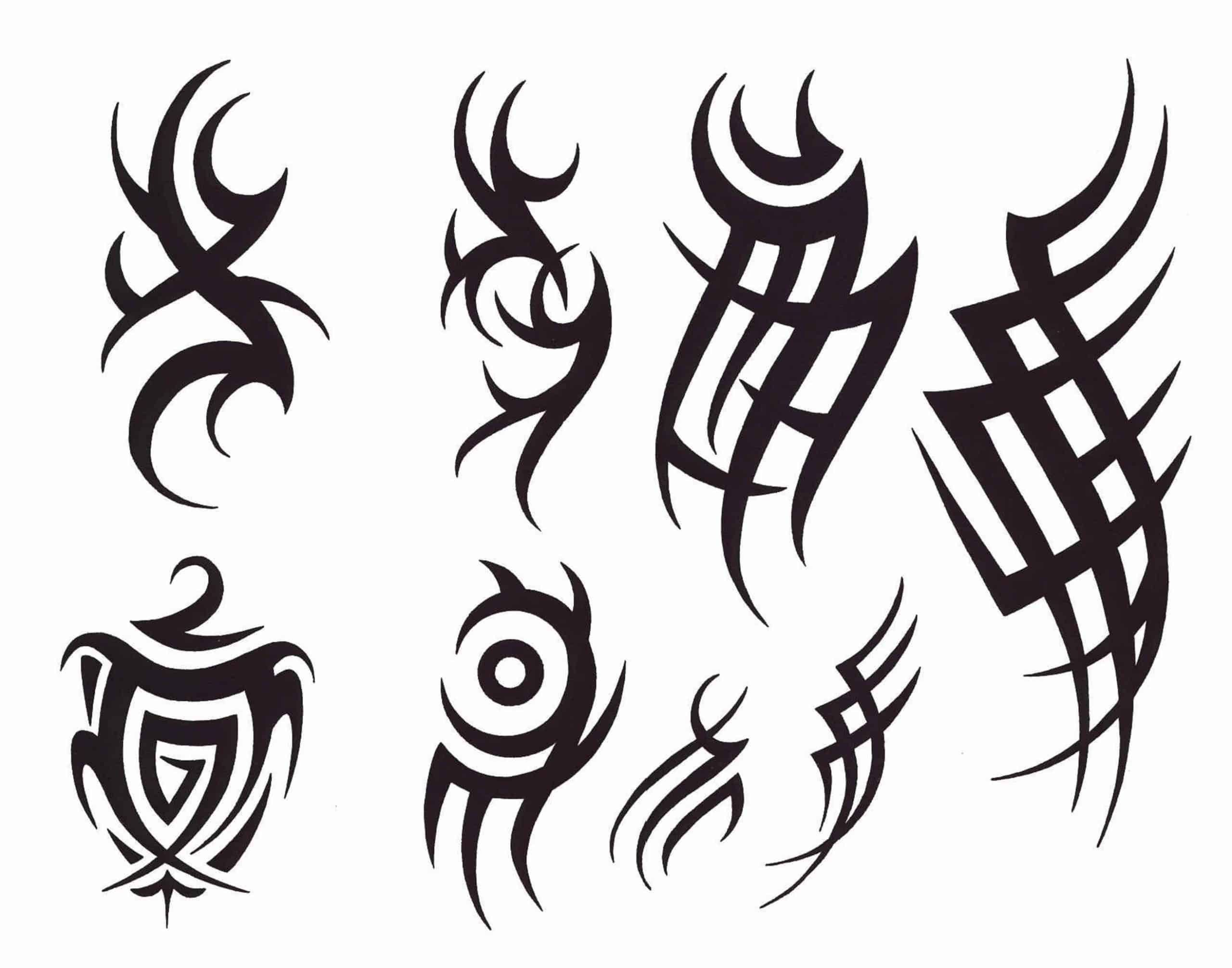
You’ve seen them. Maybe it was on a beach in the 90s, or perhaps you've been staring at the intricate, interlocking patterns on a rugby player’s shoulder during a televised match. Tribal tattoos for men have a reputation that swings wildly between "timeless cultural masterpiece" and "dated trend from a bargain-bin flash sheet." But if you think they’re all just pointy black lines meant to look tough, you’re missing the point. Completely.
The reality is way more complex.
Tribal tattooing isn't a single style. It’s a massive, global language of skin marking that spans thousands of years. From the Ta moko of the Māori people in New Zealand to the intricate geometric patterns of the Kalinga in the Philippines, these designs weren't originally about "looking cool" at the gym. They were IDs. They were resumes. They were spiritual armor. Honestly, calling it all "tribal" is a bit of a lazy Western shorthand, but it’s the term we’ve got.
Why the "90s Barbed Wire" Ruined the Reputation
Let's address the elephant in the room. In the 1990s, tribal tattoos for men exploded in Western pop culture. Suddenly, every guy had a "tribal" armband. These were often devoid of any specific cultural meaning, designed mostly to follow the contours of a deltoid or bicep. This is what tattoo historians often call "Neo-Tribal."
It was fast. It was bold. It was easy to do.
Because these designs lacked the deep, ancestral roots of traditional Polynesian or Bornean work, they eventually became a bit of a punchline. But that's a shame. It’s a shame because it ignores the technical mastery required for genuine indigenous styles. If you look at the work of someone like Apo Whang-Od, the legendary 100-plus-year-old mambabatok from the Philippines, you realize that "tribal" is actually one of the most sophisticated art forms on the planet. Her work uses thorns and soot. It's raw. It's real. It’s anything but a "trend."
Polynesian Styles: The Heavyweights of the Genre
When most guys today search for tribal tattoos for men, they’re usually looking for Polynesian-inspired work. This is the big one. It includes styles from Samoa, Tonga, Hawaii, and New Zealand.
Samoan Pe'a is the hardcore version. It’s a traditional male tattoo that covers the body from the waist to the knees. The process is grueling. It involves traditional handmade tools—basically bone or shell combs—and can take weeks. If you don't finish it, it’s considered a mark of shame. That’s a level of commitment most people can’t even wrap their heads around.
The patterns in these tattoos aren't random.
- Te Enata: Human figures representing ancestors or gods.
- Shark Teeth (Niho Mano): Symbols of protection, guidance, and strength.
- Spear Heads: Indicators of the warrior spirit or a provider.
Then you have the Māori Ta moko. Historically, these were carved into the skin using chisels (uhi), leaving the surface textured rather than smooth. In Māori culture, the head is the most sacred part of the body, so the face is the primary canvas. For a non-Māori person to get a Moko, it’s often seen as a significant cultural faux pas. Instead, many artists offer Kirituhi, which uses the same visual language but is intended for those outside the culture. It’s about respect. You don't just "steal" a lineage.
The Rise of Blackwork and Modern Tribal
If you're looking for something that feels contemporary but still honors the "tribal" vibe, you're likely looking at Blackwork.
This is where the ancient meets the avant-garde. Modern blackwork takes the heavy saturation of traditional tribal—those solid blocks of black ink—and applies them to modern geometry or abstract shapes. It’s less about "I am a warrior from this specific island" and more about "I appreciate the aesthetic power of high-contrast ink."
The pain factor here is high.
Seriously.
Filling in large areas of solid black requires the needle to pass over the same spot repeatedly. It’s a test of endurance. But the result? It’s striking. It doesn't fade the way fine-line tattoos do. It ages like a tank.
Finding the Right Artist is Everything
You cannot just walk into any shop and expect a high-quality tribal piece. Well, you can, but you'll probably regret it. Traditional tribal patterns rely on symmetry and flow. If the lines don't follow the natural musculature of your body, the tattoo will look like a sticker that's peeling off.
A true expert in tribal tattoos for men understands "mapping." They’ll often draw the design directly onto your skin with surgical markers rather than using a pre-printed stencil. This ensures that when you flex your chest or move your arm, the pattern moves with you. It becomes part of your anatomy.
Look for artists who specialize in:
- Symmetry: Can they make the left side match the right?
- Saturation: Is the black actually black, or is it a patchy grey?
- Cultural Literacy: Do they know what the symbols mean, or are they just copying a Pinterest board?
Misconceptions and Cultural Sensitivity
We need to talk about "appropriation" versus "appreciation." It's a sticky subject. Some people think it's fine to get whatever looks cool. Others argue that wearing the sacred symbols of a culture you aren't part of is disrespectful.
The middle ground? Research.
If you're drawn to Dayak tattoos from Borneo, learn about the Bunga Teruai (eggplant flower) and why it's placed on the shoulders. If you want a Celtic knot, look into the history of the La Tène culture. Knowledge changes the tattoo from a fashion choice into a story. Most indigenous artists are happy to share their culture, provided you approach them with humility and a genuine desire to learn, rather than just treating their heritage like a menu at a fast-food joint.
Does it Still Hurt?
Yeah. It does.
Especially the traditional hand-tapped methods.
But even with a modern rotary machine, tribal tattoos for men often involve long sessions of "packing" color. This isn't the light, airy shading of a portrait. This is saturation. The ribs, the inner bicep, and the back of the knees remain the "danger zones" for pain. If you're going big—and tribal usually looks better when it's big—prepare for a multi-session marathon.
Making the Decision: Practical Next Steps
Getting a tribal tattoo is a major commitment because they are notoriously difficult to remove or cover up. You're committing to a lot of black ink. Here is how you should actually handle the process:
- Deep Dive into a Specific Style: Don't just search for "tribal." Search for "Marquesan tattoo meanings" or "Filipino hand-tapped patterns." Find a specific lineage that resonates with your own values.
- Audit Your Artist's Portfolio: Look for healed photos. Fresh black ink always looks good, but you want to see what that tribal piece looks like after two years. Does it still have crisp edges?
- Consultation is Mandatory: Sit down with the artist. Ask them how they plan to wrap the design around your specific body type. If they don't talk about "flow" or "muscle placement," find someone else.
- Consider the Placement: Tribal work is bold. It’s loud. Think about how it will interact with your professional life or other tattoos you might want later. It’s hard to "layer" other styles over a solid black tribal sleeve.
- Budget for Quality: This isn't the time to look for a deal. High-quality black ink and an artist who won't chew up your skin are worth the premium price.
Tribal tattooing is the oldest form of human expression. It’s survived colonization, modernization, and the cringey trends of the 1990s. When done right, it's not just a tattoo; it’s a way of reclaiming the body and connecting to a history that is much, much older than any of us. Take your time. Do the homework. Make it mean something.