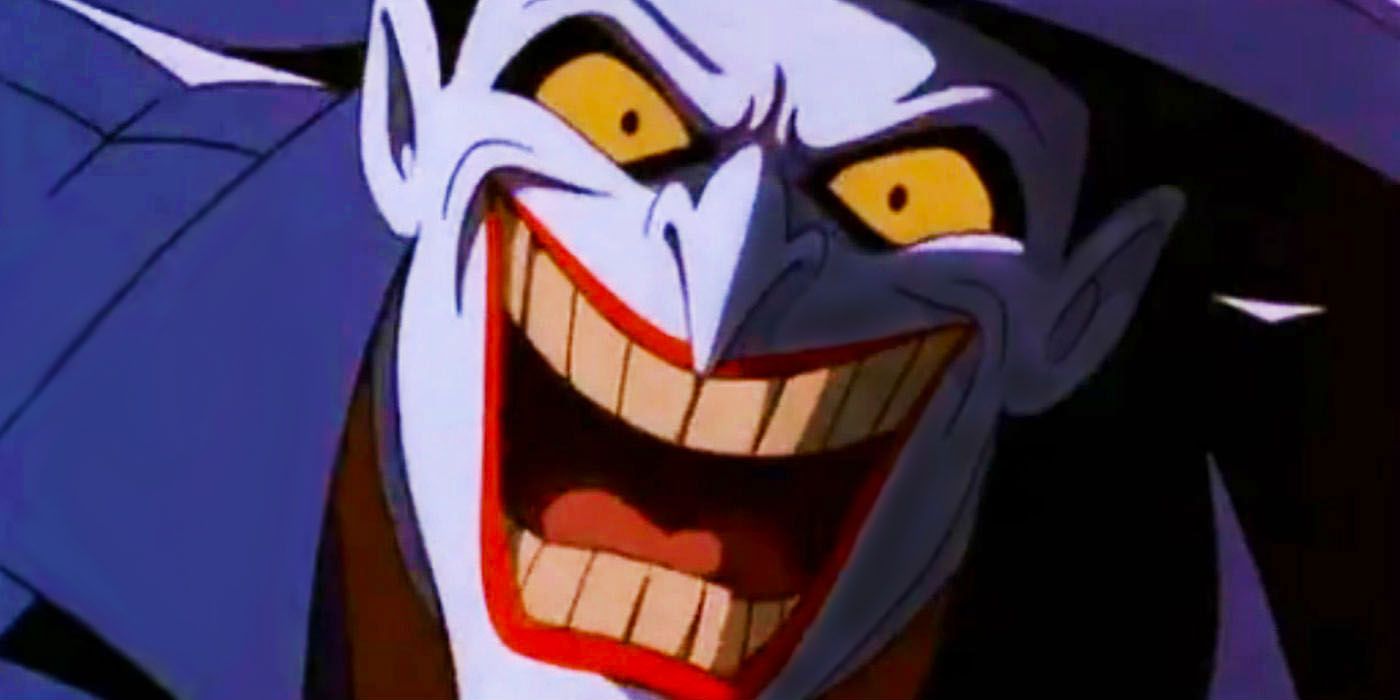
Everyone knows Mark Hamill owns the role. His cackle is the definitive sound of Gotham’s Clown Prince of Crime. But there is this persistent, shadowy "what if" that haunts the history of Batman: The Animated Series. It’s the story of Tim Curry as the Joker, a casting choice that actually made it all the way into the recording booth before the plug was pulled.
It wasn't just a rumor. He didn't just "audition."
Curry actually recorded several episodes of the show. Somewhere in the Warner Bros. vaults, there is a version of "Joker's Favor" with the voice of Pennywise coming out of the Joker’s mouth. Honestly, it’s one of the greatest pieces of lost media in animation history. For years, fans speculated that he was fired for being "too scary," which sounds like a compliment for a villain. The reality is a bit more practical, though no less disappointing for those of us who grew up worshipping The Rocky Horror Picture Show.
Why Tim Curry as the Joker Didn't Work Out
The production of Batman: The Animated Series (BTAS) was a chaotic, beautiful mess of high ambition. When producers Bruce Timm and Eric Radomski were casting the Joker, they wanted someone who could balance the theatricality of a circus performer with the genuine menace of a serial killer. Tim Curry was the obvious choice. He had just finished playing Pennywise in the 1990 IT miniseries. He was the king of the "scary clown" trope.
He got the job. He started recording.
But a few weeks into production, something wasn't clicking. The legend says his voice was so terrifying it gave the network censors night terrors, or that the children in the test audiences were weeping. Those are fun stories. They're also mostly exaggerated.
The real reason Tim Curry as the Joker fell through was much more physical. According to Andrea Romano, the legendary casting and voice director for the series, Curry developed a severe case of bronchitis during the early recording sessions. The Joker is a demanding role. It requires massive leaps in pitch, screaming, and, most importantly, the laugh.
Curry’s voice was under immense strain. He was struggling to maintain the consistency needed for a long-form series. The producers realized that if they stayed with him, they might have to delay production every time his voice gave out. In the fast-paced world of 90s television animation, they couldn't afford that. They needed someone who could hit those high-octane notes week after week without ending up on vocal rest.
Enter Mark Hamill and the "Second Choice" Success
It’s weird to think of Mark Hamill as a "replacement," but that’s basically what happened. Hamill had actually voiced a different character—Ferris Boyle—in the episode "Heart of Ice." He told the producers he desperately wanted a crack at a villain. When the Curry situation became untenable, they gave Hamill his shot.
The rest is history. Hamill brought a manic, musical quality to the character that defined the Joker for a generation.
But what about the Curry tapes?
Bruce Timm has confirmed in various interviews and at conventions like Comic-Con that the audio still exists. Every now and then, a clip or a "leak" surfaces online, but most are just clever fan edits using audio from Curry’s other roles, like Captain Hook in Peter Pan and the Pirates. The actual BTAS audio remains locked away. It’s the "Snyder Cut" of the voice-acting world.
The Tone Shift: Comparing Two Icons
If you’ve ever heard Tim Curry’s voice work in FernGully: The Last Rainforest as Hexxus, you can imagine his Joker. It would have been oily. Deep. Sophisticated in a way that felt like a predator playing with its food.
Curry’s Joker would have been a theatrical monster. Hamill’s Joker, by contrast, was a failed comedian who went insane. One feels like an ancient evil; the other feels like a tragic human breakdown.
People often forget that at the time, the Joker was still recovering from the Jack Nicholson portrayal in the 1989 film. Nicholson was big. He was a "star." Casting Curry was a way to keep that "big actor" energy in a cartoon. When they pivoted to Hamill, they shifted the character away from a "celebrity voice" toward a "character actor" performance. It changed the DNA of the show.
The Lingering Legacy of the Lost Performance
Even though he lost the role, Tim Curry’s influence on the Joker hasn't entirely vanished. You can see bits of his DNA in later versions. The way the Joker moves in the early episodes of BTAS has a certain "Curry-esque" swagger. The animators had already begun working based on his initial voice tracks.
If you watch "Joker's Favor" closely, the timing of the Joker's movements—the pauses, the dramatic sweeps of his arms—all of that was timed to Curry’s original performance. When Hamill came in, he had to "dub" over the existing animation timing. It’s a testament to Hamill’s skill that you can’t even tell.
There is a certain irony here, too.
Years later, Tim Curry did eventually get to play a version of a DC villain in other projects, but the Joker remained the one that got away. For fans, it’s the ultimate "What If?" scenario. Imagine a Joker who sounded less like a hyena and more like a Shakespearean actor who had finally snapped. It would have changed the whole vibe of the DC Animated Universe (DCAU).
Maybe the show would have been even darker. Maybe it wouldn't have been as funny.
Examining the Evidence: Did He Record Everything?
A common misconception is that Curry only did a few lines. He actually recorded most of the Joker's first few appearances. This includes "Joker's Favor" and "The Last Laugh."
In some versions of the story told by crew members, it wasn't just the bronchitis. There was also a creative difference regarding the "scary factor." Curry’s Joker was reportedly very dark. This was a Saturday morning cartoon in the early 90s. Even though BTAS pushed the boundaries, there were limits.
If Curry's take was too close to Pennywise, the network probably would have balked anyway.
The transition wasn't immediate, either. There was a brief period of panic. You have to understand, the Joker is the lynchpin of the series. Without a perfect Joker, the show might have been just another "Batman" show instead of the masterpiece it became.
How to Experience the "Curry Joker" Today
Since we can't listen to the actual vault tapes, we have to look elsewhere. To get a feel for what Tim Curry as the Joker would have sounded like, check out his performance as Skullmaster in Mighty Max. It’s chilling. It has that same rasp and that same sense of intellectual superiority.
Another great "proof of concept" is his role as The Grand Wizard in The Worst Witch. It shows his ability to be campy and menacing at the exact same time.
That balance is what makes a great Joker.
It’s easy to be scary. It’s easy to be funny. It is incredibly hard to be both simultaneously in a way that makes the audience believe you could kill them while telling a knock-knock joke. Curry had that in spades.
Actionable Insights for Fans and Collectors
If you are obsessed with this lost chapter of animation history, here is how you can dig deeper:
- Search for the "Master of the Future" Audio: Some collectors claim that snippets of Curry's Joker lines were recycled into other minor characters in the DCAU to save on recording costs. Keep a sharp ear out when watching early episodes for "uncredited" voices that sound suspiciously like Dr. Frank-N-Furter.
- Study the Animation Keyframes: Watch "Joker's Favor" again. Focus on the Joker's mouth movements. In the world of animation, "lip-sync" is everything. You can occasionally see where the animation doesn't perfectly match Hamill’s "A" and "O" vowel sounds—those are the fingerprints of Tim Curry's original vocal takes.
- Read "The Art of Batman: The Animated Series": This book contains some of the earliest character designs. You can see how the Joker’s physical appearance evolved to match the voice change, moving from a slightly more "solid" look to the more elastic, expressive version Hamill made famous.
- Follow Andrea Romano’s Interviews: She is the gatekeeper of this history. She occasionally drops new details at animation seminars or on podcasts regarding the specific moment she knew they had to make the switch.
Tim Curry’s career didn't suffer, obviously. He went on to voice iconic villains in Gargoyles, Star Wars: The Clone Wars, and Ben 10. But for those who love the dark corners of Gotham, the Curry Joker remains the greatest ghost in the machine. It’s a reminder that even in a "perfect" show like Batman: The Animated Series, the path to greatness was paved with difficult choices and missed opportunities.
We got Mark Hamill, and we are lucky for it. But somewhere in an alternate universe, Tim Curry is still laughing in the dark, and it’s probably terrifying.