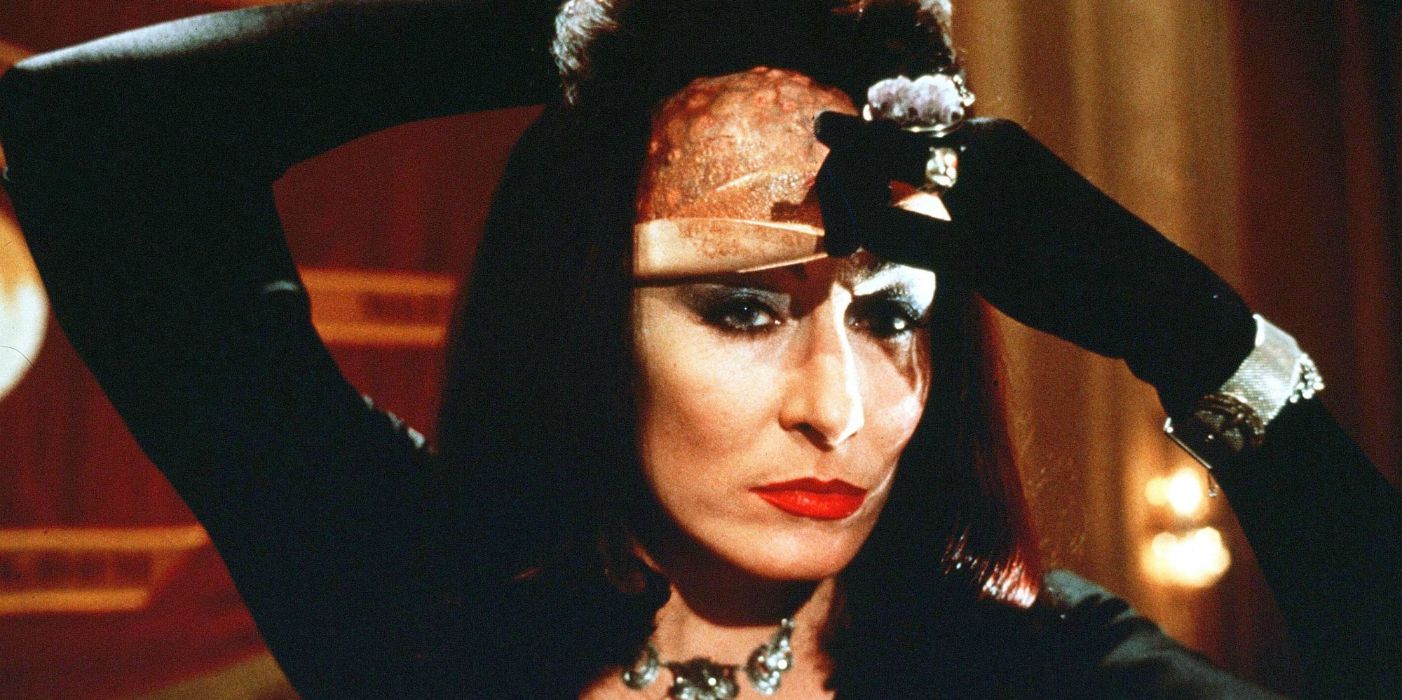
It is hard to forget that face. Even decades later, the image of Anjelica Huston peeling back her own skin to reveal a hunchbacked, hook-nosed, warty monstrosity remains burned into the collective memory of every kid who grew up in the 90s. We all remember the "Remove your wigs!" scene. It was pure nightmare fuel.
But honestly, looking back at the witches Anjelica Huston portrayed, there is a lot more to the story than just some scary makeup and a vaguely European accent. This wasn't just another paycheck for a Hollywood star; it was a grueling, high-stakes production that nearly broke its leading lady and ended up causing a massive rift with one of the most famous children's authors in history.
The Hellish Transformation into the Grand High Witch
You've probably heard that the makeup took a long time. But "a long time" doesn't quite capture the claustrophobic reality of it. To become the Grand High Witch, Huston had to sit in a chair for six to seven hours every single morning.
Think about that. Your workday starts at 3:00 AM. You are being encased in heavy latex, spirit gum, and prosthetics before you even have your first cup of coffee. By the time the cameras were ready to roll, Huston was already exhausted. She had to wear a full face mask, a prosthetic hump on her back, mechanized claws on her fingers, and even a withered collarbone piece.
It wasn't just uncomfortable; it was physically draining. There’s a specific story from the set where she was filming a long monologue. She was so tired of being "encased in rubber" under those hot studio lights that she actually started to lose her grip on the lines. The words just stopped making sense. She just wanted to cry.
Why the Makeup Was So Controversial
The look of the witches in the 1990 film—specifically the large, hooked noses—has been criticized in recent years. Critics and historians have pointed out that Roald Dahl's descriptions often leaned into old, harmful antisemitic tropes. While the 1990 film was following the book’s descriptions to a tee, the 2020 remake with Anne Hathaway deliberately moved away from the prosthetic noses to avoid those specific visual associations. It’s a complicated legacy for a movie that many of us loved as kids, but it’s an important part of why the film looks the way it does.
The Secret Romance and the Flooded Hotel
While Huston was being "the most evil woman in creation" on screen, her off-screen life was actually quite glamorous—and a little chaotic. At the time, she was dating Jack Nicholson.
The production was mostly based at the Headland Hotel in Cornwall. It’s a real place, and you can still stay there today. Apparently, the hotel staff was constantly buzzing because Nicholson would call the switchboard all the time to speak to her. He also sent massive, overflowing bouquets of roses to the hotel regularly. It must have been a weird sight: this terrifying witch figure receiving romantic gestures from one of the biggest movie stars on the planet.
Then there was Rowan Atkinson. Before he was globally famous as Mr. Bean, he played the hotel manager, Mr. Stringer. One night, Atkinson accidentally left the bath taps running in his room. He fell asleep, and the water flooded the entire floor below.
The flood didn't just ruin some carpets; it actually destroyed a huge chunk of the production team’s electrical equipment. You can imagine the hotel manager in real life being just as flustered as his character was on screen.
Why Roald Dahl Hated the Ending (And He Really Did)
If you read the book, you know it doesn't end with a "happily ever after." In Dahl's original story, the boy stays a mouse. Forever. He and his grandmother basically accept that they only have about nine years left to live, and they plan to spend those years traveling the world to hunt down the rest of the witches.
Nicolas Roeg, the director, and Jim Henson, who executive produced, decided that was way too depressing for a 1990 audience. They filmed a "happy" ending where a good witch (a character named Miss Irvine, who isn't even in the book) turns the boy back into a human.
Roald Dahl was absolutely livid.
He supposedly called the ending "appalling." There are reports that he was so upset after a screening that he was moved to tears. He even demanded that his name be removed from the credits, though he eventually backed down on that. For Dahl, the whole point of the story was the sacrifice. By making him a boy again, the movie basically erased the emotional weight of the entire journey.
Practical Effects vs. The CGI Era
The 1990 version of the witches Anjelica Huston is often cited as the peak of practical effects. This was the final project Jim Henson worked on before he passed away. His Creature Shop used three different sizes of puppets to make the mice look real:
- "A" Mice: Real mouse-sized, operated by thin cables.
- "B" Mice: Rat-sized, used for more complex movements.
- "C" Mice: Massive, three-foot-tall hand puppets used for expressive close-ups.
Because they didn't have CGI, they had to build entire "giant" sets to make the puppets look small. When you see a mouse running across a kitchen floor, you’re often looking at a massive, oversized kitchen set built just for that one shot. It gives the movie a tactile, "gross-out" feel that the 2020 CGI-heavy remake just couldn't replicate.
Huston’s Enduring Love for the Role
Despite the six-hour makeup sessions and the "encased in rubber" misery, Huston has often said that the Grand High Witch is her favorite role of her entire career. She clearly had a blast with the performance. She used a bizarre, heightened accent—basically her own "German presentation" for dramatic effect—and leaned into the campiness of the character.
She even admitted that years later, she would occasionally dress up as the character on Halloween just to scare her friends' kids. Honestly, that’s exactly the kind of energy you’d expect from the Grand High Witch.
Actionable Insights for Fans and Collectors
If you're looking to dive deeper into the world of the 1990 film, there are a few things you can actually do to experience the "magic" for yourself:
- Visit the Headland Hotel: Located in Newquay, Cornwall. You can stay in the actual rooms where they filmed. It’s an iconic spot for film buffs.
- Track Down the "Formula 86" Props: Occasionally, original props from the Jim Henson Creature Shop appear at auction. Keep an eye on sites like PropStore, but be warned: they aren't cheap.
- Watch the "Jim's Red Book" Archives: The Jim Henson Company has released behind-the-scenes footage of the puppet work on YouTube. It’s a masterclass in how movies were made before computers took over.
- Compare the Accents: Listen to Huston’s performance alongside Anne Hathaway’s 2020 version. Huston’s is much more restrained and "haughty," while Hathaway’s is more "camp and chaotic." It’s a great study in how acting styles for villains have changed over thirty years.
The 1990 film isn't perfect—the ending is a mess and some of the imagery is dated—but Anjelica Huston’s performance remains the gold standard for cinematic witches. She managed to be both glamorous and repulsive at the same time, a feat that very few actors can pull off under six inches of latex.