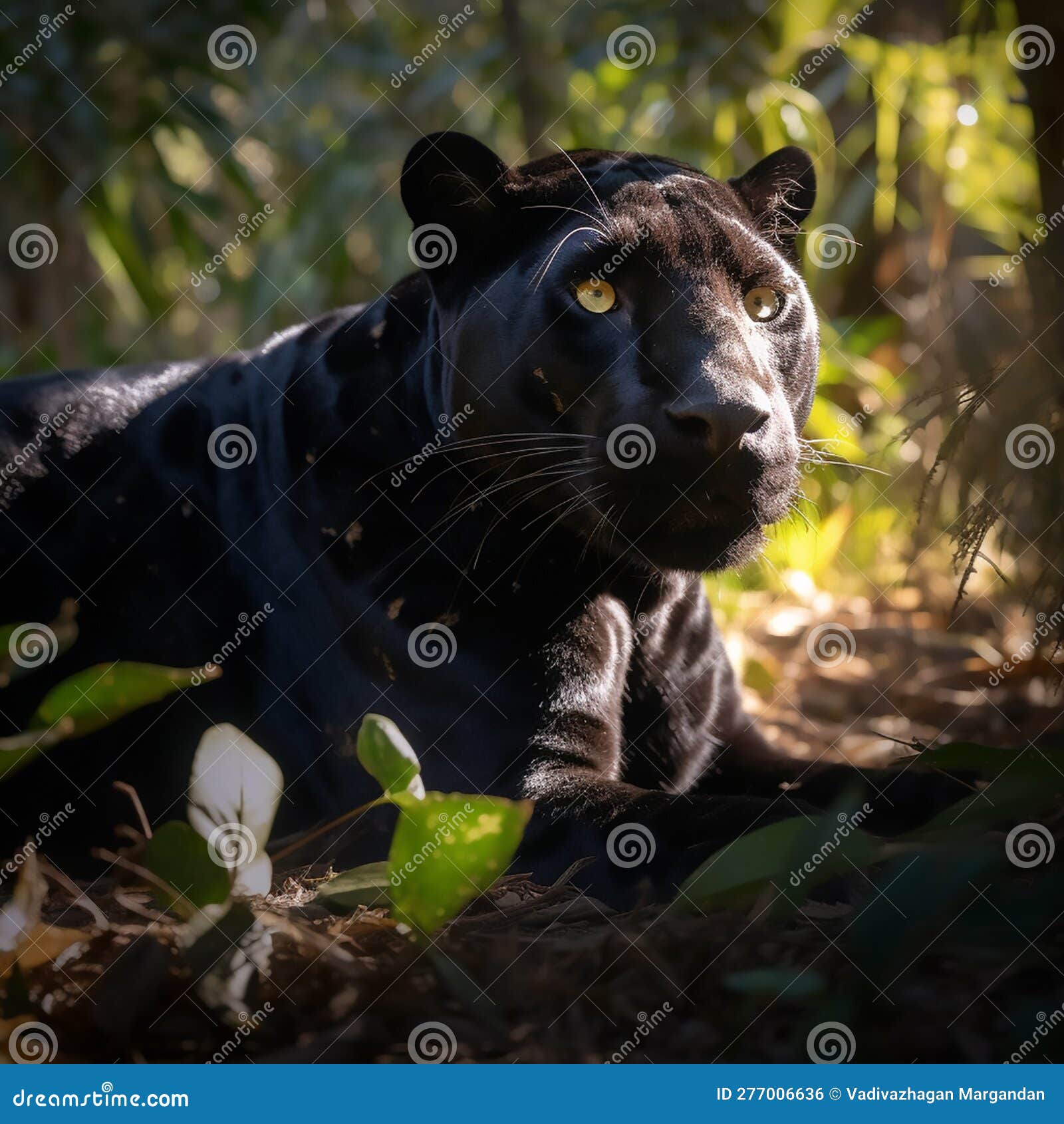
You’ve seen the photos. A sleek, midnight-colored predator sliding through the emerald shadows of the Amazon. It looks like a ghost, or maybe a glitch in the natural world. People call them "black panthers," but here’s the thing: that name is basically a catch-all term for any big cat with a dark coat. In South and Central America, that "panther" is almost always a black jaguar.
They are breathtaking.
But there is a massive amount of misinformation floating around the internet about these animals. Some people think they’re a different species entirely. They aren't. Others believe they’re sterile or "mutants" in a negative sense. Also wrong. Honestly, the reality of the black jaguar big cat is far more interesting than the myths. It’s a story of genetics, camouflage, and a very specific type of biological luck called melanism.
What is a Black Jaguar, Anyway?
To understand the black jaguar big cat, you have to look at its DNA. It’s not a subspecies. It’s just a jaguar (Panthera onca) with a genetic mutation. Specifically, it's a dominant allele. In leopards, melanism is recessive, but in jaguars, if one parent passes down the gene, the cub can be born black.
Wait. They aren't actually "black."
If you catch one in the right light—and I mean really bright, direct sunlight—you’ll see the truth. The signature "rosettes" (those ring-like spots with smaller dots inside) are still there. They’re just buried under a heavy layer of dark pigment. It’s like wearing a black lace veil over a patterned shirt. You can still see the pattern if you look closely enough. Biologists call this "ghost striping" or ghost spotting.
About 10% of the jaguar population carries this trait. Why only 10%? If it’s a dominant gene, shouldn't they be everywhere? Evolution is picky. In the bright, dappled light of a thin forest, a solid black coat is actually a disadvantage. You stick out. You’re easy to spot. But in the deep, dense, dark canopy of the rainforest floor? That’s where the black jaguar big cat becomes an apex shadow.
The Science of Melanism
We have to talk about the MC1R gene. This is the melanocortin 1 receptor. In these cats, a mutation in this gene causes an overproduction of melanin. This isn't unique to jaguars, obviously. We see it in squirrels, wolves, and even guinea pigs. But in the Neotropics, it serves a very specific ecological purpose.
Dr. Eduardo Eizirik, a leading researcher on feline genetics, has spent years tracking how these color variations impact survival. There’s a theory called "gloger’s rule" which suggests that darker-pigmented animals are more common in humid, hot environments near the equator. The black jaguar fits this perfectly. The extra pigment might even provide a slight boost to their immune systems or help with thermoregulation in the humid heat of the Pantanal or the Amazon Basin.
Where They Actually Live
You won't find many black jaguars in the open grasslands of Venezuela. They’d starve. They are almost exclusively found in dense, humid river basins.
- The Amazon Rainforest: The primary stronghold. The thick canopy creates permanent twilight on the forest floor.
- The Pantanal: Though more open, the forested fringes of these massive wetlands house melanistic individuals.
- Costa Rica and Panama: Sightings are rare but documented in the high-altitude cloud forests.
It’s worth noting that these cats are incredibly solitary. You aren't going to find a "pride" of black jaguars. A mother jaguar might give birth to one spotted cub and one black cub in the same litter. They grow up together, hunt the same capybaras, and eventually go their separate ways. To the cats, the color doesn't seem to matter for social bonding. It’s purely about who can sneak up on a caiman more effectively.
Misconceptions That Just Won't Die
I hear this all the time: "Black panthers are more aggressive."
There is zero scientific evidence for this. None. A black jaguar big cat has the exact same temperament as its spotted siblings. They are shy, reclusive, and generally want nothing to do with humans. The "aggressive" reputation likely comes from the fact that they are harder to see, so when a human does stumble upon one, it feels more sudden and terrifying. It’s a perception bias, not a biological reality.
Another one? "They are a separate breed."
Nope. Again, it’s just a coat color. It’s the same as a human having red hair. They are still Homo sapiens, just with a different chemical balance in their follicles.
The Stealth Advantage
Jaguars are already the heavyweights of the New World. They have the strongest bite force of any big cat relative to their size. We’re talking about 1,500 pounds per square inch. They don't go for the throat like a lion; they crush the skull.
The black jaguar takes this power and adds a layer of "stealth mode."
In the late evening (crepuscular hours), a spotted jaguar is fairly well camouflaged. But a black jaguar is nearly invisible. This allows them to hunt in the "deep" night with a higher success rate in specific habitats. They are opportunistic. They eat monkeys, deer, birds, and even turtles—they'll literally bite through a turtle shell like it's a cracker.
Conservation Struggles
We are losing them. Not just the black ones, but all of them.
The black jaguar big cat faces the same threats as the rest of its species: habitat fragmentation. When we build roads through the jungle, we cut off the gene flow. If the 10% of jaguars that carry the melanistic gene are isolated in a small patch of forest, that trait can disappear from the local population overnight.
Cattle ranching is the biggest conflict. A jaguar doesn't know the difference between a wild deer and a farmer's cow. When a jaguar kills livestock, the farmers often retaliate. Organizations like Panthera are working on "jaguar corridors"—strips of protected land that allow these cats to travel from Mexico all the way down to Argentina without being shot or hit by cars.
How to Actually See One (Safely)
If you’re looking to see a black jaguar in the wild, bring your patience. And a lot of bug spray.
Your best bet is the northern Pantanal in Brazil, specifically around the Porto Jofre area. While the "regular" spotted jaguars are the stars of the show there, melanistic individuals are occasionally spotted along the riverbanks. But honestly? Most "black panther" sightings reported by tourists are actually large feral cats or dark-furred jaguarundis. A real black jaguar is a massive, muscular tank of an animal.
What You Should Do Next
If you’re fascinated by these predators, don't just look at cool photos on Instagram. Support the science.
- Follow the data. Look into the work being done by the Jaguar Conservation Fund. They track specific individuals and study the frequency of melanism in the wild.
- Support sustainable beef. Since cattle ranching is the #1 threat to jaguar habitat, look for "jaguar-friendly" certifications or support ranches that use non-lethal deterrents (like electric fences and livestock guardian dogs).
- Check the sources. Next time you see a "black panther" video, look at the ears. Jaguars are stocky with short tails. Leopards (the other "black panther") are leaner with very long tails. If it’s in the Americas, it’s a jaguar.
- Advocate for corridors. Support international policies that protect trans-boundary wildlife corridors. The survival of the black jaguar depends on the ability of these cats to find mates outside of their immediate, shrinking territories.
The black jaguar big cat isn't a myth or a monster. It is a masterpiece of specialized evolution. It’s a reminder that nature has more than one way to build a perfect predator, and sometimes, the best way to survive is to blend into the shadows.