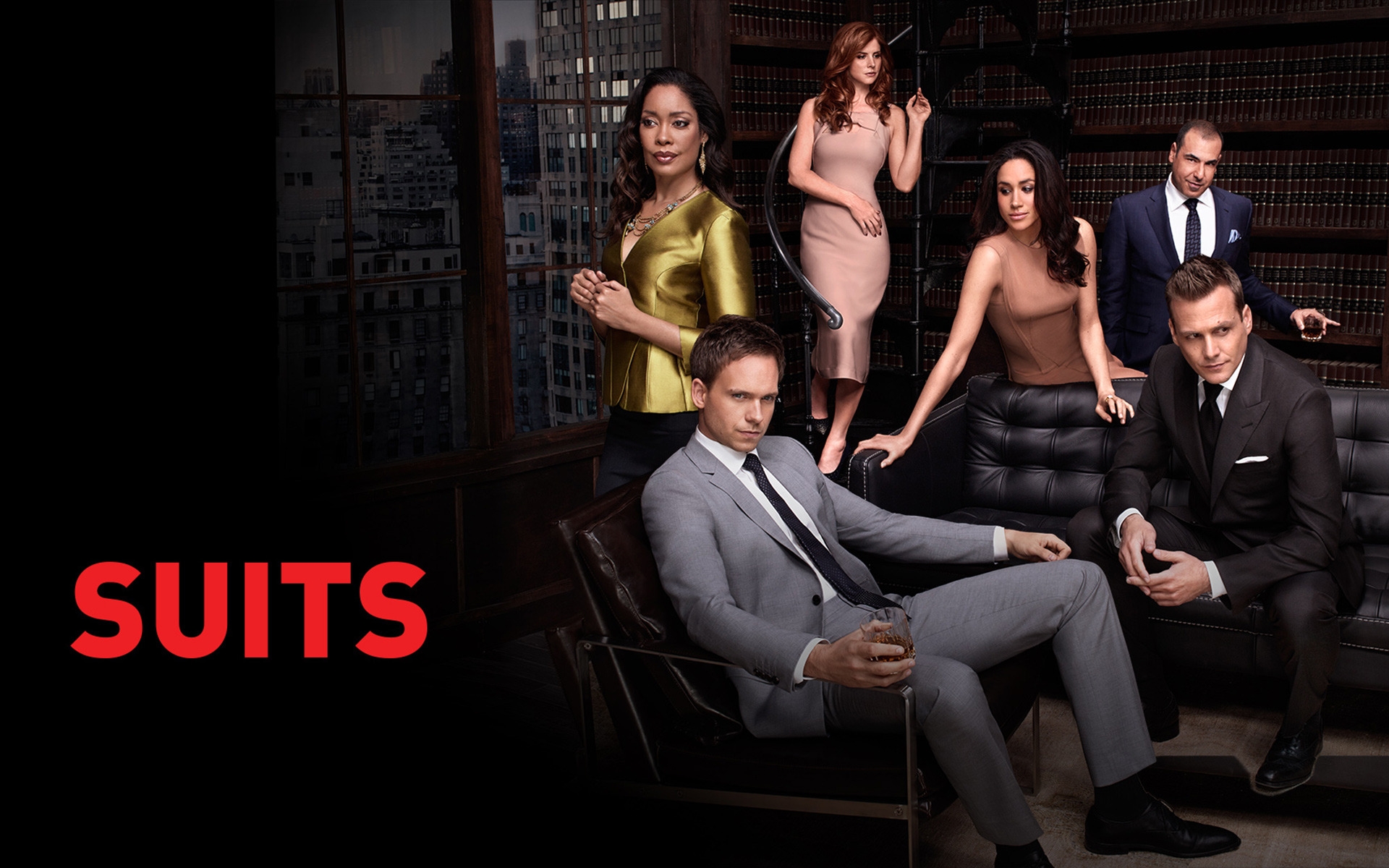
It started with a bike, a briefcase full of weed, and a legal genius who never actually went to law school. If you've spent any time on Netflix lately, you know exactly why suits tv show seasons are dominating the cultural conversation all over again. It’s not just about the crisp Tom Ford suits or the snappy banter. It’s about that specific, lightning-in-a-bottle chemistry that defined the early 2010s "Blue Skies" era of USA Network.
Honestly, the show shouldn’t have worked as long as it did. Most legal procedurals burn out by year four. But Suits managed to reinvent itself multiple times over nine years. Some of those pivots were brilliant. Others? Well, they were a bit of a slog. To really understand the show, you have to look at how the stakes shifted from "don't get caught" to "don't lose the firm."
The "Secret" Years: Why Suits TV Show Seasons 1 Through 3 Are Peak TV
The early suits tv show seasons are basically a superhero story disguised as a legal drama. Mike Ross has a photographic memory; Harvey Specter has the "power" of never losing. When they first team up, the show is light, fast, and incredibly fun. You have the "case of the week" format, but the real engine is the secret.
Think back to Season 1. It was simple. Mike is a fraud, and Harvey is his accomplice. Every time Louis Litt—played with incredible nuance by Rick Hoffman—gets close to the truth, the tension spikes. It felt like a high-stakes game of hide-and-seek. Season 2 stepped things up by introducing Hardman. This wasn't just about a secret anymore; it was a civil war for the soul of Pearson Hardman. That’s when we realized Gina Torres’s Jessica Pearson was the actual MVP of the series. She was the only person who could keep both Harvey and Mike in check.
By Season 3, the show started grappling with the consequences of its own premise. The Hessington Oil arc was polarizing, sure. Some fans felt it dragged. But it was the first time we saw that Harvey’s arrogance had real-world costs.
The Pivot to Prison and the Mike Ross Problem
Everything changed in Season 5. If you ask any hardcore fan, they’ll tell you the Season 5 finale is the most stressful hour of television the show ever produced. Mike finally stops running. He turns himself in.
This was a massive risk. Most shows would have found a magical loophole to keep their lead out of a jumpsuit. Instead, Suits actually sent Mike to Danbury. Season 6 is a weird beast because it splits the narrative. You have Mike trying to survive behind bars and Harvey trying to keep a literal ghost town of a law firm alive. It’s dark. It’s gritty. It’s almost a different show entirely.
People often wonder why the vibe shifted so much here. Basically, the writers realized they couldn't keep the "secret" going forever without it becoming a parody of itself. They had to blow it up. While some viewers missed the banter-heavy days of the early suits tv show seasons, the prison arc gave the characters a depth they hadn't earned yet. Harvey had to face his abandonment issues. Mike had to face his Messiah complex.
The Meghan Markle and Patrick J. Adams Exit
We have to talk about the elephant in the room: Season 7. This was the end of an era. With the real-life royal wedding on the horizon, Meghan Markle (Rachel Zane) and Patrick J. Adams (Mike Ross) both exited the show.
Losing one lead is tough. Losing two is usually a death sentence.
The Season 7 finale felt like a series finale. Mike and Rachel get married and head off to Seattle to run a legal clinic. It was the "happily ever after" fans wanted. But the show kept going.
Rebranding the Firm: The Katherine Heigl Era
Seasons 8 and 9 are divisive. No way around it. When Samantha Wheeler (Katherine Heigl) joined the cast, the dynamic shifted from a mentor-protege story to an ensemble power struggle.
Without Mike, Harvey became the central protagonist in a way he hadn't been before. He had to grow up. The romance with Donna—which had been teased for nearly a decade—finally took center stage. Honestly, some people felt "Darvey" was a bit forced by the end, but after 134 episodes, the fans deserved some payoff.
What’s interesting about these later suits tv show seasons is how they leaned into the "family" aspect. The firm changed names about fifteen times (Pearson Darby Specter Litt Wheeler Williams... you get the point), but the core remained. It was about people who were addicted to winning but realized they didn't want to win alone.
Why the Show is Blowing Up Now
You’ve probably seen the headlines about Suits breaking streaming records in 2023 and 2024. It's wild for a show that ended in 2019.
Why? Because it’s "comfort TV" with a sharp edge. It’s aspirational. Everyone wants to be as confident as Harvey or as smart as Mike. It’s also one of the last great "long-form" dramas. Most shows today are eight-episode seasons that feel like stretched-out movies. Suits gave you 16 episodes a year. You lived with these people. You learned their coffee orders. You knew exactly what it meant when Harvey adjusted his cufflinks.
Navigating the Seasons: A Practical Watcher’s Guide
If you're jumping into a rewatch or starting for the first time, don't feel like you have to treat every season the same. The show evolves, and your expectations should too.
- For the "Classic" Vibe: Stick to Seasons 1-4. This is the peak of the Mike and Harvey bromance and the best legal "wins."
- For High Stakes: Season 5 is non-negotiable. It’s the tightest writing in the series.
- For Character Growth: Seasons 8 and 9 are actually great if you view them as a spin-off. Louis Litt’s redemption arc across these final years is arguably the best writing in the entire show.
How to Stream and What to Watch Next
Currently, the vast majority of suits tv show seasons are available on Netflix and Peacock. Note that Season 9 is sometimes missing from certain regions on Netflix, so you might need to hunt it down on Peacock or Amazon to see the actual series finale.
If you finish all nine seasons and feel a void in your life, you have a few options:
- Pearson: The short-lived spin-off following Jessica Pearson in Chicago. It’s more of a political drama than a legal one.
- Suits: L.A.: Keep an eye out for the new expansion. It’s not a direct sequel, but it exists in the same universe with a new cast.
- The Original "Blue Skies" Shows: If you miss the tone of the early seasons, check out White Collar or Burn Notice. They have that same breezy, high-stakes energy.
The legacy of these seasons isn't just about the law. It’s about the fact that even if you start out as a fraud, you can eventually earn your seat at the table. Just make sure your suit is tailored.
To get the most out of your viewing experience, start by paying attention to the color palette. Notice how the office lighting gets darker and more "corporate" as the seasons progress—it's a subtle reflection of the characters losing their innocence. Track the number of times they use the word "goddamn" (it's a lot) and watch how the power dynamics in Jessica’s office shift based on who is standing and who is sitting. These small details are what make the show infinitely rewatchable.
Now, go find a comfortable couch and start with the Pilot. That first 90-minute episode is a masterclass in television setup. Reach for Season 5 when you want to see the show at its most daring, and don't sleep on the series finale—it brings back just enough nostalgia to satisfy without overstaying its welcome.