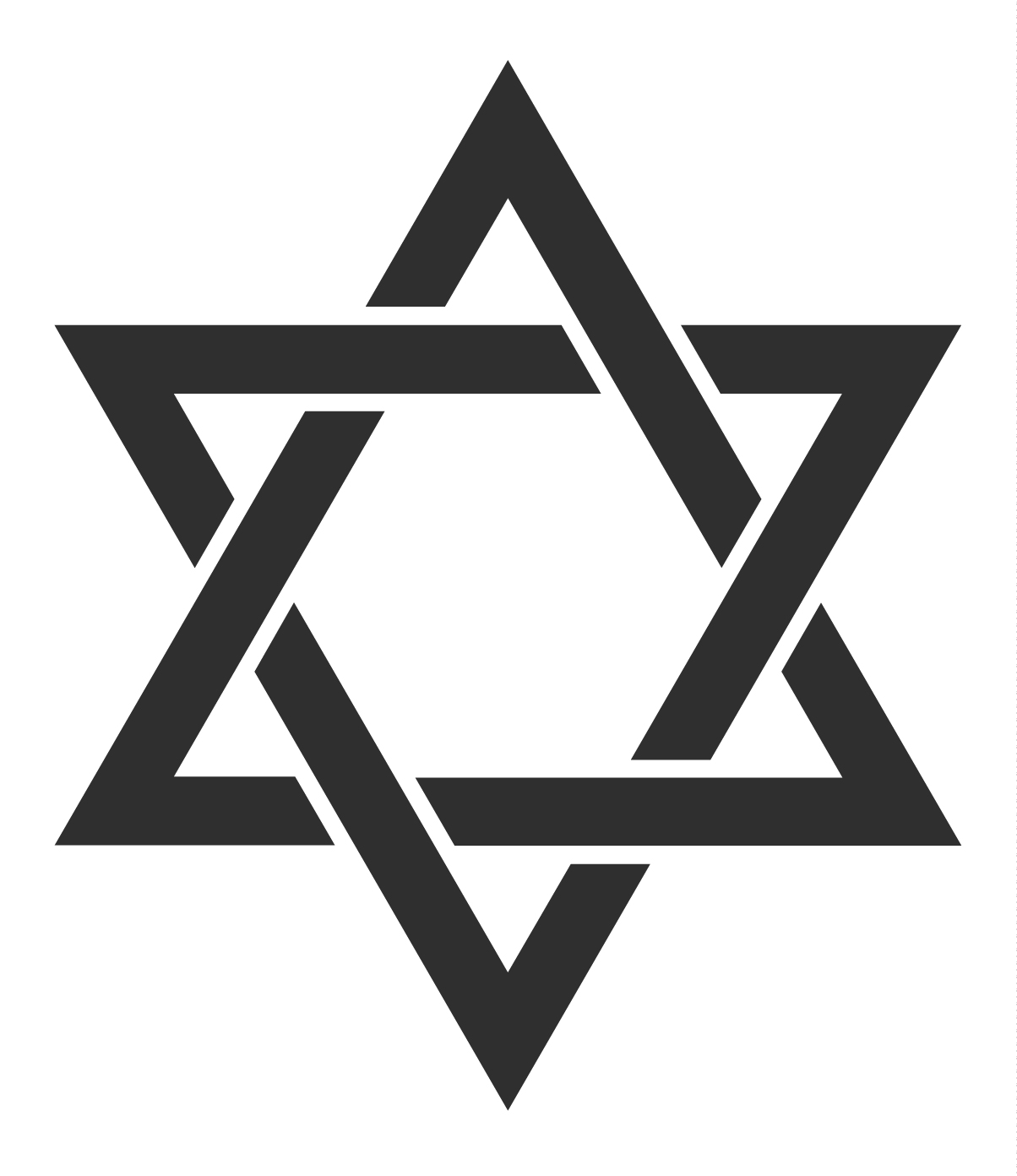
Walk through any neighborhood in Jerusalem or glance at the blue-and-white flag snapping in the wind at a Mediterranean harbor, and you’ll see it. The hexagram. Two interlocking triangles. Most people know it as the Jewish star, but the star of david meaning stretches far beyond a simple modern religious badge. Honestly, it’s one of those symbols that everyone thinks they understand until they start digging into the actual history. It’s not like the Menorah, which has been the official symbol of Judaism since ancient times. This star? It’s a bit of a late bloomer in the world of religious iconography.
You’ve probably seen it on necklaces, gravestones, and even superhero costumes. But if you went back to the time of King David himself, he probably wouldn't have recognized it as his personal logo. That’s the first thing that trips people up. History is messy. Symbols evolve. And the way we interpret this specific six-pointed shape today is a mix of medieval mysticism, 19th-century politics, and a very deep, very human need for identity.
Where did it actually come from?
Let’s get one thing straight: the hexagram isn't exclusive to Judaism. Not by a long shot. Archeologists have found it in Bronze Age carvings, in Hindu temples where it's known as the Shatkona, and in early Islamic art where it was often called the Seal of Solomon. It’s a geometric inevitability. If you play with a compass long enough, you’re going to draw a hexagram.
In early Jewish contexts, it showed up occasionally as a decorative motif. You can see it on a 3rd-century synagogue in Capernaum, sitting right next to a five-pointed star and a swastika (which, back then, was a common solar symbol). It didn’t "mean" anything specific yet. It was just a cool shape. It wasn't until the Middle Ages that things started getting interesting. Kabbalists—Jewish mystics—began to use the star in amulets. They weren't calling it the Star of David (Magen David) just yet. Often, it was associated with protection. Magic, basically.
By the 14th century, the Jewish community in Prague started using the star on their official flag. This was a turning point. It moved from a mystical doodle on an expensive piece of parchment to a public declaration of "here we are." But even then, it wasn't universal. If you asked a Jewish family in Morocco or Yemen in the 1600s about the star of david meaning, they might have just shrugged.
The Kabbalah and the "Shield" of David
The Hebrew term for the symbol is Magen David, which literally translates to the "Shield of David." There’s a cool legend behind this. Some stories suggest that when David was a young man hiding from King Saul in a cave, a spider spun a web in the shape of a star across the entrance, or that his soldiers carried shields reinforced by a metal hexagram design.
There's no archaeological evidence for the spider web thing, obviously. It’s folk history. But the "shield" concept stuck.
In the world of Jewish mysticism, the six points plus the center represent seven key attributes of God, or Sefirot. Think of it as a map of divine energy.
- Chesed (Kindness)
- Gevurah (Severity)
- Tiferet (Harmony)
- Netzach (Victory)
- Hod (Splendor)
- Yesod (Foundation)
- The center represents Malchut (Kingdom)
Franz Rosenzweig, a famous 20th-century Jewish philosopher, took this even further in his book The Star of Redemption. He saw the triangles as representing two sets of relationships: God, Humanity, and the World on one hand, and Creation, Revelation, and Redemption on the other. It’s a heavy, intellectual way of looking at a simple shape, but it shows how much weight we’ve put on those six points over the centuries.
The 19th Century Pivot
Why is it everywhere now? You can thank the 1800s for that. As Jews in Europe began to integrate more into mainstream society—a process called Emancipation—they wanted a symbol that functioned like the Christian cross. They needed something recognizable that could be put on the outside of a building to say "This is a Synagogue."
The Menorah was too complicated to draw quickly. The Lion of Judah was too busy. The hexagram? It was geometric, easy to reproduce, and already had some historical street cred. When the Zionist movement picked it up in 1897 for the First Zionist Congress in Basel, the deal was sealed. It became the symbol of a national hope, not just a religious one.
Darker Chapters and the Yellow Star
We can't talk about the star of david meaning without mentioning the Holocaust. It’s the elephant in the room. The Nazis took a symbol of pride and turned it into a badge of shame, forcing Jewish people to wear a yellow hexagram. It was meant to dehumanize.
But something fascinating happened after the war. Instead of abandoning the symbol because of its association with trauma, the Jewish people reclaimed it. When the State of Israel was founded in 1948, putting the star on the flag was a massive middle finger to those who tried to use it as a mark of death. It became a symbol of "never again." It shifted from a mark of victimization back to a mark of sovereignty.
Modern Interpretations: What does it mean to you?
Today, the meaning is mostly personal. For some, it’s purely religious. For others, it’s secular—a way to connect with their heritage or the land of Israel without necessarily believing in the mystical Sefirot.
You'll see it in pop culture too. It’s in the Marvel Universe with characters like Sabra. It’s on the jerseys of Jewish athletes. It’s even used in some New Age circles to represent the union of opposites: the upward triangle (fire, masculine) and the downward triangle (water, feminine).
Honestly, the star of david meaning is whatever the person wearing it needs it to be. It’s a shield. It’s a map of God. It’s a political statement. It’s a reminder of a grandmother’s necklace.
Actionable Takeaways for Understanding the Symbol
If you’re researching this for a project, or maybe you’re considering wearing the star, here are a few things to keep in mind:
- Check the Context: If you see a hexagram in a Hindu or Buddhist temple, it’s usually the Anahata (the heart chakra). Don't assume every six-pointed star you see in an antique shop is Jewish.
- Respect the History: Because of the Holocaust, the symbol carries a huge amount of emotional weight. Wearing it isn't quite the same as wearing a trendy geometric pattern; it's a statement of identity and history.
- Language Matters: If you want to sound like an expert, use the term Magen David. It shows you understand the Hebrew root of the "Shield of David" concept.
- Explore the Art: Look at the "Leningrad Codex," the oldest complete manuscript of the Hebrew Bible. The cover art features a beautiful, intricate Star of David, proving that even 1,000 years ago, Jewish scribes were finding beauty in this geometry.
The story of the star is far from over. As long as people are looking for a way to express who they are and where they come from, those two interlocking triangles will keep appearing on flags, around necks, and in the history books of the future. It’s a simple shape with a very, very complicated soul.
To truly understand the depth of this symbol, look into the works of Gershom Scholem, the preeminent scholar of Jewish mysticism. His essay "The Star of David: History of a Symbol" is the gold standard for anyone who wants to move past the myths and get into the real, gritty history of how this hexagram became the icon it is today. You can also visit the Diaspora Museum (ANU) in Tel Aviv, which has extensive exhibits on how Jewish visual identity has shifted over the millennia.
Ultimately, the Star of David serves as a bridge between the ancient and the modern, the mystical and the political. It remains one of the most resilient symbols in human history.