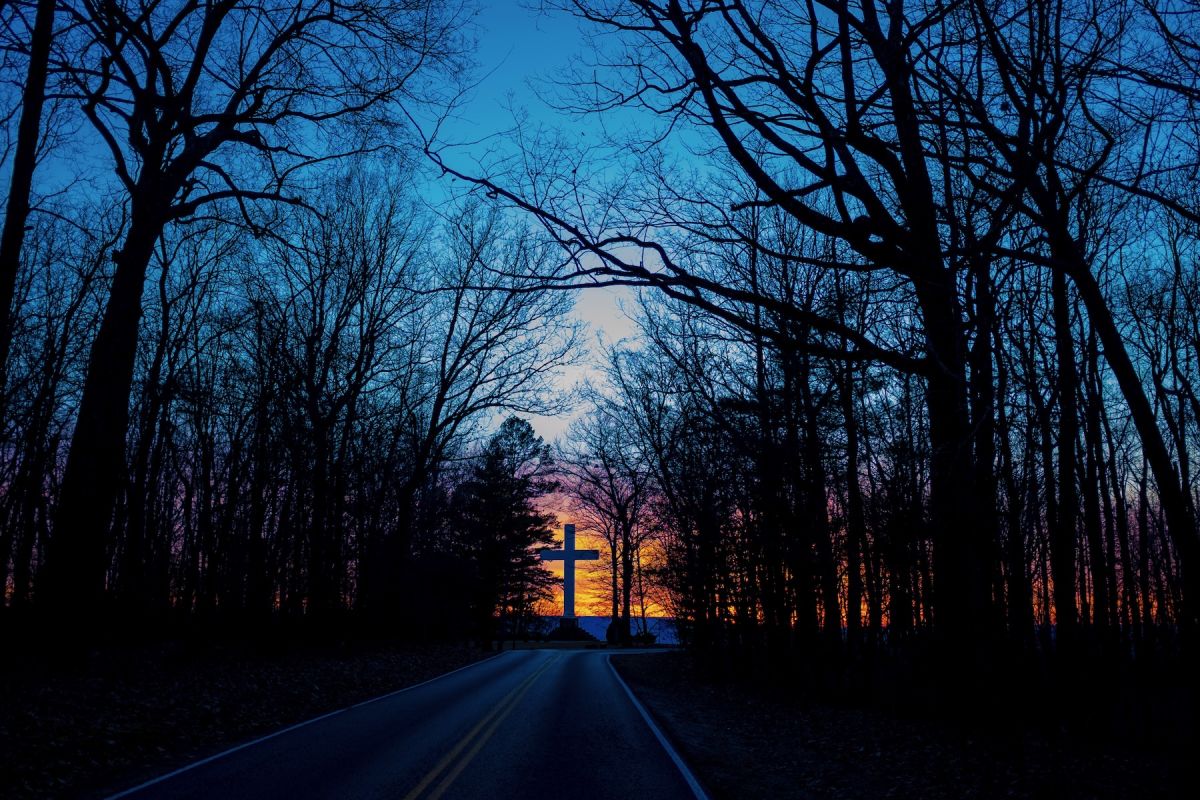
It hits you the moment you round that final curve on the Tennessee Highway 156. You aren’t just looking at a monument; you are looking at sixty feet of pure, unyielding limestone jutting out over the edge of the Cumberland Plateau. It’s huge. Honestly, the Sewanee Memorial Cross is one of those places that feels different depending on whether you’re standing at its base or looking up at it from the valley floor thousands of feet below.
Some people call it the "Memorial Cross." Others just say "The Cross."
If you’ve ever spent time at the University of the South—better known as Sewanee—you know this spot is the soul of the mountain. It isn't just a religious symbol or a photo op for graduation. It’s a compass.
But here’s the thing. A lot of people drive up from Nashville or Chattanooga, snap a selfie, and leave without actually realizing what they’re standing on. This isn't just a pile of rocks. It’s a WW1 memorial, a masterclass in 1920s engineering, and a site that has survived lightning strikes, intense fog, and nearly a century of Tennessee weather.
The History Nobody Reads on the Plaque
The cross was dedicated in 1922. That’s over a hundred years ago. Back then, the university wanted a way to honor the men from the school and the surrounding Franklin County who fought in World War I. They didn’t want something small. They wanted something that could be seen from the passing trains in the valley.
It was designed by an architect named Harold Bush-Brown. If that name sounds familiar, it’s because he was a big deal in the world of academic architecture. He didn't just want a cross; he wanted a beacon.
Construction was a nightmare.
Imagine hauling massive blocks of limestone up to a windy bluff in the early 1920s. There were no heavy-duty hydraulic cranes or paved access roads like we have now. It was grit. They built it right on the edge of "Green’s View," which offers one of the most vertigo-inducing lookouts in the entire state of Tennessee.
When it was finished, it stood sixty feet tall. It’s built of native sandstone and limestone, which is why it looks like it grew right out of the mountain itself. Over the years, they added names to the base—honoring those who served in World War II, Korea, and Vietnam. It turned from a specific tribute into a living timeline of sacrifice.
Why the View is Actually Better in the Winter
Most tourists flock to the Sewanee Memorial Cross in the fall. I get it. The changing leaves in the Franklin-Marion State Forest are world-class. You get these deep ochres and bright crimsons that look like the valley is on fire.
But honestly? Go in January.
When the trees are bare, the "bowl" of the valley opens up. You can see the patterns of the old farmsteads and the way the mist settles in the lowlands. Plus, Sewanee gets this weird micro-climate called "The Fog." Sometimes the fog is so thick you can’t see the top of the cross from the bottom. It feels haunting. It’s quiet. You’re standing there, looking out into a white abyss, and for a second, you feel like the only person on earth.
The Engineering of a Sixty-Foot Landmark
Let’s talk about the specs because the scale is hard to grasp until you’re leaning against it.
The cross isn't just a hollow shell. It’s solid. It has to be. The winds coming off the plateau can reach speeds that would tip over a lesser structure. Because it sits on the very edge of the Cumberland Plateau, it’s a natural lightning rod.
- Height: 60 feet.
- Material: Locally quarried stone.
- Lighting: It stays illuminated at night, acting as a literal North Star for pilots and locals.
There was a major restoration project some years back. You see, stone and mortar don’t play well with the freeze-thaw cycle of Tennessee winters. Water gets into the cracks, freezes, expands, and starts popping the stones out. The university has to be incredibly diligent about "re-pointing" the masonry. If you look closely at the base, you can see the different shades of mortar where experts have gone in to seal the wounds of time.
Finding the Cross: A Local’s Guide to the Best Route
Don’t just GPS "Sewanee" and hope for the best. You’ll end up in the middle of a dorm parking lot.
You want to take University Avenue all the way through the heart of the campus. You’ll pass All Saints’ Chapel—which, by the way, is a Gothic masterpiece you shouldn't skip—and keep heading toward the edge of the mountain. The road eventually turns into Tennessee Avenue.
Follow the signs for "The Cross."
The parking area is small. On a Saturday in October, it’s a mess. If you want the real experience, park further back near the Perimeter Trail and hike in. The Perimeter Trail is a 20-mile loop that circles the entire 13,000-acre campus (known as "The Domain"). The section leading to the cross is relatively flat but crosses some beautiful rock formations.
Coming in from the woods and seeing the cross emerge through the trees is much more rewarding than just hopping out of a minivan.
The Traditions and the "Sewanee Mythos"
There are stories.
Every graduating class has some sort of memory tied to this spot. It’s where people get engaged. It’s where students go at 3:00 AM to clear their heads during finals week. It’s where the "Order of the Gown" members—Sewanee’s academic honor society—sometimes gather.
There’s a sense of "thin space" here. It’s a Celtic concept where the gap between heaven and earth feels smaller. Whether you're religious or not, there is an undeniable weight to the air at the bluff.
What Most People Get Wrong About the Site
One big misconception is that the cross is purely a University of the South property for students only.
That’s false.
The Domain is open to the public. The university actually takes its role as a land steward very seriously. They manage the forest, protect the bluff, and keep the cross accessible to anyone who wants to visit.
Another mistake? People think the cross is the highest point on the mountain.
It’s actually not.
But it has the best prominence. Because it sits on that specific jut of the plateau, it overlooks the "Cove." The elevation drop is dramatic. You aren't just looking at a hill; you are looking at a geological shift where the Appalachian foothills begin to crumble into the flatlands of Middle Tennessee.
Logistics for Your Trip
If you’re planning a visit, keep these things in mind:
- Weather is unpredictable. It can be 70 degrees in Winchester and 55 degrees at the cross. Bring a jacket. The wind at the bluff is no joke.
- The Perimeter Trail. If you’re a hiker, use the cross as your "North Star." It’s one of the best-marked points on the trail.
- No drones. Usually, the university is pretty strict about drones around the cross and chapel to maintain the "quiet" atmosphere of the place. Check the latest campus policies before you fly.
- Sunset is the peak. Everyone goes for sunset. If you want to avoid the crowds, go for sunrise. The sun comes up behind the cross, casting a massive shadow across the valley. It’s incredible.
Protecting the Plateau
The area around the Sewanee Memorial Cross is ecologically sensitive. The Cumberland Plateau is one of the most biodiverse regions in North America. When you're walking around the base, stay on the stones. Don’t trample the native grasses or the small wildflowers that tuck into the rock crevices.
The university’s forestry department, which is world-renowned, uses the land around the cross for research. You might see small tags on trees or research plots. Leave them be. It’s all part of a larger effort to ensure this view looks the same in 2122 as it does today.
The Takeaway for Your Visit
Don’t rush it.
The Sewanee Memorial Cross isn't a "check it off the list" destination. Sit on the stone wall. Look out over the valley. Think about the fact that people have been standing on that exact spot, looking at that exact view, for over a century.
It’s a place for perspective.
When you look down and see the tiny cars moving on the highway below, your problems feel a little smaller. That’s the real reason people keep coming back. It’s not just the stone or the history; it’s the way the mountain makes you feel.
Your Next Steps for Exploring Sewanee
If you're ready to make the trip, here is how to maximize the experience:
- Check the Clear Sky Chart. Use a stargazing app or website to check the cloud cover for Sewanee. If it’s "socked in," you won’t see anything but white mist.
- Visit the Natural Bridge. Just a few miles away from the cross is a 25-foot high natural sandstone arch. It’s a quick side trip that most people miss.
- Stop by Shenanigans. It’s the local pub in the "village" of Sewanee. Get a "Shenanigan" sandwich and a local brew. It’s the unofficial post-cross tradition for everyone from hikers to professors.
- Download a trail map. Grab a PDF of the Sewanee Perimeter Trail from the university website. Even if you only walk a half-mile, it helps to know which overlooks are nearby, like Green’s View or Proctor’s Hall.
The cross is waiting. Just remember to breathe when you look over the edge.