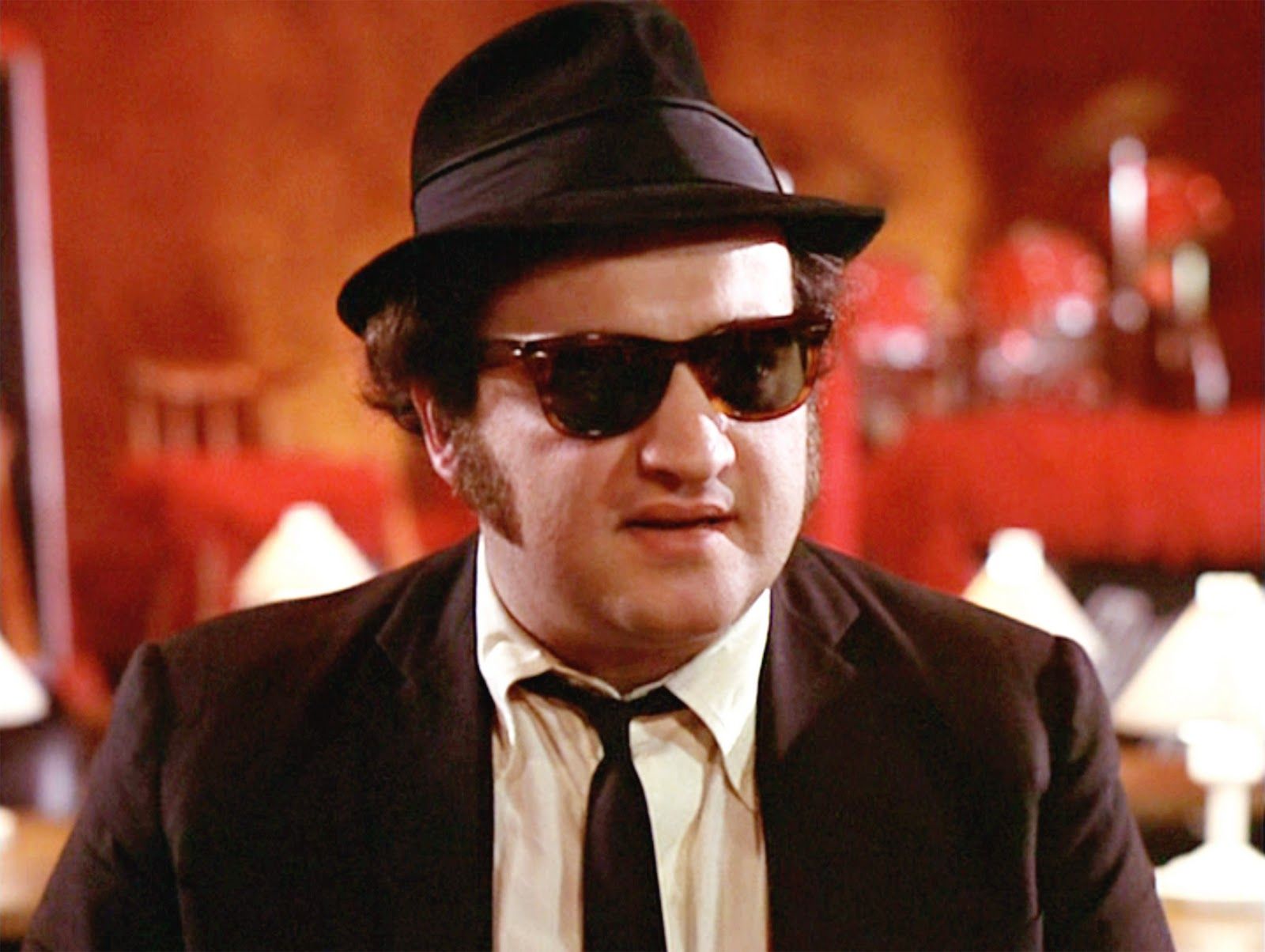
You’ve seen the one. The black-and-white frame of a man in a "COLLEGE" sweatshirt, eyes bulging, looking like he’s about to either start a riot or eat a raw potato. That’s the thing about pictures of John Belushi. They don’t just sit there. They vibrate.
He was the patron saint of the "Not Ready for Prime Time Players," a man whose face was basically a rubber band stretched to its absolute limit. Whether he was playing a samurai, a bee, or a blues singer, the camera loved him. Honestly, it probably feared him a little bit too. He wasn't exactly known for standing still for a light meter.
Why We Can't Stop Looking at Bluto
There is a specific kind of magic in the promotional stills for Animal House. If you look at the work of photographers like Ken Regan, you see Belushi in his absolute prime. These aren't just movie posters; they're historical documents of a guy who was, at that exact moment, the biggest comedic force on the planet.
Regan captured him for People magazine in late 1978, right when Animal House was a smash and The Blues Brothers album was hitting number one. In those shots, there’s a weird mix of exhaustion and ego. He’s the king, but you can see the toll the crown is taking. It's in the eyes. Even when he’s grinning, he looks like he hasn’t slept since 1975.
Then there are the Annie Leibovitz portraits. She did a famous one of John and Dan Aykroyd—The Blues Brothers—where they’re just standing there in the suits. No props. No jokes. Just two guys who look like they’re waiting for a bus to a funeral. It’s iconic because it stripped away the "Saturday Night Live" zaniness and showed the world that these characters were a legitimate soul-music obsession, not just a five-minute sketch.
The Gritty Reality of the SNL Years
The early days of Saturday Night Live were basically a high-speed car crash caught on film. Most of the best pictures of John Belushi from this era aren't the polished studio portraits. They’re the candids.
- The Bumblebee Skit: There’s a shot of him in the yellow-and-black stripes, skating at Rockefeller Center. It’s ridiculous. It's stupid. But he’s doing it with 100% commitment.
- Backstage Chaos: Look for the photos of him with Gilda Radner or Bill Murray in the dressing rooms. You’ll see him slumped in a chair, surrounded by coffee cups and script pages.
- The Musical Guest Jams: He famously jammed with the Joe Cocker band and Keith Richards. These photos show the "fanboy" side of Belushi. He wasn't just a comedian; he wanted to be a rock star.
Rare Finds and the "Lost" Belushi
A lot of people think they’ve seen every photo of him, but the archives are surprisingly deep. Recently, a rare 1970s photo of John with his grandmother in Chicago surfaced through the estate of photographer Marc Hauser. It’s jarring. You see this soft, almost shy kid who looks nothing like the "Samurai Futaba" character.
And we have to talk about the Chateau Marmont photos. They’re grim. On March 5, 1982, the world changed when the news broke that he was gone. The shots of the coroner’s technician arriving at the hotel or the flowers on his casket (with a devastated Bill Murray in the background) are a hard pivot from the laughter. They serve as the final, somber chapter of a life lived at 200 miles per hour.
Getting the Real Thing
If you're looking to actually own a piece of this history, there’s a hierarchy. You can find "COLLEGE" posters on Etsy for twenty bucks, but for the real deal, you have to dig into the high-res archives.
Getty Images and MPTV Images hold the keys to the kingdom. They have thousands of frames from the 1970s and early 80s, including unused outtakes from movie sets like 1941 and Continental Divide. These aren't just for decoration; they’re often licensed for documentaries or editorial work. For a private collector, you're usually looking at "Fuji Crystal" archival prints if you want something that won't fade by next Tuesday.
Actionable Ways to Curate Your Collection
- Verify the Source: If you're buying a "vintage" print, check for the photographer's stamp on the back. Names like Ken Regan, Annie Leibovitz, or Edie Baskin (the SNL photographer) add massive value.
- Know Your Formats: Original studio negatives are the holy grail, but high-resolution scans from the original 35mm slides are what you’ll typically find in quality galleries.
- Avoid the AI Upscales: A lot of modern "restored" photos of Belushi look like plastic because of bad AI smoothing. Stick to the grainy, authentic versions that show the texture of the 1970s.
- Check the Licensing: For anything beyond hanging a picture in your living room—like if you're writing a book or making a video—you need to contact the estate or a major agency like Alamy or Shutterstock for editorial rights.
The legacy of John Belushi is messy, loud, and brilliant. His photos are the only way we have left to bottle that lightning. Whether he’s wearing a toga or a tuxedo, he remains the guy we all wanted to party with—and the guy we were all a little bit worried about.
Your next move: If you're hunting for a specific vibe, start by searching for the "National Lampoon Lemmings" rehearsal photos from 1973. It's the earliest look at the raw, unpolished energy that eventually took over the world.