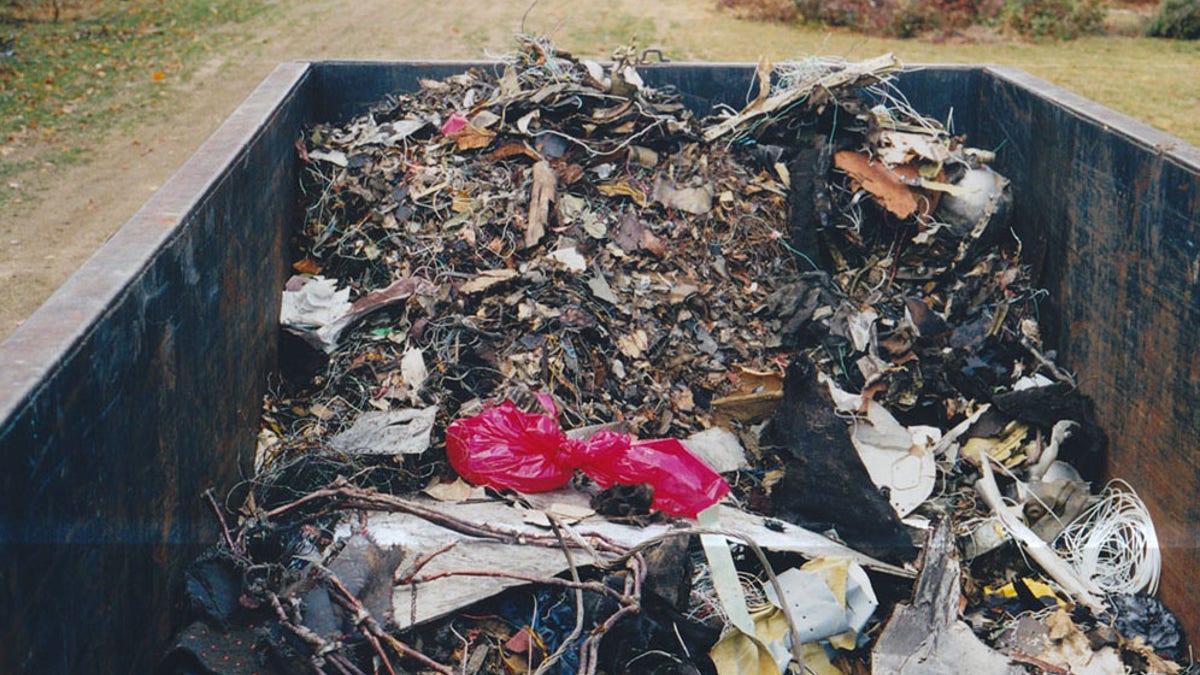
The smoke hadn't even cleared from the hemlock grove in Shanksville, Pennsylvania, when the first investigators arrived. Most of us remember the overhead shots. That jagged, black scar in the green field. It looked like nothing was left. Honestly, if you look at the raw photos flight 93 crash site documentation from that morning, the sheer lack of large debris is what hits you first. It wasn't like a typical plane crash where a fuselage sits broken on the tarmac. This was different. United Airlines Flight 93 was traveling over 560 miles per hour when it struck the earth at a 40-degree angle, upside down.
People still argue about what those photos show. Some folks see a conspiracy because they don't see a "plane," but forensic experts and the FBI see a high-velocity impact site that behaved exactly how physics says it should. It’s heavy stuff.
The First Images: A Smoldering Crater in the Woods
When the first local photographers and responders like Rick King arrived, they didn't find a cabin or wings. They found a hole. The crater was roughly 15 feet deep and 30 feet wide. If you examine the early photos flight 93 crash site records, you’ll notice the trees at the edge of the woods are scorched. That’s because the jet fuel—some 7,000 gallons of it—basically acted like a massive blowtorch upon impact.
It’s kind of haunting.
The debris was tiny. We're talking about pieces of aluminum no bigger than a phone, or scraps of upholstery that looked like confetti. Investigators from the NTSB, led by people like Wally Miller, the Somerset County Coroner, had to explain to grieving families that the earth had literally opened up and then closed back over the aircraft. Because the ground was reclaimed strip-mine soil—basically soft, loose dirt—the plane didn't just break; it became buried.
Why the Lack of Big Debris Confuses People
Look, it’s a valid question if you aren't an aviation nerd. Why does a 757 vanish?
The answer is kinetic energy. When that much mass hits soft earth at nearly the speed of sound, the metal doesn't just bend. It fragments. In the official photos flight 93 crash site archives used during the trial of Zacarias Moussaoui, you can see the "debris field" actually extended for miles, but the bulk of the ship was underground. One engine was recovered 2,000 yards away in a catch basin, which some people point to as "proof" of a shoot-down. However, NTSB investigators like Mitch Garber explained that a high-speed impact often "bounces" heavy components or sends them tumbling like a skipped stone.
Evidence Hidden in the Dirt: What Investigators Found
If you go through the federal evidence logs, the photos get much more personal and, frankly, much harder to look at. They found a wedding band. They found a C-130 pilot’s logbook belonging to one of the passengers. They found the Flight Data Recorder (FDR) and the Cockpit Voice Recorder (CVR).
- The FDR was found on September 13, 2001.
- The CVR was buried 25 feet below the surface, recovered a day later.
These aren't just "things." They are the reason we know exactly what happened in that cockpit. The audio from the CVR—which many family members have heard but has never been fully released to the public—paints a picture of a violent, heroic struggle. The passengers, led by Todd Beamer, Mark Bingham, Tom Burnett, and Jeremy Glick, didn't just "vote" to fight; they physically moved against the terrorists.
The photos flight 93 crash site evidence includes shots of the recovered "Leatherman" tools and cutlery the passengers likely used as weapons. It’s visceral. It makes the event feel less like a "tragedy" and more like a battlefield.
The Mystery of the "White Jet"
You’ve probably heard about the mysterious white plane spotted over the site. Conspiracy theorists love this one. But the reality is actually documented in the FAA flight logs and confirmed by photos. There was a Dassault Falcon 20 business jet, owned by the VF Corporation, that was asked by air traffic control to drop down and get the coordinates of the crash. It was white. It was there. But it arrived after the impact.
Sometimes the simplest explanation is just the truth, even if it feels less dramatic than a secret military operation.
How the Site Changed Over Two Decades
The way we photograph this place has shifted. In 2001, the photos flight 93 crash site images were grainy, chaotic, and filled with yellow police tape. Today, the Flight 93 National Memorial is a masterpiece of somber architecture. The "Wall of Names" follows the flight path. If you stand at the overlook, you can see the "Boulder," which marks the exact impact point.
The FBI finished their sweep long ago. They collected roughly 95% of the aircraft. Think about that. They sifted through tons of dirt to find tiny fragments of a Boeing 757. What remained was buried back in the crater, meaning the site is technically a cemetery.
Actually, it’s more than a cemetery. It’s a crime scene that became a shrine.
Understanding the Physics of the "Scrap"
Some skeptics point to photos of a single piece of fuselage—one of the few large chunks found—and ask why it isn't charred. It’s because it was blown away from the main fireball. You see this in high-impact crashes; a piece of the tail or a door gets "sneezed" out by the internal pressure of the cabin before the fuel ignites everything else.
If you look at the photos flight 93 crash site from the Smithsonian’s collection, you see the "Tower of Voices" now standing 93 feet tall. It’s a strange contrast. The jagged, ugly hole from 2001 has been replaced by 40 wind chimes. Each chime has a different tone, meant to represent the 40 passengers and crew.
Lessons from the Photographic Record
What can we actually learn from looking at these images? Honestly, they teach us about the limit of human resilience. We see the photos of the "Wall of Names" and it’s easy to forget that beneath that grass, there are still microscopic remnants of a struggle that changed the course of the 21st century.
- The Angle Matters: The 40-degree descent explains why the crater wasn't a perfect circle.
- The Soil Matters: The swampy, soft earth absorbed the plane, which is why there wasn't a massive debris field like the Lockerbie crash.
- The Speed Matters: At 500+ knots, aluminum acts more like a liquid than a solid.
People often search for photos flight 93 crash site because they want to see "proof." But proof of what? The proof is in the silence of the woods. The proof is in the fact that Flight 93 was the only hijacked plane on 9/11 that didn't hit its intended target—likely the U.S. Capitol Building.
Nuance in the Narrative
We have to acknowledge that the early 2000s were a time of massive confusion. Some early news reports claimed the plane landed in a different town, or that there were multiple crash sites. These were just errors born of chaos. When you look at the verified photographic evidence from the FBI's Evidence Response Team, the narrative stays consistent.
The debris didn't "disappear." It was just pulverized.
If you're looking into this, don't just look at the blurry zoomed-in shots on forums. Look at the high-resolution scans from the National Archives. You can see the individual pine trees snapped like toothpicks. You can see the heavy machinery used to excavate the engines from deep in the Pennsylvania mud.
Actionable Steps for Researching Flight 93
If you want to understand the site beyond the headlines, you've got to go to the sources that don't have an axe to grind.
Visit the National Park Service Digital Archive
The NPS maintains a massive database of the photos flight 93 crash site before and after the memorial was built. It’s the best place to see the evolution of the land from a scarred coal mine to a place of peace.
Read the 9/11 Commission Report - Aviation Section
Don’t just skim it. Read the part about the recovery of the "Black Boxes." It explains the technical difficulty of pulling data from recorders that have been hammered into the earth at high speeds.
Watch the "The Flight That Fought Back" Documentary
It uses actual photos and recreations based on the CVR transcripts. It helps bridge the gap between a "photo of a hole" and the human beings who were inside that plane.
Check the Somerset County Historical Society
Local accounts often have photos and perspectives that the national media missed. They have records of the local volunteers who helped feed the investigators for weeks during the recovery effort.
The story of Flight 93 isn't just about a crash. It’s about a 35-minute window where 40 people decided they weren't going to be victims. The photos of the site are just the physical footprint of that decision. They are messy, they are confusing, and they are heartbreaking. But they are also the only physical evidence we have of a moment where regular people in business suits and flight attendant uniforms became the first soldiers in a new kind of war.
Explore the archives with a critical eye. Recognize that a lack of "obvious" wreckage isn't a sign of a cover-up—it's a sign of a terrifyingly high-speed impact. When you look at the photos flight 93 crash site today, you don't see a crater anymore. You see a field of wildflowers. Nature has a way of covering things up, but the history remains etched in the records of those who were there to see the smoke first.