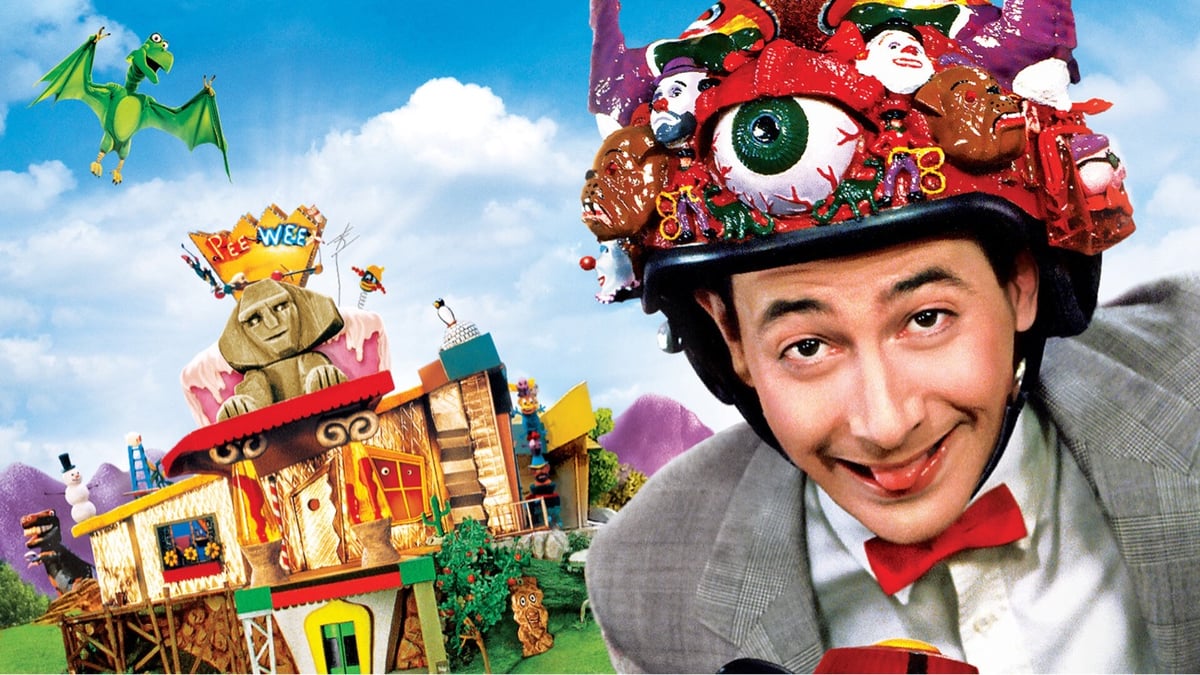
Paul Reubens lived a life defined by a grey suit, a red bowtie, and a laugh that became the soundtrack for an entire generation of kids who felt a little bit weird. But the man behind the mask was always a bit of an enigma. When news first broke about the Pee-wee as Himself documentary, fans didn't just want a clip show of Pee-wee’s Playhouse. They wanted to know who Paul actually was when the makeup came off.
He was private. Obsessively so.
For decades, Reubens maintained a strict "in-character" policy for almost all public appearances. If he was on Late Night with David Letterman, he was Pee-wee. If he was doing an interview for a magazine, he was Pee-wee. This commitment to the bit was legendary, but it also created a massive wall between the artist and his audience. The HBO documentary, produced by Josh Bratman and Safdie brothers collaborator Elara Pictures, finally starts pulling back those heavy velvet curtains.
It’s a heavy lift. How do you profile a man who spent forty years trying not to be profiled?
Honestly, the project is a bit of a miracle because Paul actually participated in it before he passed away in 2023. This isn't just a posthumous collection of talking heads saying nice things about a dead guy. It’s a two-part deep dive that uses Paul’s own voice to narrate the highs of his Groundlings days and the absolute, crushing lows of his public scandals.
The Groundlings and the Birth of a Counter-Culture Icon
Before the playhouse, there was the improv scene in Los Angeles. Reubens wasn't just some guy who liked puppets; he was a sharp, satirical mind working alongside people like Phil Hartman. Most people don't realize that the Pee-wee as Himself documentary highlights how the character was originally a bit of a jerk.
He was a brat.
The early stage show, The Pee-wee Herman Show, which debuted at The Roxy, was edgy. It was "adult" in a way that felt like a fever dream of 1950s children's television. When you watch the archival footage included in the documentary, you see a version of Pee-wee that is much more manic and slightly more dangerous than the one who eventually taught us about the "Secret Word" on Saturday mornings.
Why the "Himself" Part Matters
The title of the documentary is a play on his stage credits, but it carries a weight that most fans are just now starting to process. For years, the credit "Pee-wee Herman as Himself" was a joke—a way to maintain the illusion that the character was a real person and Paul Reubens was just his "manager."
By flipping that, the documentary forces us to look at Paul.
We see the meticulous collector. We see the man who was deeply hurt by the 1991 arrest in Sarasota, Florida. That event didn't just pause his career; it fundamentally changed how he interacted with the world. The film doesn't shy away from this. It looks at the mugshot that became a punchline and shows the person behind it who was essentially grieving the loss of his anonymity and his creation all at once.
The Struggle to Return to the Suit
One of the most poignant parts of the Pee-wee as Himself documentary is the footage from the later years. Reubens struggled with the idea of aging. Pee-wee was supposed to be a perennial child, a creature of pure imagination who didn't get grey hair or wrinkles.
He was a perfectionist.
When he returned for the Broadway show in 2010 and the Netflix movie Pee-wee’s Big Holiday in 2016, the digital de-aging and heavy makeup weren't just about vanity. They were about preserving the icon. The documentary explores the tension between Paul’s physical reality and the immortal character he felt he owed to the fans. It’s a bit heartbreaking to see the effort it took to step back into that tight grey suit.
Breaking the Silence on the Final Years
Reubens kept his cancer diagnosis a secret for six years. Six years.
He didn't want the public to see him as a patient. He wanted them to see the bowtie. The documentary manages to handle this with a level of grace that feels authentic to Paul’s wishes. It frames his silence not as a deception, but as a final act of showmanship. He wanted the work to be the focus, not the illness.
Many people think this film is just for people who grew up in the 80s, but that’s a mistake. It’s actually a case study in branding and the psychological toll of becoming your own product.
What the Documentary Reveals About Phil Hartman
You can't talk about Paul without talking about Phil. Their friendship was the backbone of the early Pee-wee years. They co-wrote Pee-wee’s Big Adventure together. The documentary sheds light on their creative shorthand and the eventual drifting apart that happens when one person becomes a global superstar and the other is still finding their footing.
It’s a nuanced look at creative partnership. It isn't all sunshine. There was friction, there was ego, and there was a lot of love. Seeing them together in old, grainy rehearsal footage is a gut-punch for anyone who understands the tragedy that later befell Hartman.
Actionable Insights for Fans and Film Buffs
If you are planning to watch the Pee-wee as Himself documentary, or if you've already seen it and want to dig deeper into the legacy of Paul Reubens, here is how to process the experience:
- Watch the 1981 Roxy Special First: To truly appreciate the documentary’s arc, you need to see where it started. The 1981 The Pee-wee Herman Show (available on various streaming platforms) provides the necessary context for the "edgy" origins the documentary references.
- Look for the "Easter Eggs": Paul was a legendary collector of kitsch. In the documentary, pay close attention to the backgrounds of his home interviews. His environment was an extension of the Playhouse in real life.
- Revisit the 1991 Context: Before watching, it's worth reading a quick retrospective on the 1991 media landscape. The "Sarasota incident" happened in an era before "cancel culture" had a name, and the documentary shows how the media's reaction was vastly different from how a similar event would be handled today.
- Focus on the Craft: Beyond the character, use the documentary to study Reubens' comedic timing. He was a master of the "slow burn" and physical comedy that took cues from Buster Keaton and Charlie Chaplin.
The Pee-wee as Himself documentary serves as a final, definitive statement on a man who spent his life hiding in plain sight. It reminds us that behind every great comedic creation is a person with a complex, often difficult, reality. Paul Reubens gave the world a gift of pure joy, but the documentary shows us the price he paid to keep that gift wrapped in a red bowtie. It’s a essential viewing for anyone who ever felt like they didn't quite fit in, because, as Pee-wee taught us, everyone has a "big but" and a story worth telling.
The most important takeaway is that Reubens never lost his sense of wonder, even when the world tried to take it from him. He stayed true to his vision until the very end, proving that being "yourself" is the hardest, but most rewarding, performance of all.