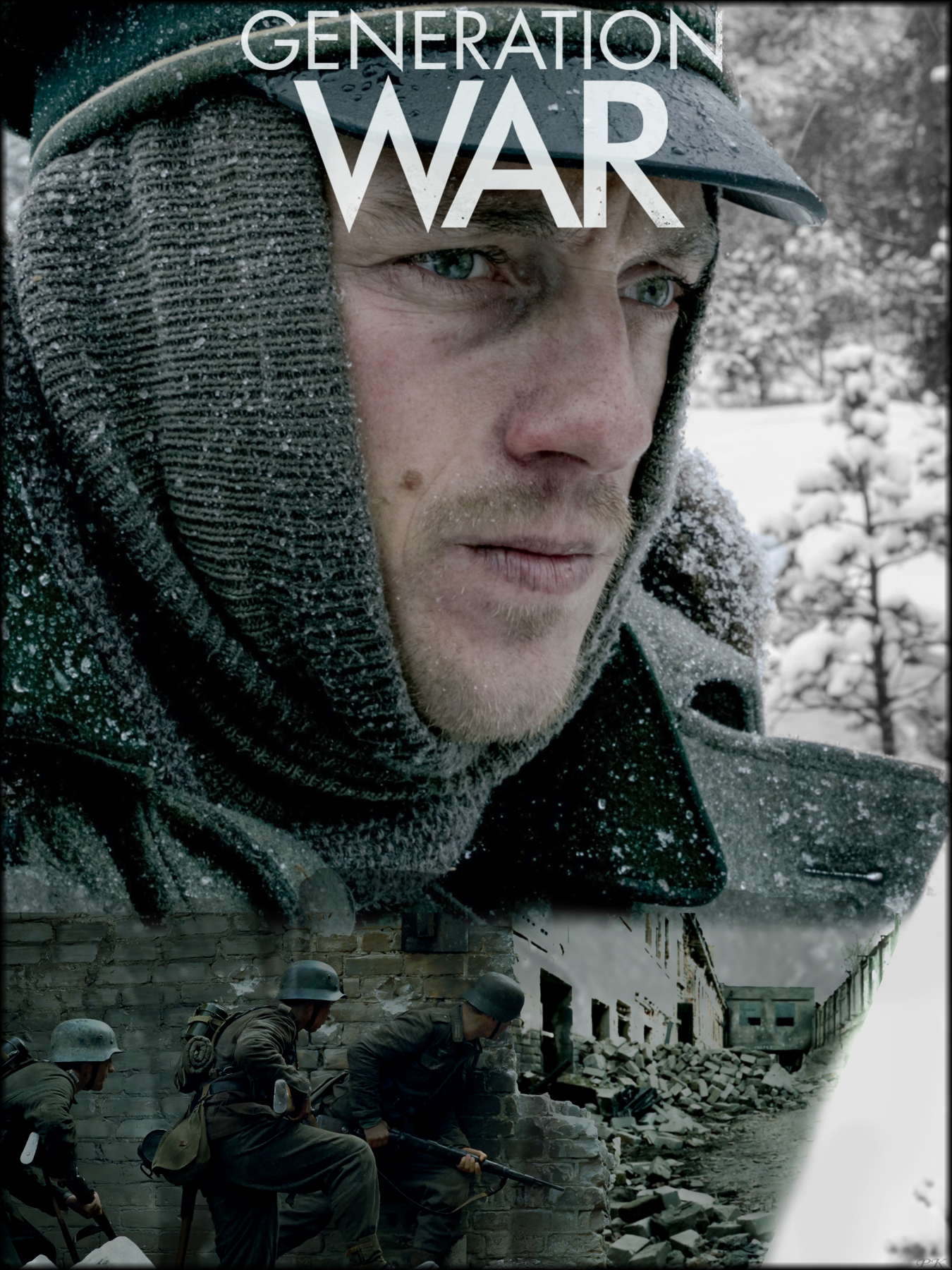
When the German miniseries Unsere Mütter, unsere Väter first aired—internationally titled Generation War—it didn't just premiere. It exploded. It was a massive, uncomfortable, and visually staggering cultural event that forced a global audience to look at the Second World War through the eyes of five young Germans. We’re talking about a story that follows five friends who believe they’ll be home by Christmas, only to be swallowed by the visceral horror of the Eastern Front and the moral decay of the Nazi regime.
But beyond the high-octane pyrotechnics and the gritty cinematography, the real weight of the series rested on the shoulders of its cast. The actors in Generation War weren't just playing roles; they were navigating the minefield of their own national history.
It’s heavy stuff. Honestly, the performances are what saved the show from being just another "war is hell" trope. Each actor had to embody a specific archetype of lost innocence. You have the golden boy officer, the sensitive artist turned killer, the ambitious singer, the devoted nurse, and the Jewish friend trying to survive the very country his friends are fighting for.
The Core Five: Who Were the Actors in Generation War?
The casting was surgical. It had to be. If the audience didn't believe in the bond between these five people, the tragedy of their separation wouldn't have landed.
Volker Bruch played Wilhelm Winter. Before he became the face of the international hit Babylon Berlin, Bruch had to portray the slow, agonizing erosion of a "good soldier." His performance is incredibly quiet. He uses his eyes to show the moment his soul basically leaves his body. If you watch his face in the first episode compared to the third, he looks like a completely different human being. He’s not a hero; he’s a man realizing he’s a cog in a genocidal machine.
Then you have Tom Schilling as Friedhelm. If Wilhelm is the stoic leader, Friedhelm is the intellectual who understands the futility of the war before anyone else. Schilling is known for playing these sorts of detached, observant characters. He brings a haunting, nihilistic energy to the role. One minute he’s reading poetry, and the next, he’s leading a squad into a massacre because he simply doesn't care if he lives or dies anymore. It's chilling.
The female leads were equally vital. Miriam Stein played Charlotte, the nurse whose idealism is shattered when she realizes the reality of the front. Stein’s performance is a masterclass in suppressed trauma. Opposite her, Katharina Schüttler played Greta, the girl who wanted to be the next Marlene Dietrich. Schüttler had arguably the hardest job—playing a character who is somewhat vain and selfish, yet making the audience weep for her when the Gestapo inevitably comes knocking.
Finally, there’s Ludwig Trepte as Viktor Goldstein. As the only Jewish member of the group, Trepte’s performance provides the essential external perspective. His journey from a tailor’s son to a partisan fighter is the heartbeat of the show’s survival narrative.
Why This Cast Sparked a Global Controversy
You can't talk about the actors in Generation War without talking about the backlash. This wasn't just another TV show in Poland or Russia. It was seen by many as an attempt to "humanize" the aggressors.
Critics in Poland were particularly furious. The depiction of the Armia Krajowa (the Polish Home Army) as virulently anti-Semitic sparked official diplomatic protests. While the actors were praised for their craft, the characters they played were accused of being "accidental Nazis"—people who just happened to be there while the "real" bad guys did the dirty work.
It’s a fair point. Does the show lean too hard into the "we were just victims of the times" narrative? Maybe. But the actors don't play them as victims. They play them as people making terrible, often cowardly choices.
- Volker Bruch’s character deserts his post.
- Miriam Stein’s character betrays a Jewish colleague out of a twisted sense of duty.
- Tom Schilling’s character becomes a cold-blooded executioner.
The nuance provided by the cast is what makes the debate so complicated. If they were cartoon villains, we could dismiss them. Because they feel like people you might know, the horror is much more intimate.
The Physical Toll of the Performance
Filming wasn't a walk in the park. The production lasted for months, often in grueling conditions to mimic the frozen hell of the Russian winter.
The actors have spoken in various German interviews about the psychological weight of the costumes. Putting on a Wehrmacht uniform carries a different kind of weight for a German actor than it does for an American or British one. There is a "hereditary burden," as some critics call it. They weren't just playing a character; they were playing their grandfathers.
Katharina Schüttler once mentioned in an interview with The Guardian that the most difficult part wasn't the dramatic scenes, but the realization of how easily people could be seduced by the lifestyle and the propaganda of the era. They had to inhabit that seduction to make the fall feel real.
Where Are the Actors in Generation War Now?
Since the show wrapped in 2013, the cast has basically become the royalty of German cinema and television.
Volker Bruch is the big one. If you haven't seen Babylon Berlin, stop what you're doing and go watch it. He plays Gereon Rath with the same intensity he brought to Wilhelm, but with a lot more jazz-age flair. He has become a global face for German prestige TV.
Tom Schilling has continued to dominate the German indie scene. He starred in Oh Boy (A Coffee in Berlin) and Never Look Away, which was nominated for an Oscar. He has this knack for playing characters who are deeply alienated from the world around them.
Ludwig Trepte has stayed busy in European television, appearing in Deutschland 83 and its sequels. He has a way of bringing a grounded, empathetic quality to every role he takes on.
The Legacy of the Series in 2026
Looking back from 2026, Generation War remains a touchstone for how we handle historical trauma on screen. It paved the way for shows like The Defeated or All Quiet on the Western Front (the recent Netflix version) to push even further into the visceral reality of conflict.
The actors in Generation War did something rare. They took a script that could have been a simple apology and turned it into a mirror. It’s not an easy watch. It shouldn't be.
If you're looking to dive deeper into the history or the production, there are a few things you should actually do rather than just reading about it.
Actionable Steps for History and Film Buffs:
- Watch the 'Making Of' Documentary: Most Blu-ray versions and some streaming platforms include a documentary called A Generation's Memories. It features the actors meeting the real people who inspired their characters. It is arguably more moving than the show itself.
- Read the Memoirs of Real Soldiers: To see where the actors got their inspiration, look into The Forgotten Soldier by Guy Sajer. While controversial in its own right regarding factual accuracy, it captures the sensory nightmare of the Eastern Front that the show tries to replicate.
- Compare with 'Heimat': If you want to see how German television evolved, watch the Heimat series from the 1980s. It’s a massive commitment, but it shows the "before and after" of how Germany processes its past through fiction.
- Follow the Cast’s Current Projects: Keep an eye on the German Film Awards (Lola). Most of these actors are still the primary drivers of German cinema today.
The performances in this series serve as a reminder that history isn't just a collection of dates and maps. It’s a collection of people who make choices, many of them wrong, and have to live with the wreckage. The cast of Generation War didn't just act; they bore witness.