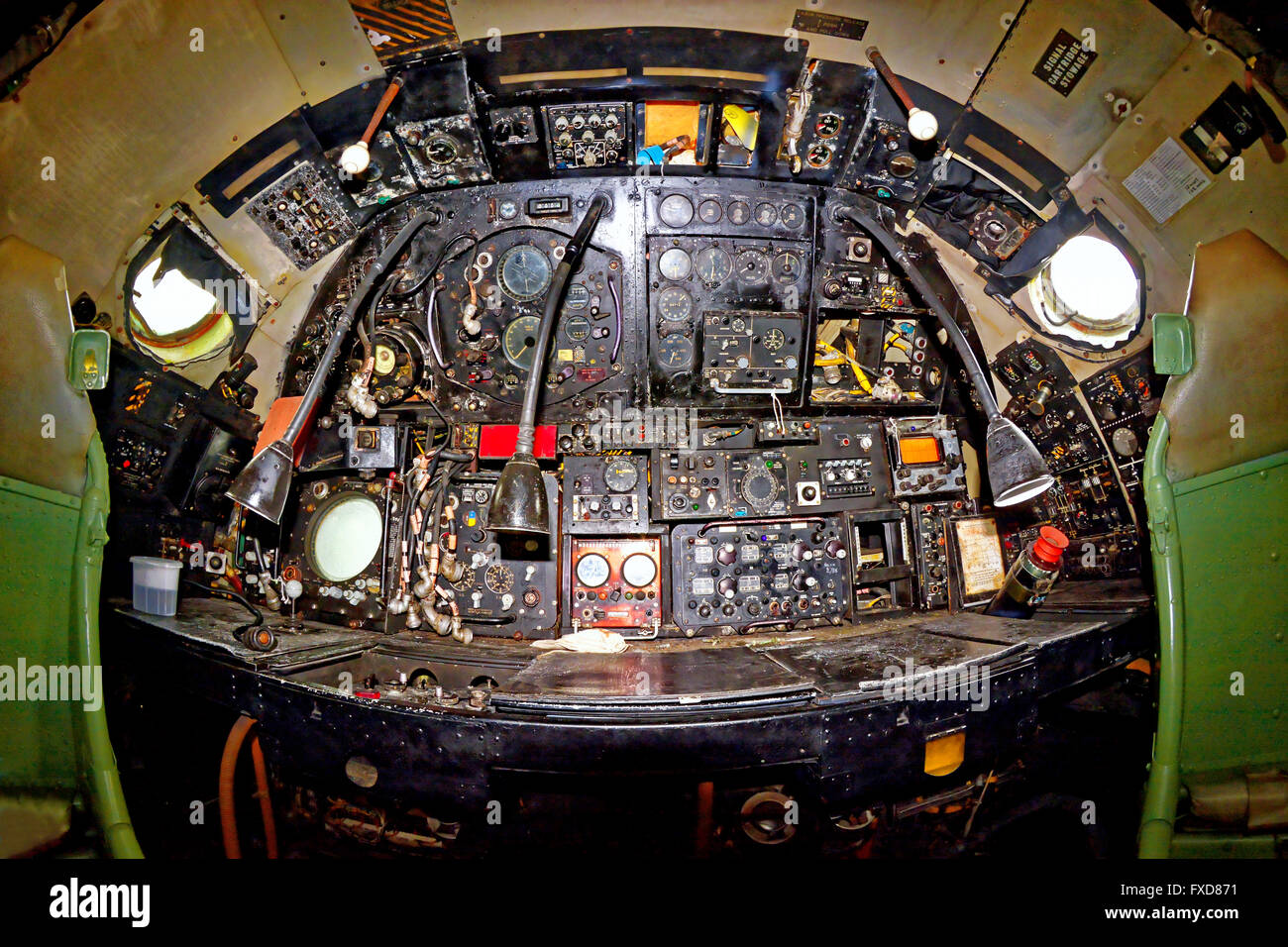
You’ve probably seen the grainy photos. A cramped, glowing green space that looks more like a high-end arcade cabinet from 1994 than a billion-dollar stealth platform. Honestly, the inside b2 bomber cockpit is a massive contradiction. It is the most sophisticated wing-shaped piece of titanium and carbon fiber ever to haunt a radar screen, yet the pilots are sitting in front of CRTs that would look right at home in a basement office.
It's tight. If you’re claustrophobic, the Spirit isn’t for you. There are two seats. That’s it. For missions that can last over 40 hours—straight shots from Whiteman Air Force Base in Missouri to the other side of the planet—those two human beings are the only thing keeping the $2 billion bird in the air.
Most people expect the bridge of the Enterprise. What they get is a masterclass in Cold War ergonomics.
The Glass Cockpit That Time (Almost) Forgot
The B-2 Spirit was designed in an era when "cutting edge" meant the first Macintosh computer. When you look at the inside b2 bomber cockpit, you’re seeing what Northrop Grumman engineers call a "Glass Cockpit," but it’s a specific vintage. There are eight main flight displays. These aren't the sleek, 4K touchscreens you’d find in an F-35 or even a modern Tesla. They are multi-function displays (MFDs) that provide the crew with everything from synthetic vision to engine diagnostics.
It’s surprisingly analog in its feel.
There are switches. Physical, tactile, chunky switches. Pilots love this. Why? Because when you’re flying at 50,000 feet in a high-stress environment, you don't want to be digging through a digital menu to find your landing gear or your weapons release. You want to feel the "thunk" of a physical toggle.
The seating arrangement is side-by-side. The pilot sits on the left, and the mission commander sits on the right. In most fighters, you're stacked one in front of the other. In the B-2, you can actually look over at your partner and see the exhaustion on their face after 30 hours of flying. It’s a shared experience. They even have a tiny space behind the seats—basically a flat patch of floor—where one pilot can curl up in a sleeping bag while the other flies.
Think about that. The most lethal weapon in the U.S. arsenal has a "bedroom" that’s smaller than a walk-in closet.
How They Actually Fly the Thing
Flying a flying wing is inherently impossible for a human. The B-2 is aerodynamically unstable. Without the quadruple-redundant fly-by-wire computers constantly making tiny adjustments to the flight surfaces, the plane would basically tumble out of the sky like a falling leaf.
Inside the cockpit, the pilot uses a side-stick controller. It’s subtle. You aren't manhandling a giant yoke like you’re in a B-52. It’s more about finesse. The MFDs show what’s known as the "Z-axis" of the mission. You’re looking at fuel, stealth health (the plane's signature integrity), and the target data.
The "Toilet" Situation
People always ask. They have to. On a 40-hour mission, where do you go?
Behind the seats, there is a very rudimentary chemical toilet. It’s basically a stainless steel box. It is not private. It is not comfortable. If you’ve ever wondered what the glamour of being a stealth pilot looks like, it involves using a box three feet away from your coworker while the plane flies itself on autopilot over the Pacific.
Eating and Staying Sane
The cockpit has a small microwave. Well, sort of. It’s more of a food heater. Pilots bring "go-pills" (stimulants) and "no-go pills" (sedatives) prescribed by flight surgeons to manage their sleep cycles. They eat a lot of "pocket" foods—sandwiches, burritos, things that don't make crumbs. Crumbs are the enemy. In a cockpit filled with sensitive electronics, a stray Cheeto could theoretically cause a short circuit in a mission-critical panel.
The Stealth Health Display
This is the part of the inside b2 bomber cockpit that is actually secret. While the Air Force has released photos of the general layout, they are very careful about what’s on the screens.
One of the most critical systems is the "Stealth Management System."
It monitors the skin of the aircraft. If a piece of tape peels off or a bird strike scuffs the radar-absorbent material (RAM), the pilot sees it on their screen. The plane’s "stealthiness" is a variable. The cockpit tells the pilot if they are suddenly glowing on enemy radar. If the signature is too high, they have to change their flight path or abort.
It’s a game of ghosts.
Why We Aren't Seeing Big Upgrades
You might think, "Why not just put some iPads in there?"
The military works on a "if it isn't broken, don't fix it" mentality, combined with a "if you fix it, it’ll cost five billion dollars" reality. There have been upgrades, though. The DMS-M (Defensive Management System Modernization) was a huge deal, intended to help the B-2 detect modern air defense radars.
But the core interface remains.
There is a certain reliability to old tech. These systems are hardened against electromagnetic pulses (EMP). In a nuclear exchange—which is what the B-2 was originally built for—your fancy OLED screen might fry, but the ruggedized, radiation-hardened tech in the Spirit is designed to keep ticking.
The View From the Windows
The windows are small. They are also coated in a fine layer of gold.
No, it’s not for style. The gold film helps dissipate radar energy and protects the pilots from the flash of a nuclear explosion. Looking out the window of a B-2 isn't like looking out the window of a Cessna. You have a limited field of view. You rely almost entirely on your instruments.
When you’re refueling mid-air—a process that happens multiple times a mission—the pilot has to stare through that gold-tinted glass at a KC-135 tanker just feet away. It’s nerve-wracking. The B-2 is a massive, heavy beast, and bringing it that close to another plane requires a level of concentration that most people can't imagine.
What Most People Get Wrong
People think the B-2 is fully automated. It’s not.
While the computers handle the stability, the mission management is incredibly labor-intensive. The crew is constantly monitoring "threat rings." These are the ranges of enemy radar stations. The inside b2 bomber cockpit is a hub of constant re-calculation. If a mobile SAM (Surface-to-Air Missile) site moves, the mission commander has to re-route the entire flight path on the fly.
It’s less "Top Gun" and more "Corporate IT Manager in a High-Stakes Pressure Cooker."
The Next Steps for Stealth Tech
The B-2 is slowly being phased out for the B-21 Raider. We’ve seen the outside of the Raider, but the cockpit is top secret. Expect it to lose the CRTs. It will likely move to a "Single Large Area Display" (LAD) like the F-35. But the lessons learned in the B-2—the need for a place to sleep, the physical switches, the stealth monitoring—will all be there.
Actionable Insights for Enthusiasts:
- Visit the Museums: If you want to see the scale of the plane, go to the National Museum of the U.S. Air Force in Dayton, Ohio. They have a B-2 structural test body. You can't go inside, but you can stand under the wing.
- Study Ergonomics: If you’re into design, look up the "Glass Cockpit" transition of the late 80s. The B-2 is the pinnacle of that specific design philosophy.
- Flight Sims: High-fidelity simulators like DCS World or even advanced mods for MSFS 2024 are the closest you’ll get to seeing how these MFDs actually function in a tactical environment.
The B-2 remains a marvel because it does so much with what is now considered "old" tech. It’s a reminder that in the world of high-end military hardware, reliability and specialized function beat "new and shiny" every single time.