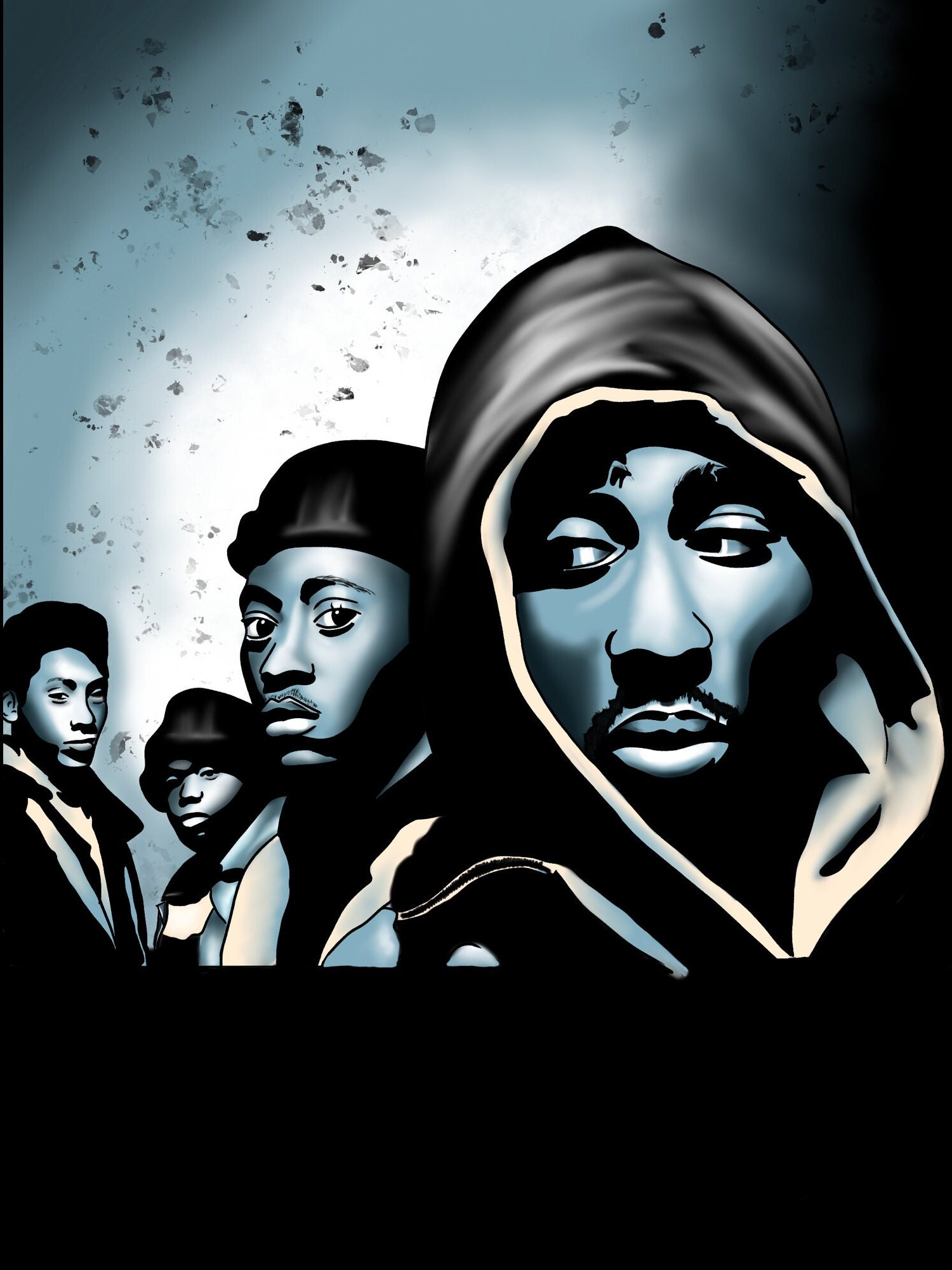
Ernest Dickerson didn’t just make a movie in 1992. He captured a lightning strike. When people talk about actors from juice the movie, they usually start and end with Tupac Shakur. It makes sense. Tupac’s performance as Bishop was terrifying. It was visceral. But looking back thirty-plus years later, the sheer density of talent packed into that Harlem crime drama is kind of staggering. You have future Oscar winners, sitcom royalty, and hip-hop legends all fighting for screen time in a story about four friends who just wanted some respect.
The "juice." That’s what they called it.
Honestly, the casting process for this film is the stuff of legend. Dickerson, who had spent years as Spike Lee’s go-to cinematographer, knew he needed faces that didn't feel like "Hollywood" faces. He needed kids who looked like they actually lived on 145th Street. What he got was a ensemble that would go on to redefine Black cinema in the 90s.
The Transformation of Tupac Shakur
Tupac wasn't even supposed to be there. He originally showed up to the audition just to support his friend Money-B from Digital Underground. But then he decided to read for the part of Roland Bishop. The rest is history.
It’s wild to think about now, but before Juice, the world mostly knew 'Pac as the high-energy roadie/dancer who did the "Humpty Dance." In this film, he became a monster. But a human one. That’s the nuance people miss. Bishop wasn't just a villain; he was a kid suffocating under the weight of his father’s "wino" reputation and the constant pressure of the streets. When he gets that gun, his entire posture changes. You see the insecurity vanish and get replaced by a cold, vibrating ego.
Most actors from juice the movie talk about how Tupac stayed in character. He was intense. He was erratic. He was Bishop. It’s easily one of the most influential film debuts in the history of the genre because it didn't feel like acting. It felt like a warning.
Omar Epps and the Moral Compass
If Tupac was the fire, Omar Epps was the cooling water. Playing Quincy "Q" Powell, Epps had the hardest job in the movie. He had to be the guy we rooted for while he made increasingly terrible decisions to stay loyal to his crew.
Epps was only 17 or 18 during filming. Think about that. He’s carrying the emotional weight of a major motion picture while acting against a supernova like Shakur. His character’s passion for DJing provided the film’s heartbeat. The scene where he’s competing in the DJ battle while his friends are out committing a robbery is peak tension. It showed the duality of the era—the creative explosion of hip-hop culture versus the destructive path of the street life.
After this, Epps became a staple. You saw him in Higher Learning, Love & Basketball, and eventually, he spent eight years as Dr. Eric Foreman on House. He’s a survivor in an industry that usually chews up young actors and spits them out.
The Forgotten Pillars: Khalil Kain and Jermaine Hopkins
We need to talk about Raheem and Steel.
Khalil Kain played Raheem, the de facto leader of the group. He had this quiet authority. When Bishop kills him, the movie shifts from a coming-of-age story into a nightmare. Kain brought a certain level of maturity that made the tragedy feel heavier. He’s worked consistently since then, notably in the Girlfriends series, but his role in Juice remains his most haunting work.
Then there’s Jermaine Hopkins as Steel.
You might remember him as the kid from Lean on Me.
In Juice, he’s the comic relief until he’s not.
The scene where Bishop corners him in the elevator is one of the most claustrophobic moments in 90s cinema. Hopkins played the "vulnerable big man" trope perfectly. He was the one who actually showed fear, which made the stakes feel real for the audience. Without Steel’s terror, Bishop is just a cartoon. With it, Bishop is a threat to everyone we care about.
Why the Supporting Cast of Juice Still Matters
The depth of the actors from juice the movie extends way beyond the core four. Look at the names tucked into the credits.
- Samuel L. Jackson: He plays Trip, the pool hall owner. This was right before Pulp Fiction made him the biggest star on the planet. Even in a small role, his screen presence is massive.
- Queen Latifah: She shows up as the DJ battle judge. At the time, she was hip-hop royalty, but her transition into acting was just beginning.
- Cindy Herron: A member of En Vogue, playing Q’s girlfriend.
- Flex Alexander: He’s one of the rival gang members.
It’s basically a time capsule of 1992 Black excellence. Even the background actors and bit parts felt authentic because Dickerson insisted on filming on location in Harlem. There’s a grit you can’t fake on a soundstage in Burbank.
The Directorial Vision of Ernest Dickerson
We can’t discuss the actors without the man who guided them. Dickerson’s background in cinematography is why the movie looks the way it does. He used color to tell the story. Notice how the blues and greens feel cold and isolating when Bishop is on screen?
He allowed the actors to improvise. He let them speak the slang of the time without trying to "standardize" it for a white audience. That’s why the dialogue still holds up. It doesn't sound like a middle-aged screenwriter trying to sound "urban." It sounds like kids on a stoop.
There was a lot of controversy at the time. People thought Juice was just another "hood movie" glorifying violence. They were wrong. If you actually watch the performances, it’s a cautionary tale about the vacuum of power. When young men feel like they have no agency in their lives, they will seize it by any means necessary. The actors didn't play "thugs"; they played desperate children.
The Legacy of the Juice Soundtrack on the Acting
It’s impossible to separate the acting from the music. The soundtrack featured Eric B. & Rakim, Big Daddy Kane, and Cypress Hill. For the actors from juice the movie, the music wasn't just background noise; it was the environment.
Hank Shocklee and the Bomb Squad handled the score. The aggressive, scratching, industrial sounds mirrored Bishop’s deteriorating mental state. When Q is on the decks, the music is soulful and rhythmic. When the violence starts, the music becomes discordant. The actors reacted to that energy. Epps has mentioned in interviews how the DJ culture was central to his understanding of Q. He wasn't just a kid who liked music; he was a kid who used music as his only escape route.
What Most People Get Wrong About the Ending
There’s a common misconception that Bishop was just "crazy."
If you look at the performance Shakur gives in the final rooftop scene, it’s not just madness. It’s total exhaustion. He realized he had pushed everyone away. He had the "juice," but he was completely alone. The look in his eyes right before he falls isn't one of anger; it’s almost a realization.
The actors worked together to build that tension over 90 minutes. It wasn't an accident. They spent weeks bonding before the cameras rolled, which is why the betrayal in the third act hurts so much. You believe they were friends. You believe they loved each other.
Actionable Insights for Fans and Cinephiles
If you’re revisiting the film or discovering it for the first time, keep these things in mind to truly appreciate the craft:
- Watch the eyes. In the scenes where the group is just hanging out, watch how often the actors look at each other for approval. It’s a masterclass in ensemble chemistry.
- Focus on the DJ battle. This isn't just a cool sequence. It’s the pivotal moment where the paths of the four characters diverge forever. It’s the last time they are all in the same "world" mentally.
- Contrast the home lives. Look at the difference between Q’s home life and Bishop’s. The actors use their physical space differently. Epps is relaxed at home; Shakur is tense, even when he’s just sitting in his room.
- Listen to the silence. For a movie known for its loud soundtrack, the quietest moments—like the walk to the store before the robbery—are where the best acting happens.
Juice remains a foundational text of 90s cinema. While many films of that era have aged poorly or feel like caricatures, the performances here remain grounded. It wasn't just a paycheck for these guys. For most of them, it was the beginning of everything. They weren't just playing roles; they were defining an era of storytelling that demanded to be heard.
The "juice" isn't about the gun or the money. It's about the fact that thirty years later, we're still talking about what these actors did in those Harlem streets. That's real power.
To dive deeper into this era of film, check out the early work of Spike Lee or the cinematography of Ernest Dickerson in Do The Right Thing. You’ll see the visual DNA that made Juice such a powerhouse. Also, look for the 4K restoration released recently; the colors and the grit of the original 35mm film look better than ever, making the actors' subtle expressions much easier to catch.