When a frumpy Scottish lady walked onto the Britain’s Got Talent stage in 2009, nobody expected the world to stop. But it did. We all remember "I Dreamed a Dream," but the real litmus test for her career wasn’t a show tune. It was a rock anthem. When news broke that she was tackling the Rolling Stones, the skepticism was thick enough to cut with a knife. Susan Boyle Wild Horses shouldn't have worked on paper. It's a song born from the grit of Keith Richards and the drugged-out exhaustion of the 70s rock scene.
Boyle is the literal opposite of a rock star. Or so we thought.
The Performance That Silenced the Skeptics
In September 2009, Susan took the stage for the America's Got Talent finale. This was her big US debut. People weren't just curious; they were waiting for the "one-hit wonder" bubble to pop. Instead, she stood there—no pyrotechnics, no dancing, just a stool and a microphone—and delivered a version of Susan Boyle Wild Horses that felt like a prayer. It was ghostly.
The arrangement, produced by Steve Mac, stripped away the country-rock swagger of the original. They traded the keening slide guitars for a haunting, cinematic piano and string section. It transformed the track from a song about a messy breakup or drug addiction into a ballad about resilience.
What Most People Get Wrong About the Lyrics
There is a massive misconception that Susan just picked a popular song to sell records. She actually chose it because it mirrored her life in the council estates of Blackburn. While Mick Jagger wrote it about the "graceless lady" (often cited as Marianne Faithfull), Susan saw herself in the first verse.
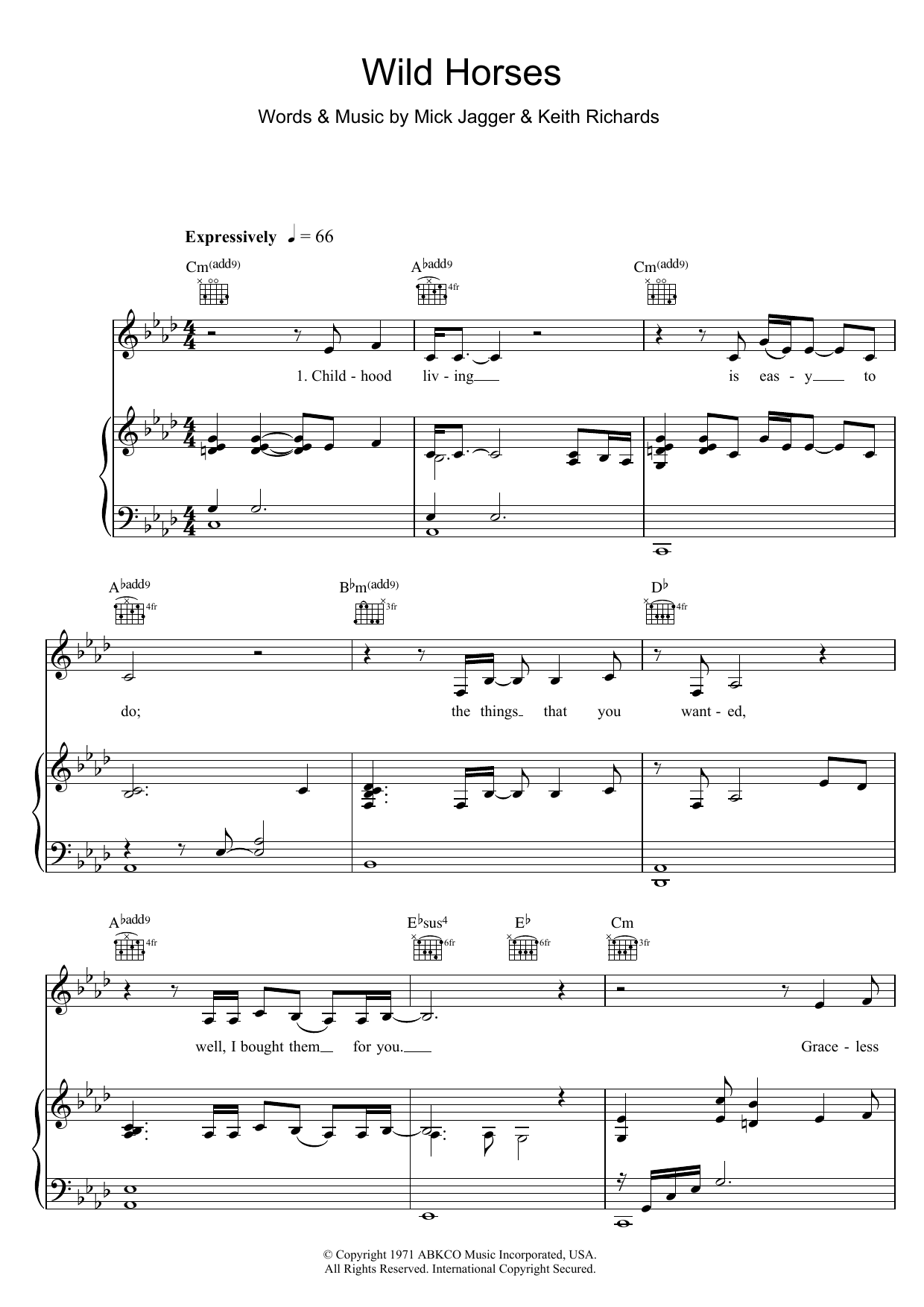
"Childhood living is easy to do... Graceless lady, you know who I am."
For her, those lines weren't about a lover. They were about her mother, Bridget, and the years Susan spent as a caregiver. She told the Herald Scotland that the song was an "emotional release" for the bullying she endured. It was her answer to the people who called her "Simple Susie" and the teachers who she claimed treated her unkindly. When she sings "wild horses couldn't drag me away," she isn't talking about a man. She's talking about her roots and her refusal to let the world break her spirit.
Chart Success and Global Impact
Did it sell? Oh, absolutely. The numbers from late 2009 and early 2010 are staggering even by today’s streaming standards.
- UK Charts: It peaked at number 9, staying on the charts for 38 weeks in various stints.
- US Billboard: It reached number 98 on the Hot 100, which is wild for a classical crossover cover of a rock song.
- Album Sales: Her debut album, I Dreamed a Dream, sold over 10 million copies worldwide, with this track serving as the lead-off single.
Even the legendary Mick Jagger weighed in. There were rumors circulating—later fueled by a radio interview in New Zealand—that Jagger called her version "ghostly" and "much better" than anything he had done. Whether he was being gracious or genuinely moved, the endorsement cemented the cover as a legitimate piece of music rather than a reality TV gimmick.
The "Marmite" Factor: Critical Backlash
Honestly, not everyone loved it. Die-hard Rolling Stones fans were horrified. Some critics, like those writing for Passage des Perles, argued she "leached the desperation" out of the song. They felt it was too "safe" or "church-like."
But art is subjective. For every critic who hated the orchestral arrangement, there were millions of people who felt it was the first time they actually heard the lyrics. By removing the "cool" factor of the Stones, Boyle made the song accessible to people who had never stepped foot in a rock club. She turned a "hurtin' song" into a victory lap.
Why It Still Matters Today
In 2019, Susan returned to the America's Got Talent: The Champions stage. Guess what she sang? Susan Boyle Wild Horses.
She earned the Golden Buzzer from Mel B. It proved that the song wasn't just a flash in the pan. It’s her signature now. It represents the moment she transitioned from a "viral video" to a recording artist with staying power.
If you're looking to understand the "Susan Boyle phenomenon," you have to look past the Les Misérables cover. You have to look at the woman who took a song by the baddest boys in rock and roll and made it her own.
Actionable Takeaways for Music Fans
- Listen for the Phrasing: Compare Boyle’s version with the original 1971 Sticky Fingers track. Notice how she lingers on the word "drag." It's a masterclass in breath control.
- Check the Credits: Look up the work of producer Steve Mac. He’s the same guy behind hits for Ed Sheeran and P!nk. His "clean" production style is why this cover sounds so timeless.
- Explore the Genre: If you like this style, look into the "Classical Crossover" genre. Artists like Jackie Evancho or Josh Groban often use this same formula of "rock-to-ballad" transformations.
- Watch the 2019 Version: Go to YouTube and find the AGT: Champions performance. The confidence difference between 2009 and 2019 is the real story of her career.