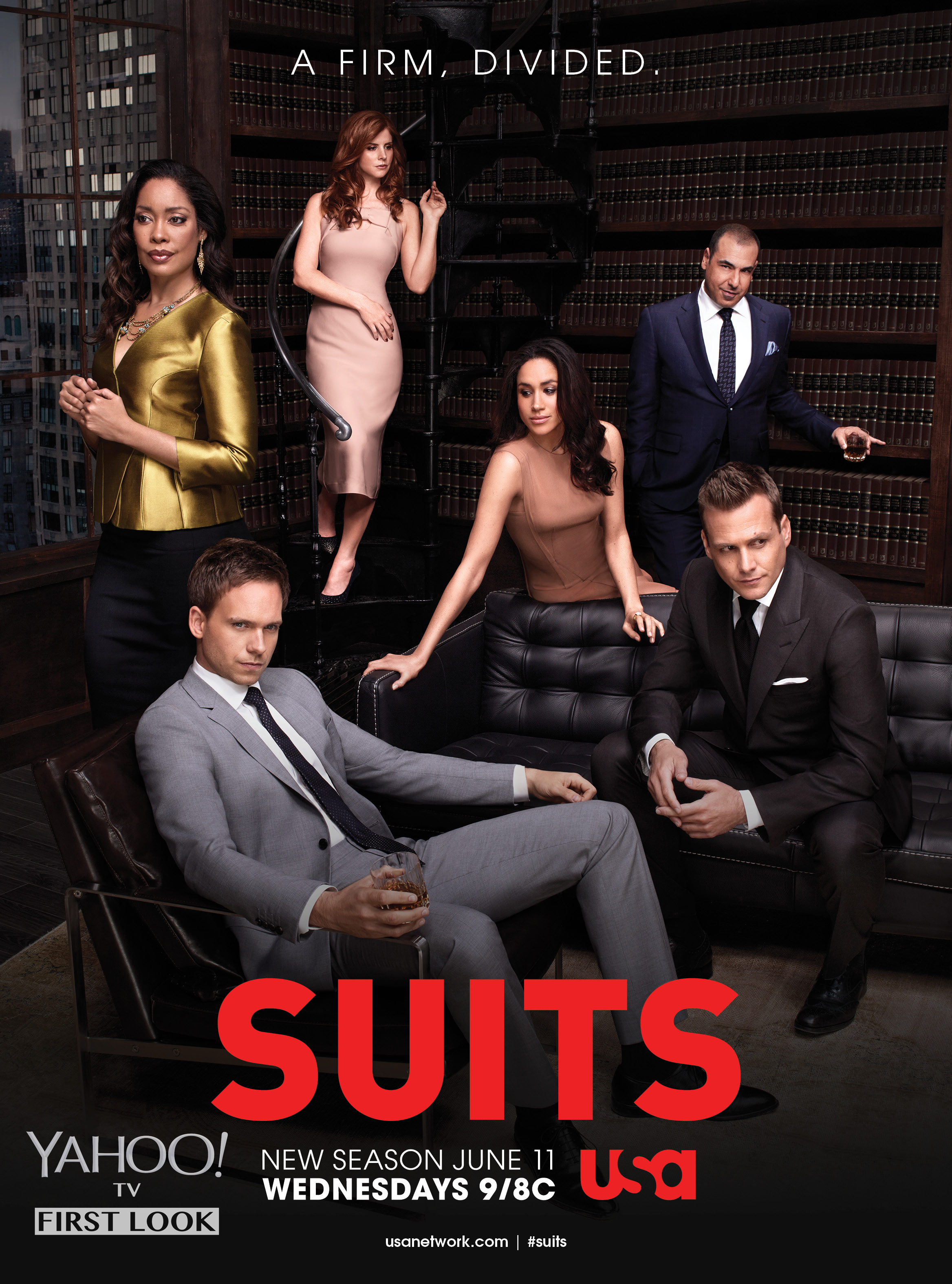
Mike Ross finally went to jail. It was the moment fans spent five years dreading, yet deep down, we all knew it had to happen eventually. For a show built on the high-stakes lie of a fraudulent lawyer, there was only so long the writers could keep the plates spinning before everything shattered. When Suits Season 6 kicked off, it wasn't the slick, glass-tower legal drama we were used to. It was gritty. It was cramped. Honestly, it was a massive risk that fundamentally changed how the series functioned.
The Danbury Reality Check
The season opens with Mike Ross—played by Patrick J. Adams—swapping his bespoke Tom Ford suits for a coarse blue denim prison uniform. It’s a jarring transition. We’re used to seeing Mike solve impossible problems with his photographic memory while walking fast through a hallway. In Danbury Federal Prison, that memory is almost a liability. He can’t out-think a shiv.
This shift in scenery forced the show to split its DNA. Half the time, we’re in the cell block with Mike and his new antagonist, Frank Gallo. The other half? We’re back at Pearson Specter Litt, which is basically a ghost town. Seeing those empty desks was depressing. Gina Torres, Sarah Rafferty, and Gabriel Macht had to carry the weight of a firm that had lost its reputation, its staff, and its soul. It felt like the show was mourning itself.
Frank Gallo, played by Paul Schulze, was a brilliant casting choice because he represented the literal ghosts of Harvey’s past. He wasn't some corporate raider trying to buy shares; he was a guy Harvey put away years ago who now had Harvey's "son" within arm's reach. The tension was real. You could feel Harvey’s desperation in every scene. He couldn't just throw money at this or cite an obscure precedent to make it go away. For the first time, the invincible Harvey Specter was truly helpless.
Dealing With the "Empty Office" Problem
One of the biggest complaints during the original airing of Suits Season 6 was that the firm felt too lonely. Usually, the background of the show is bustling with paralegals and junior associates. In Season 6, it’s just the core five. While some fans hated this, it actually allowed for some of the best character work in the series.
Louis Litt’s character arc this season is a rollercoaster. We see him falling for Tara Messer, an architect, and while the "Louis in love" trope can sometimes feel like filler, it grounded him. It made his professional desperation feel more human. He wasn't just fighting for a name on a wall; he was fighting for a future.
The Rachel and Jessica Dynamic
While Mike was doing time, Rachel Zane was coming into her own. This is where the show leaned into the "Innocence Project" storyline. It was a smart move. It gave Rachel a purpose that wasn't just "Mike's girlfriend who cries a lot." Watching her work on Leonard Bailey's case—a death row inmate—raised the stakes of the show. It wasn't about mergers and acquisitions anymore. It was about life and death.
Jessica Pearson, the formidable Managing Partner, also hit a crossroads. This season is essentially the swan song for Gina Torres as a series regular. Her realization that she didn't want to spend her life fighting for people who didn't care about her was a poignant pivot. When she finally walks away, it’s not a defeat. It’s a liberation.
The Collateral Damage of the Deal
Let’s talk about the mid-season finale, "P.S.L." To get Mike out of prison early, Harvey has to make a deal that involves snitching on Mike’s cellmate, Kevin Miller. This is classic Suits. It’s a moral quagmire. Mike is a guy who values loyalty above everything else, yet to gain his freedom, he has to betray the only friend he has behind bars.
The psychological toll on Mike was heavy. Patrick J. Adams played the internal conflict well—you could see the guilt eating him alive. When he finally walks out those gates, it isn't a triumphant moment. It’s quiet. It’s heavy.
Then came the second half of the season.
A lot of people think the show should have ended when Mike got out. But the back six episodes of Suits Season 6 explored something rarely seen in TV: the struggle of a convicted felon trying to re-enter a white-collar world. Mike couldn't be a lawyer. He was working at a legal clinic, making pennies, trying to help people while the ghost of his fraud followed him everywhere.
The Bar Hearing and the "Miracle"
The season finale, "Character and Fitness," is one of the most stressful hours of television in the series' history. The hurdle was simple but impossible: get the Ethics Board to admit a convicted fraudster to the Bar.
The return of Anita Gibbs—the prosecutor who put Mike away—was a stroke of genius. She wasn't a villain; she was a woman doing her job, and she was right. Mike did break the law. Watching her go toe-to-toe with Harvey again reminded us that in this universe, actions have consequences.
The "deus ex machina" moment involving Jessica Pearson returning to save the day at the hearing was polarizing. Some called it a cop-out. Personally? It felt earned. Jessica started this mess by hiring Mike in the first place. Her coming back to put her own license on the line to fix it was the only way to close that loop.
Why Season 6 Still Matters
Looking back, Suits Season 6 was the bridge between the "Case of the Week" procedural the show started as and the "Family Soap Opera" it eventually became. It stripped the characters of their armor.
- Harvey learned he couldn't win every fight. He had to deal with his panic attacks and his family issues, which set up the therapy arcs later on.
- Louis proved he could lead. Despite his insecurities, Louis kept the lights on when everyone else was ready to quit.
- Donna became more than a secretary. This season planted the seeds for "The Donna" and her eventual rise to COO, for better or worse.
The season also holds a 91% on Rotten Tomatoes, which is surprisingly high for a show in its sixth year. Most series are running on fumes by that point, but the prison storyline gave Suits a second wind. It forced the characters to stop being "cool" for a minute and start being real.
Fact-Checking the Production
- The season was split into two parts: Episodes 1-10 aired in the summer of 2016, and 11-16 followed in early 2017.
- This was the final season where Gina Torres was a main cast member before her spin-off, Pearson.
- The set for the prison was actually a repurposed warehouse, designed to look significantly more oppressive than the high-tech law offices.
Actionable Insights for Fans and Rewatchers
If you’re revisiting the series or watching for the first time, keep an eye on the color palette. Notice how the blues and grays are washed out while Mike is in prison. The show literally loses its "pop" to reflect his headspace.
Also, pay attention to the music. The soundtrack in Season 6 shifted away from indie-rock swagger toward more somber, atmospheric tracks. It’s a masterclass in using audio to signal a tonal shift.
For those interested in the legal realism—or lack thereof—it’s worth noting that Mike’s path to the Bar is highly stylized. In the real world, a felony conviction for the unauthorized practice of law would almost certainly be a permanent bar to entry in New York. However, the show uses the "Character and Fitness" hearing to argue that his pro bono work and "extraordinary circumstances" outweighed his crime.
Next Steps for Suits Enthusiasts:
- Watch the "Aftershow" segments if you can find them; they provide deep context on how the writers handled the prison transition.
- Compare the pilot episode’s dialogue to the Season 6 finale. The evolution of Harvey and Mike’s relationship from "boss/employee" to "brothers" is the true backbone of this arc.
- Track the number of times "The Firm" is mentioned as a living entity. In Season 6, the firm isn't just a place; it's a character that is dying and being resurrected.