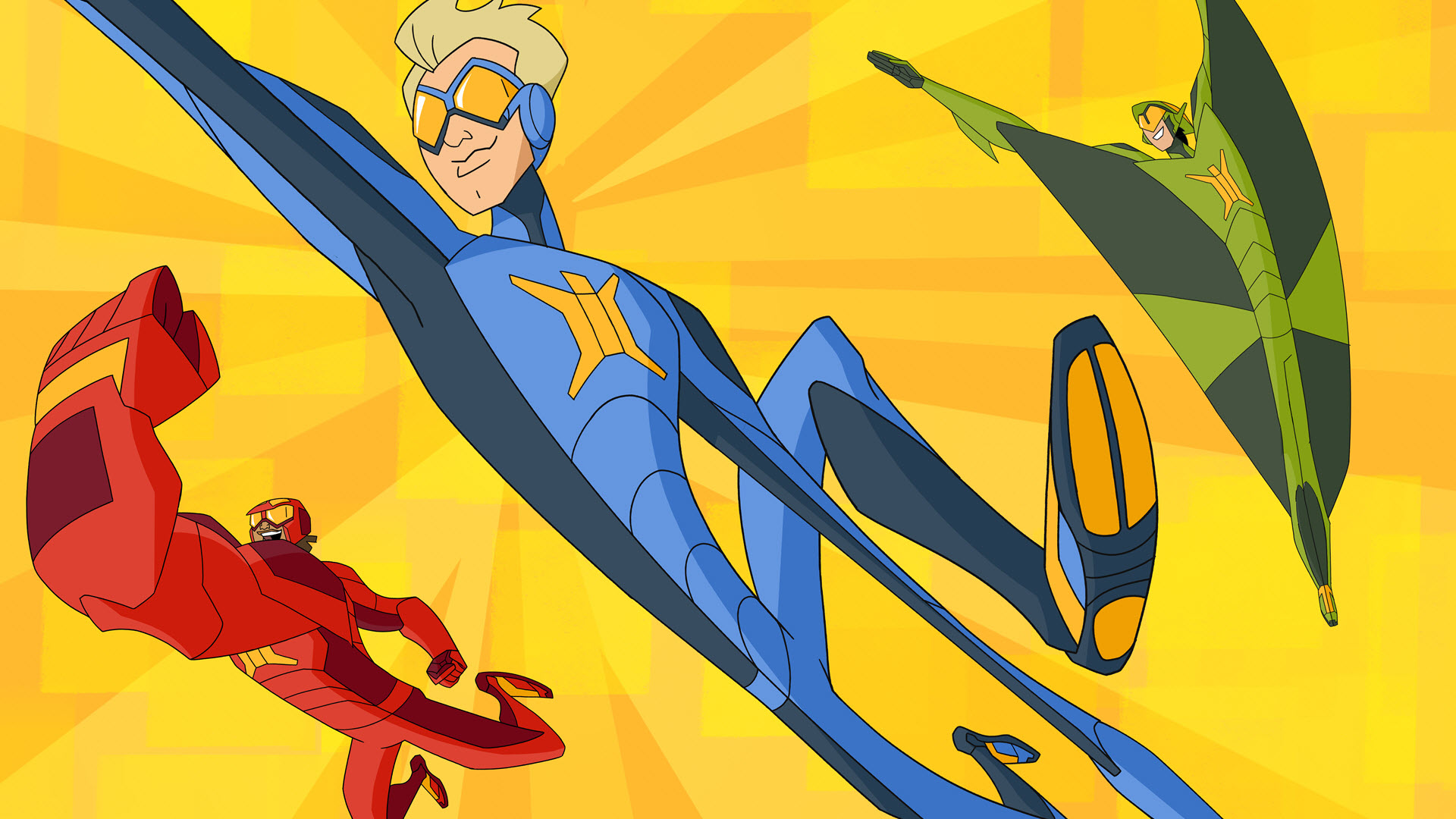
Most people remember Stretch Armstrong as that weird, gel-filled rubber guy from the 70s who could be pulled into a pretzel. He was basically the king of tactile toys before slime was even a thing. But then, Netflix and Hasbro did something nobody expected. They turned a toy with zero backstory into a superhero team. Stretch Armstrong and the Flex Fighters wasn't just some lazy cash-grab. Honestly, it was one of the smartest subversions of the "teen superhero" trope we’ve seen in years. It’s kinda weird how good it was.
You've got Jake Armstrong, Nathan Park, and Ricardo Perez. They aren't just kids who found a magic ring or got bitten by a radioactive spider. They were exposed to an experimental chemical called "Flexarium." It changed them. It made them stretchy, sure, but it also made them part of a massive corporate machine. That’s the hook.
The Corporate Trap of Rook Unlimited
In most superhero shows, the mentor is a wise old man or a dedicated scientist. Here, the mentor is Jonathan Rook. He's the billionaire CEO of Rook Unlimited. Think of him as a mix between Elon Musk and a classic Bond villain. He "saves" the boys after their accident, gives them suits, and turns them into the official protectors of Charter City.
It feels safe at first.
But the show quickly peels back the layers. The Flex Fighters are basically PR assets. They have to do photo ops. They have to follow a script. It captures that feeling of being a teenager and realizing the adults in charge might actually be the ones making things worse. Most kids' shows don't dive that deep into the ethics of corporate branding. Stretch Armstrong and the Flex Fighters leaned into it hard.
Why the Animation Style Matters
The show was developed by Victor Cook and Kevin Burke alongside Chris "Doc" Wyatt. If those names sound familiar, it’s because they worked on The Spectacular Spider-Man. That’s a huge deal. That show is widely considered one of the best iterations of Peter Parker ever made. You can see that DNA in the Flex Fighters.
The action is fluid. It has to be, right? If your main power is stretching, the animation needs to feel elastic. The fight scenes aren't just punches and kicks. They use physics. They use momentum. It’s visually satisfying in a way that most CGI-heavy reboots just aren't. They chose a 2D aesthetic that feels timeless. It doesn't age as poorly as early 2010s 3D animation.
The Characters Aren't Just Archetypes
Let's talk about the boys.
- Jake Armstrong (Stretch): He’s the "leader," but he’s incredibly anxious. He’s obsessed with his schedule. He’s trying to be the perfect student and the perfect hero. It’s exhausting.
- Nathan Park (Wingspan): He doesn't just stretch; he grows these wing-like membranes. He’s the heart of the team.
- Ricardo Perez (Omni-Mass): He’s the powerhouse. He can increase his mass and size.
They feel like real friends. They bicker. They keep secrets from their parents, which leads to actual consequences. It’s not just "monster of the week." It’s a serialized story. You have to watch the episodes in order to get why the betrayal in the middle of Season 1 hurts so much.
The Twist Nobody Saw Coming
Look, spoilers for a show that’s been out for a while, but the reveal of the "Stretch Monster" is a masterclass in world-building. For the longest time, the boys think they are fighting this mindless beast. Then you realize the beast is actually someone they know. It’s tragic.
And then there's the Flex Fighters' relationship with the public. Charter City loves them until they don't. The media turns on them. It’s a very modern take on how reputation can be manufactured and destroyed in an instant. The show tackles the idea of "fake news" and "controlled narratives" way before those became buzzwords in every other script.
Why It Ended Too Soon
The show ran for two seasons and a "Choose Your Own Adventure" interactive special. Then, it just kinda... stopped. Hasbro shifted its focus. Netflix changed its algorithm. It’s a shame because the world they built was massive. There were hints of other Flexarium-powered individuals. There was a whole history of Rook’s experiments that we barely scratched the surface of.
It remains a cult classic for a reason. It took a toy that was literally just a gag—a rubber man filled with corn syrup—and gave it a soul.
How to Watch and What to Look For
If you’re going back to watch it now, pay attention to the background details in Rook’s office. The writers hid a lot of foreshadowing in plain sight.
- Check out the IDW comic tie-ins. They bridge some of the gaps between the episodes and offer a bit more lore on the side characters.
- Watch the interactive special The Breakout last. It uses the choices you make to reveal different facets of the characters' personalities.
- Pay attention to Dr. C. She’s the "villain" at the start who turns out to be the only one telling the truth. It’s a great flip on the trope.
The legacy of Stretch Armstrong and the Flex Fighters is a reminder that any IP, no matter how silly, can be great if the writers actually care about the characters. It’s about the struggle for autonomy in a world that wants to own you. Plus, the stretching looks really cool.
If you want to dive deeper into the history of the original toy versus this reboot, start by looking into the development of "Denys Fisher" toys in the UK. The evolution of the material used in the toys—switching from real latex to synthetic polymers—actually mirrors some of the "science" discussed in the show. Understanding the physical limitations of the 1970s toy makes the limitless powers of the animated Flex Fighters even more of a fun contrast. It’s worth the watch, even if you never owned the original rubber doll.
Practical Next Steps
- Stream Season 1 on Netflix: Start with the pilot to see how they handle the origin story without the usual clichés.
- Look for the 2017 Hasbro action figures: They are surprisingly hard to find now but represent a weird era where the toys were based on the show based on the toy.
- Compare to The Spectacular Spider-Man: Watch an episode of both back-to-back to see how the creative team carries over their signature "kinetic" animation style.
- Explore the "Flexarium" lore: Check out the fan-run wikis that document the specific chemical properties mentioned in the show; the writers actually tried to keep the "pseudo-science" consistent.