If you were watching the NFL last January, you saw it. The Pittsburgh Steelers and Baltimore Ravens weren't just playing a game; they were settling a season-long blood feud in the Wild Card round.
The Ravens won 28-14. It was brutal.
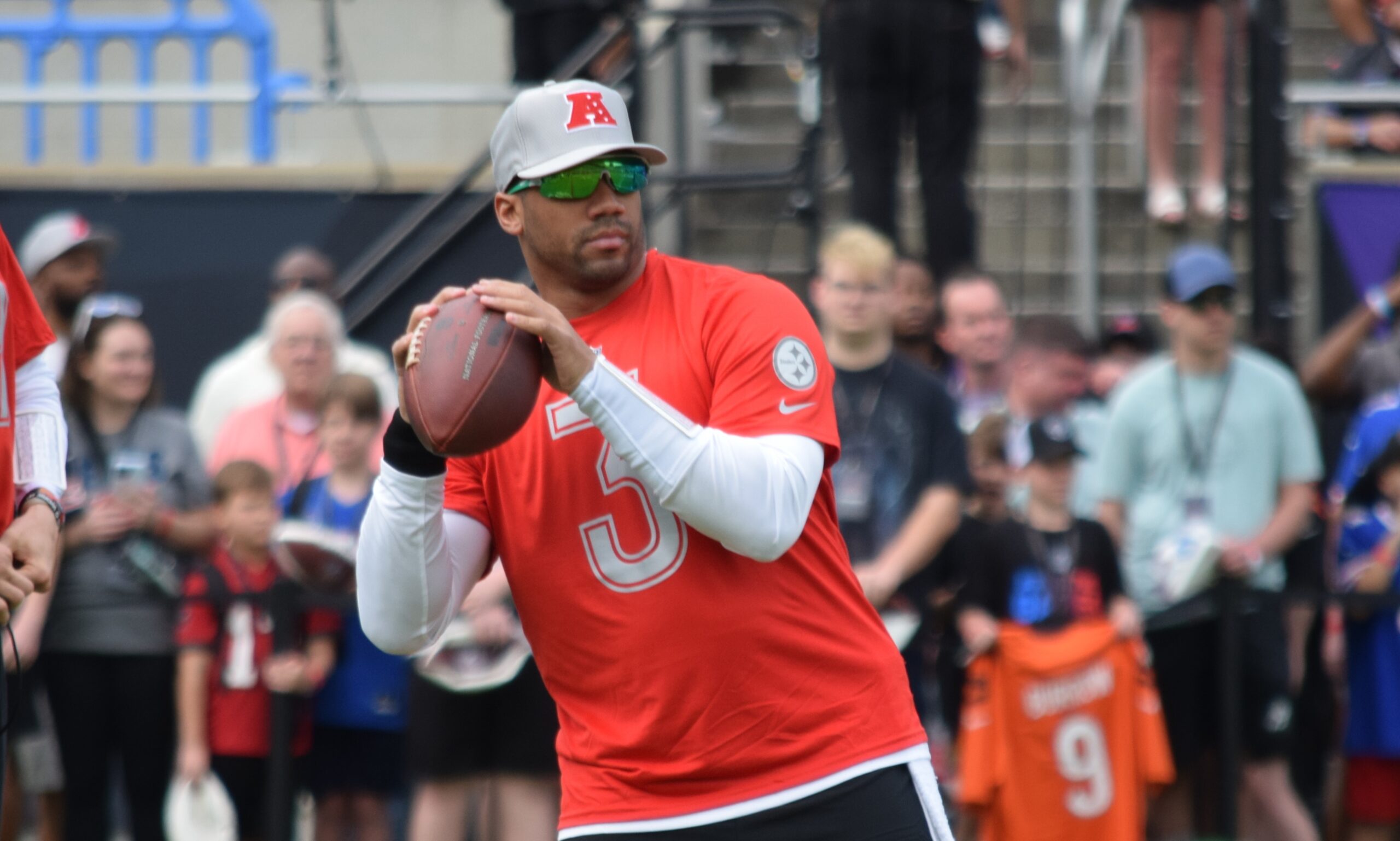
But the real story—the one that still lingers in the air around the South Side facility and M&T Bank Stadium—isn't just the score. It’s the Steelers Ravens Russell Wilson playoff warning that everyone seems to be ignoring. While the pundits are already moving on to the 2026 season and discussing Aaron Rodgers' arrival in Pittsburgh, the fallout from that Wilson-led playoff exit tells us everything we need to know about why the Steelers' quarterback room is currently a revolving door.
The Night the Warning Became Reality
Let's be real for a second. Going into that 2024-25 playoff matchup, the Steelers were huge underdogs. They’d already split the regular-season series with Baltimore, winning a classic 18-16 field-goal-fest in Week 11 before getting handled 34-17 in Week 16.
By the time the Wild Card game kicked off on January 11, 2025, the vibe was off.
The "warning" wasn't some mystical prophecy. It was a statistical neon sign. Russell Wilson, despite his "Dangeruss" pedigree, was entering the postseason on a five-game slide. The offense hadn't cleared 20 points since mid-December. If you can't score 20 in the modern NFL, you aren't winning a playoff game against Lamar Jackson and a Ravens defense that smells blood in the water.
The first half was a massacre.
The Steelers offense, led by Wilson, managed exactly zero points and 59 total yards on 18 plays. Four punts. Four possessions. Baltimore just sat on them.
Why the "Revival" Was a Mirage
People point to Wilson's second half in that game as a sign he still "had it." He went 20-of-29 for 270 yards and two touchdowns. No turnovers. On paper? Looks great. In reality? Most of that was empty calories against a Ravens defense that was playing soft coverage with a 21-0 lead.
Wilson was getting clobbered by Justin Madubuike. He was holding the ball too long, a habit that has haunted him since his final days in Seattle.
The warning was this: Russell Wilson could still provide the "highlights," but he could no longer provide the consistency required to beat elite teams in January. Mike Tomlin admitted as much after the game, saying the offense was "ineffective" and he wasn't ready to commit to Wilson for 2025.
The Rivalry That Breaks Quarterbacks
The Steelers-Ravens rivalry is different. It’s not just "tough football." It’s a physical tax you pay to be in the AFC North.
Think about what we saw this most recent season, in January 2026. The Steelers finally got their revenge, beating the Ravens 26-24 to clinch the AFC North title. But look at the names involved. It wasn't Russell Wilson. It wasn't even Justin Fields. It was Aaron Rodgers throwing a 26-yard game-winner to Calvin Austin III.
Why does this matter for the Wilson "warning"?
Because it proves the Steelers front office listened. They saw that Wilson’s style—scrambling into sacks and hunting for the deep moon ball—wasn't compatible with the "Steelers Way" against a team like Baltimore. To beat the Ravens, you need precision. You need to handle the blitz without taking a 10-yard loss every third down.
The Numbers That Mattered
- Time of Possession: In that 2025 playoff loss, Baltimore held the ball for nearly 40 minutes.
- The Sack Factor: Wilson’s inability to navigate the pocket led to a league-high sack rate during the final stretch of 2024.
- The "Post-Bye" Cliff: The Steelers were 10-3 at one point. They finished the season on a five-game losing streak.
DeShon Elliott, the Steelers' safety, didn't sugarcoat it. After the playoff loss, he famously said the team "sh*t the bed" at the end of the year. That’s the most honest assessment you’ll ever get in an NFL locker room.
What Most People Get Wrong About the Warning
Most fans think the "playoff warning" was about Wilson being "washed." Honestly? That’s too simple.
Wilson wasn't physically incapable of playing. He still has the arm. He still has the fitness. The warning was actually about offensive identity. When the Steelers transitioned from Justin Fields to Wilson mid-way through 2024, they gained passing volume but lost the dynamic run-threat that kept the Ravens' linebackers honest.
By the time the playoffs hit, Baltimore didn't fear the run. They just pinned their ears back and hunted Wilson.
If you're a team looking at a veteran QB, this is the blueprint of what not to do. You can't put a "stat-statue" behind a developing offensive line and expect him to magic his way out of a Ravens-style blitz.
The Aftermath and Your Next Steps
The Steelers eventually moved on. They went the "all-in" route with Rodgers for the 2025-26 season, which resulted in a division title but also a lot of short-term cap pain. As for Wilson, his desire to stay in Pittsburgh was clear—he told reporters "that's the plan" just days after the loss—but the business of football moved faster than his legs could.
If you’re following the AFC North, here is the nuance you need to hold onto:
- Watch the Offensive Line: The Steelers’ success in 2026 wasn’t just the QB; it was the maturation of Broderick Jones and the line. No QB survives the Ravens without a wall.
- The Lamar Factor: Baltimore is 5-0 when they don't turn it over and 1-6 when they do (as seen in the 2025 stats). The rivalry is won on mistakes, not just "star power."
- The Quarterback Ceiling: The "warning" is that 270 yards and 2 TDs can be a losing performance if you spend 40 minutes of the game on the sideline.
The Russell Wilson era in Pittsburgh will likely be remembered as a bridge that didn't quite reach the other side. It served as a reminder that in the AFC North, you either evolve or you get buried under a pile of purple jerseys.
To truly understand where the Steelers go from here, you need to track the 2026 Offseason Salary Cap. With the Rodgers experiment in full swing and the defense getting older (T.J. Watt and Cam Heyward aren't getting younger), the front office has exactly one more window before a full-scale rebuild becomes mandatory. Keep an eye on the "Dead Cap" numbers if the Steelers decide to move on from their current veteran strategy—it will tell you everything you need to know about the next three years of Pittsburgh football.