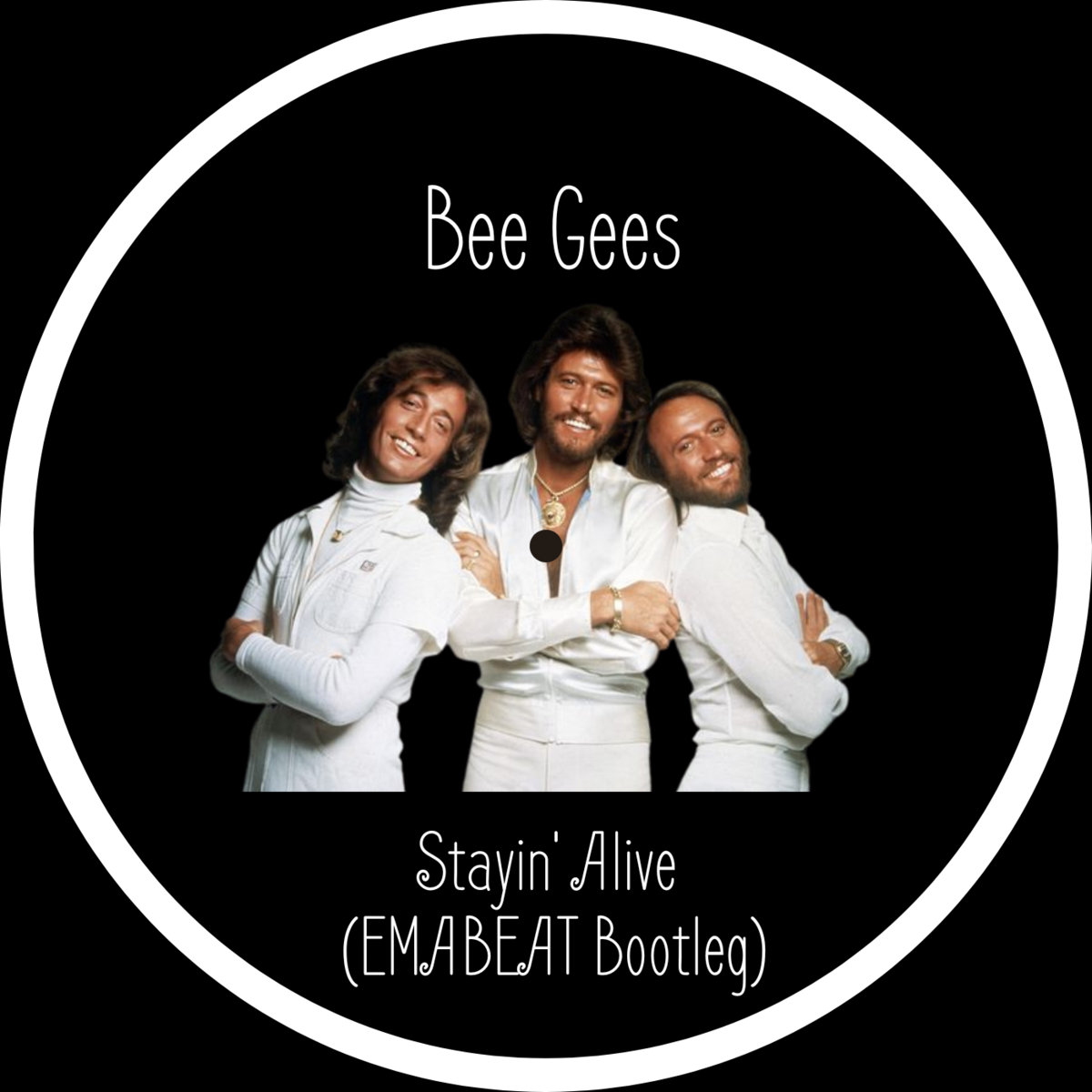
You know that walk. The one John Travolta does in the opening of Saturday Night Fever, strutting through Brooklyn with a paint can in hand and a rhythmic confidence that seems to vibrate off the pavement. That’s the power of Stayin’ Alive by the Bee Gees. It isn’t just a disco track. Honestly, calling it a disco song feels like a massive understatement because it has become a cultural heartbeat, a medical tool, and a weirdly resilient piece of pop history that refuses to die.
Most people think the song was written for the movie. It wasn't. Not exactly.
Robert Stigwood, the Bee Gees' manager, called the brothers while they were recording at Château d'Hérouville in France. He needed songs for a "disco movie" based on a New York Magazine article called Tribal Rites of the New Saturday Night. The Gibbs—Barry, Robin, and Maurice—wrote the bulk of the soundtrack in about a weekend. They were basically factory-producing hits at that point. But they didn't have a drummer. Their regular drummer had to leave for a family emergency, so they took a few bars of the drum track from "Night Fever," looped them manually by taping the physical recording tape around two mic stands, and created the world’s first "loop" for a hit record. That steady, unwavering 103 BPM (beats per minute) pulse is why the song feels so hypnotic. It’s a literal machine-like loop of human drumming.
Why Stayin’ Alive by the Bee Gees is the Ultimate Survival Anthem
The title alone is iconic. But if you actually listen to the lyrics, the song is dark. Like, really dark. Barry Gibb is singing about the struggle of being a "woman’s man" while being kicked around since he was born. It’s about the grit of 1970s New York City. It captures that feeling of just trying to keep your head above water when the world is screaming at you.
When you hear Stayin’ Alive by the Bee Gees, you’re hearing the sound of survival.
Interestingly, the song became a medical standard. The American Heart Association actually recommends it for Hands-Only CPR. Why? Because it’s almost exactly 100 to 103 beats per minute. That is the ideal rhythm for chest compressions to keep someone’s blood circulating during cardiac arrest. It’s a bit of dark irony that a song about the desperation of the streets is now the literal tempo for saving lives in emergency rooms and on sidewalks. If you find yourself in a crisis, you hum the Bee Gees. It works.
The Falsetto That Divided the World
Before this era, the Bee Gees were a folk-rock harmony group. Think "Massachusetts" or "To Love Somebody." They sounded like the Beatles’ younger, more sensitive cousins. Then came the R&B influence. Barry Gibb discovered his falsetto during the Main Course sessions, specifically on "Nights on Broadway." By the time they recorded the soundtrack for Saturday Night Fever, the falsetto was their weapon of choice.
Some people hated it. They thought it was "unmanly" or a gimmick. But it was that high-frequency pierce that allowed the vocals to cut through the heavy bass lines and the thick orchestration of the 70s disco era. It was soul music filtered through three brothers from the Isle of Man.
The Backlash and the Resurrection
By 1979, the "Disco Sucks" movement was in full swing. The infamous Disco Demolition Night at Comiskey Park saw crates of Bee Gees records blown up in center field. It was a weird, aggressive time in music history. The Bee Gees became the face of a genre that people suddenly wanted to bury. For a few years, they were almost persona non grata in the industry.
But quality wins out.
Fast forward to the 90s and 2000s. The song started appearing in everything from Airplane! to The Office. It became a meme before memes existed. Rappers started sampling the basslines. Younger generations didn't see the "uncool" disco stigma; they just heard a track with an incredible groove and a melody that you can’t get out of your head.
What You Probably Didn't Know About the Recording
The production was actually a bit of a nightmare. The studio in France was isolated. The brothers were working under immense pressure. They weren't even sure if the movie was going to be good. At the time, disco was a underground club scene in New York; nobody knew it would become a global phenomenon that would define an entire decade.
- The Tempo: 103 BPM. It’s the "sweet spot" for walking.
- The Bass: Maurice Gibb’s bass playing is often overlooked, but it’s the melodic glue.
- The Lyrics: "Life goin' nowhere, somebody help me." It’s a cry for help disguised as a dance floor filler.
People often forget that the Bee Gees were incredible songwriters for other people, too. They wrote "Islands in the Stream" for Dolly Parton and Kenny Rogers. They wrote "Grease" for Frankie Valli. Their mastery of the three-minute pop song is almost unparalleled, and Stayin’ Alive by the Bee Gees is the crown jewel of that craftsmanship.
The Cultural Weight of a Paint Can
When you see the opening credits of Saturday Night Fever, Tony Manero (Travolta) isn't just walking; he's performing. The song provides the internal monologue. He’s a guy with a dead-end job who feels like a king only when he’s under the lights. That resonance is why the song hasn't disappeared. It speaks to the "weekend warrior" in everyone.
Even today, in 2026, the song pops up in TikTok trends and workout playlists. It has an energy that feels modern because the production was so clean. If you strip away the bell-bottoms and the disco balls, you’re left with a perfectly constructed piece of R&B.
Actionable Takeaways for Your Playlist
If you want to truly appreciate this track beyond the surface level, here is what you should do:
- Listen to the multitracks: Go find the isolated vocal tracks on YouTube. You’ll hear the insane precision of the three-part harmony. They aren't just singing the same notes; they are layering tones to create one "super voice."
- Check the BPM: Use it for your next walk or run. It’s designed to keep you moving at a brisk, steady pace.
- Learn the CPR Rhythm: Seriously. It’s a life skill. Memorize the beat of the chorus. If you ever need to perform chest compressions, "Stayin' Alive" is the internal metronome that keeps you at the 100-120 compressions-per-minute range required by medical professionals.
- Explore the 1975-1979 Era: Don't just stop at this song. Listen to the albums Main Course and Spirits Having Flown. You'll see how the Bee Gees evolved from a ballad band into a powerhouse that dominated the Billboard charts more than almost any other act in history.
The song is a masterclass in how to turn personal struggle and technical limitations (like a missing drummer) into a global anthem. It’s proof that sometimes, the best way to deal with the pressure of life is to just keep walking to the beat.
Next Steps for Music Lovers:
To dive deeper into the technical side of the 70s sound, look into the "MCI console" sound of Criteria Studios in Miami, where the Bee Gees recorded many of their biggest hits. Understanding the "Miami Sound" will change how you hear the bass and drums in all your favorite disco-era records.