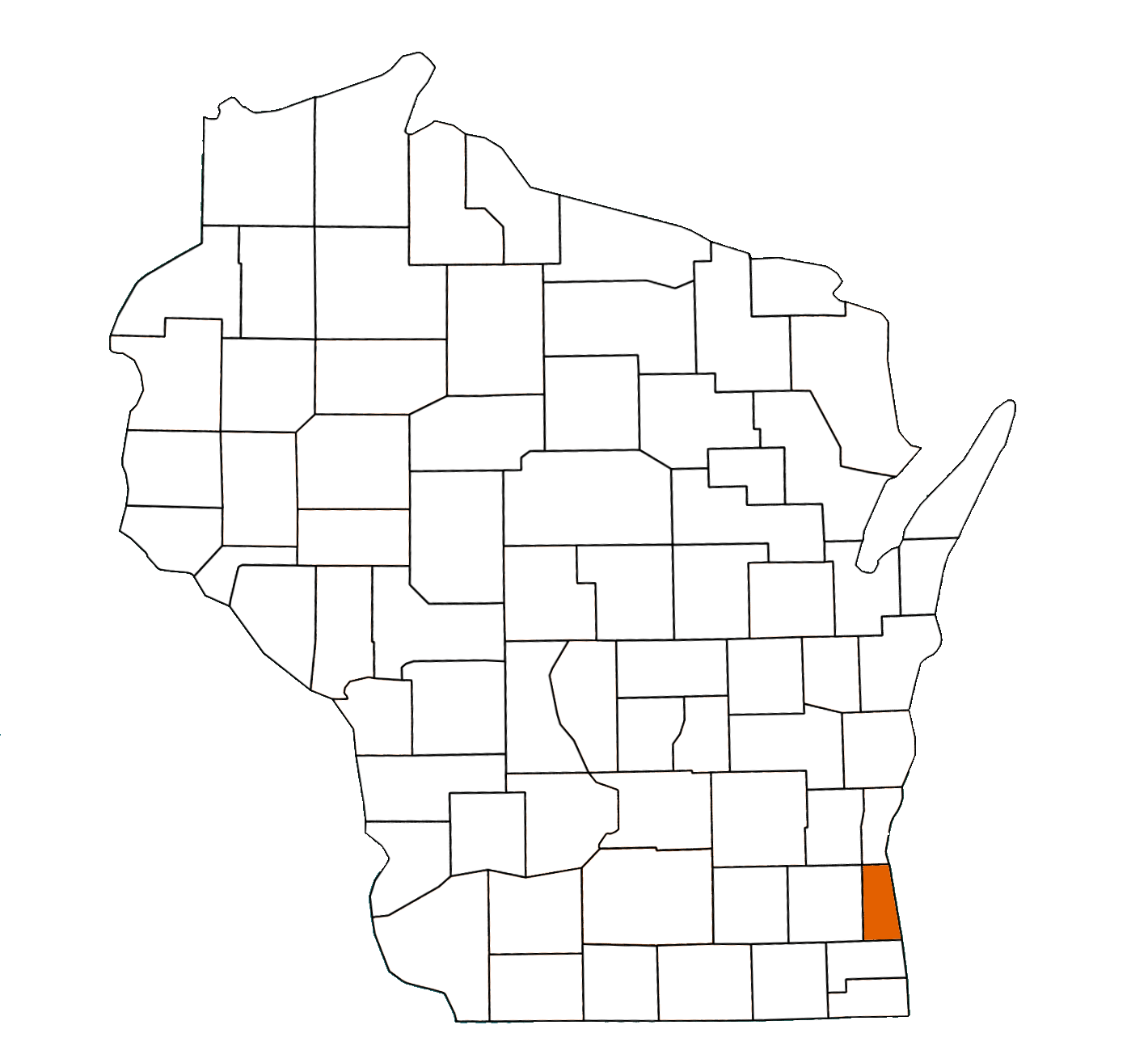
If you’re driving north from Chicago and see the Hoan Bridge rising up like a giant yellow roller coaster against the Lake Michigan skyline, you’ve arrived. But as you navigate the Beer Line or look for a spot near Fiserv Forum, a logistical question might pop up: what county is the city of Milwaukee WI in?
It’s Milwaukee County.
Simple, right? Well, mostly. While the city and the county share a name—which makes things easy for your GPS—the relationship between the two is a sprawling web of history, shared services, and a few confusing border overlaps that trip up locals and tourists alike. Honestly, if you aren't from around here, the way the "MKE" brand covers everything from the airport to the zoo can make it feel like the city and the county are the exact same thing. They aren't.
The Geography of Milwaukee County: It’s Not Just the City
When people ask what county is the city of Milwaukee WI in, they are usually looking for a mailing address or a tax jurisdiction. But Milwaukee County is actually home to 19 different municipalities. You’ve got the heavy hitter, the City of Milwaukee, sitting right in the middle, but then you’ve got these "suburbs" that feel like neighborhoods but are technically their own independent cities.
Think about Shorewood or Whitefish Bay. If you’re walking down North Avenue, you might cross an invisible line and suddenly be in a different jurisdiction with different trash pickup and different police. It’s a patchwork. The county acts as the umbrella for all of it.
Why the Name Matters
Milwaukee comes from the Algonquian word Millioke, which basically means "The Good Land" or "Gathering Place by the Waters." When the county was formed back in 1834—back when Wisconsin was still just a territory—it was massive. We are talking about an area that originally included what is now Waukesha, Ozaukee, Washington, and even parts of Jefferson and Dodge counties.
Eventually, those other areas broke off because people wanted local control. They wanted their own courthouses. By 1846, the borders we see today were pretty much set.
Understanding the "MKE" Identity Crisis
A lot of folks get confused because the City of Milwaukee is the "county seat." That means the big, beautiful, neoclassical Milwaukee County Courthouse is located right in the heart of downtown Milwaukee. If you have to do jury duty or get a marriage license, you’re going to the city to handle county business.
The lines get even blurrier when you look at the parks.
One of the coolest things about this area is the Milwaukee County Park System. It’s world-class. You have places like South Shore Park or the Boerner Botanical Gardens. Even though many of these parks are physically located inside the city limits of Milwaukee, they are owned and managed by the county. It's a weirdly integrated system. You’ll see the "Oak Leaf Trail" snaking through various cities, but it’s all under that county banner.
The Border Blurs
Here is where it gets tricky for people moving here. The Milwaukee ZIP codes don't always respect county lines. While the vast majority of the city is in Milwaukee County, the metropolitan area (the "Metro Milwaukee" area) spills over into Waukesha County to the west, Ozaukee to the north, and Washington to the northwest.
If you are looking at real estate, you've gotta be careful. You might have a Milwaukee mailing address but actually live in the Village of Menomonee Falls (Waukesha County) or Mequon (Ozaukee County). This affects everything from your property taxes to which school district your kids attend. Always check the tax bill. It’s the only way to be 100% sure.
The Economic Engine of Southeast Wisconsin
Milwaukee County is the most populous county in Wisconsin. It has been for a long time. Even as the city itself has seen population shifts over the decades, the county remains the economic heartbeat of the state.
We’re talking about massive employers.
- Northwestern Mutual (the giant towers changing the skyline).
- Harley-Davidson (the legendary museum is right there in the Menomonee Valley).
- Rockwell Automation.
- The Medical College of Wisconsin.
These institutions might be "in Milwaukee," but their impact is felt across the entire county and the "WOW" counties (Waukesha, Ozaukee, Washington).
How the Government Works (In Plain English)
It’s easy to get the Mayor and the County Executive mixed up.
The Mayor of Milwaukee—currently Cavalier Johnson—oversees the city’s police, fire, and basic infrastructure like snow plowing and local streets.
The Milwaukee County Executive—currently David Crowley—oversees things that affect the whole region. This includes the transit system (MCTS buses), the county jail, the airport (Milwaukee Mitchell International), and the massive park system mentioned earlier.
Sometimes they work together. Sometimes they butt heads over funding. It's the standard political dance you see in any major American metro area. The county is basically the middleman between the state government in Madison and the local city halls.
Fun Facts Most People Miss
Did you know that Milwaukee County is the only county in Wisconsin that is "fully incorporated"?
Basically, every single square inch of land in Milwaukee County belongs to a city or a village. There is no "unincorporated" land or "townships" left. This happened back in the mid-20th century as a way to prevent the City of Milwaukee from just annexing everything around it. The suburbs all incorporated to protect their borders.
It’s also worth noting the transit. The Milwaukee County Transit System is the primary way people get around if they aren't driving. If you’re hopping on the "Brisk" or the "GreenLine," you’re using a county service.
Beyond the City: Other Gems in the County
While most people focus on the downtown area, the rest of Milwaukee County has some serious personality.
- Wauwatosa (Tosa): Just west of the city. It has a charming "Village" area with European-style cafes and the massive Mayfair Mall.
- West Allis: Home to the Wisconsin State Farm and the Pettit National Ice Center. It’s gritty, authentic, and has some of the best farmers' markets in the state.
- Cudahy & South Milwaukee: These "South Shore" communities have a deep industrial history. They are perched right on the bluffs of Lake Michigan and offer some of the best hiking trails at Grant Park (the Seven Bridges trail is a must-see).
What You Should Actually Do Next
If you’re trying to figure out what county is the city of Milwaukee WI in because you’re planning a move, a trip, or just settling a bet, here is the ground-truth advice.
First, go to the official Milwaukee County website or use the "Interactive Mapping Service" (GIS). It's a nerd's dream. You can toggle layers to see exactly where the city ends and the county begins.
Second, if you’re visiting, don't just stay downtown. The beauty of Milwaukee County is in the variety. Grab a beer at a beer garden in Estabrook Park (County) and then catch a Bucks game at Fiserv Forum (City).
Third, if you're dealing with legal paperwork, taxes, or car registration, double-check your municipality. Don't just assume "Milwaukee" means the city. Check your specific village or city name on your lease or deed.
The region is changing fast. New developments are popping up from the Deer District to the suburbs of Oak Creek. But the answer to your question remains the same: Milwaukee is the heart and soul of Milwaukee County, and understanding that link is the first step to really knowing the Brew City.
Start by visiting the Milwaukee County Parks website to find a trail near you; it’s the best way to see how the city and county landscapes truly blend together.