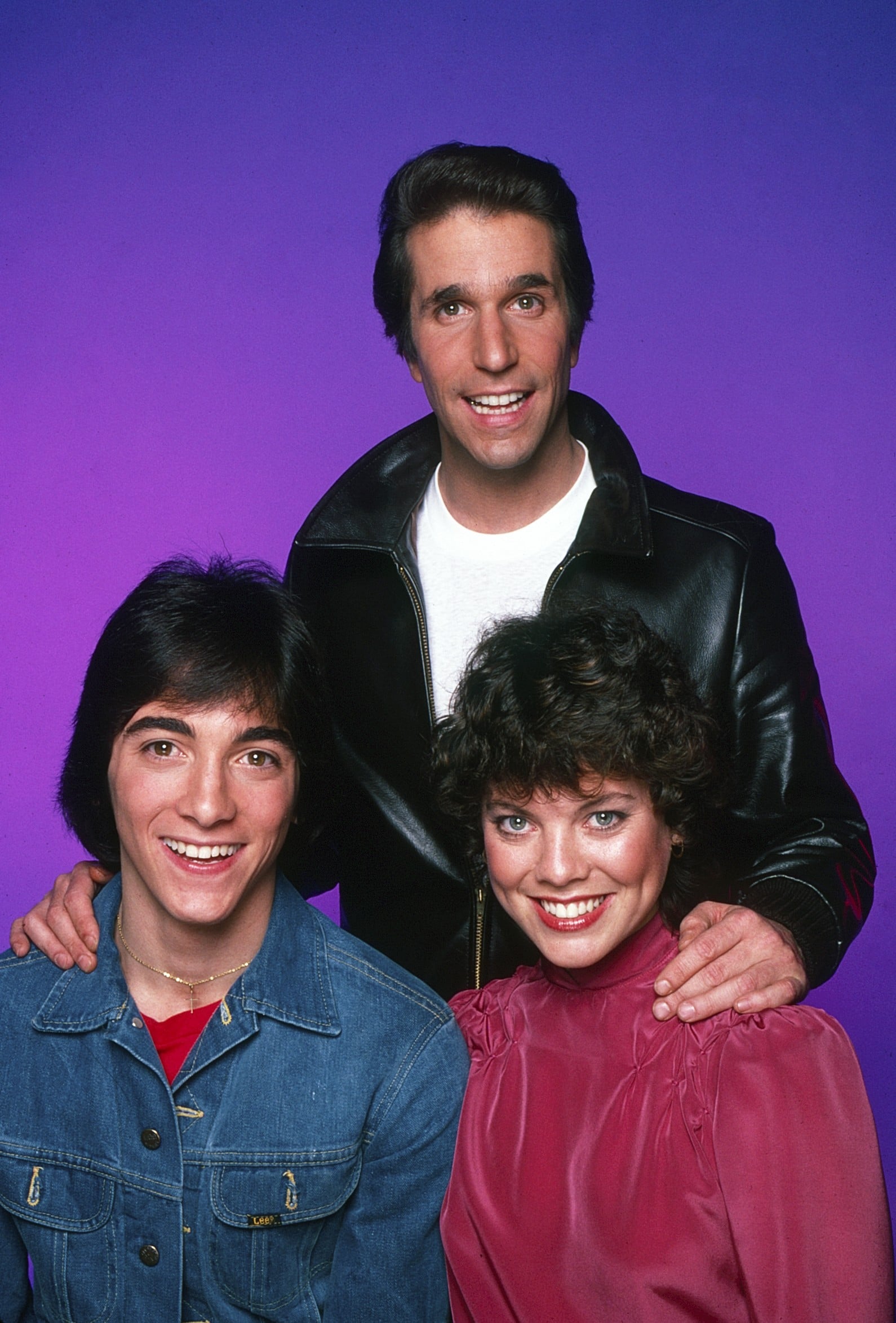
It is 1977. Happy Days is arguably the biggest thing on planet Earth. Richie Cunningham is the wholesome heart, and the Fonz is the leather-clad soul. But there’s a problem brewing in Milwaukee. The show is starting to feel, well, a little older. The original audience is hitting their late teens, and the writers realize they need fresh blood to keep the screams coming from the live studio audience.
Enter a 16-year-old kid from Bensonhurst with a thick Brooklyn accent and a feathered mane of hair that would eventually define an entire decade’s aesthetic.
Scott Baio didn't just join the cast; he basically hijacked the show’s hormonal demographic. When he first strutted onto the screen as Charles "Chachi" Arcola, Fonzie’s younger, scrappier cousin, nobody really knew if he’d stick. Honestly, he was supposed to be a bit player. But then something weird happened. Every time he said "Wa-wa-wa," the audience went absolutely nuclear.
The Chachi Factor: Saving a Sitcom from Itself
By the late 70s, the "Jump the Shark" moment had already happened (literally, in Season 5). The show was in danger of becoming a parody of itself. Bringing in Scott Baio was a tactical strike. He was the "New Kid" archetype before that was even a solidified TV trope.
You’ve probably seen it a million times since—think Leonardo DiCaprio on Growing Pains or Cousin Oliver on The Brady Bunch. Usually, it reeks of desperation. But with Baio, it actually worked. He brought a kinetic, nervous energy that balanced out Henry Winkler’s increasingly "superhero-like" Fonzie.
Why the chemistry with Joanie felt real
The heart of the Scott Baio era was, without a doubt, the romance with Joanie Cunningham (played by the late Erin Moran). It wasn’t the polished, "perfect" love of Howard and Marion. It was messy. It was teenage. It was kinda loud.
Behind the scenes, the production had to deal with a hilarious physical reality: Scott Baio was a late bloomer. When he started, he was actually shorter than Erin Moran. The producers were reportedly worried that audiences wouldn't buy him as a heartthrob if he had to look up at his girlfriend. Nature eventually took its course, Baio hit a growth spurt, and the "Joanie and Chachi" power couple was officially born.
The Spin-off Disaster No One Expected
If you want to see how much clout Scott Baio had by 1982, look no further than Joanie Loves Chachi. This wasn't just a sitcom; it was a musical experiment. They moved the characters to Chicago, put them in a band, and had them sing a ballad in almost every episode.
It was... a lot.
Baio has been pretty blunt about this in recent years. He’s gone on record saying that the spin-off was "the wrong idea" and that the writing just wasn't there once the original Happy Days team went back to the mother ship. The show lasted only 17 episodes before being axed.
The silver lining? It forced the characters back to the main show for the final seasons. We got the big wedding. We got the closure. But the failure of the spin-off is a great example of "too much of a good thing." You can love Chachi in 22-minute bursts, but 1980s audiences weren't ready for a full-blown musical variety hour disguised as a sitcom.
The Tension Behind the "Happy" Facade
Was it all "Correctamundo" on set? Not exactly.
While the cast of Happy Days is famously close—Ron Howard and Henry Winkler are still best friends—Scott Baio was always a bit of an outlier. He was younger, he was a massive teen idol, and he was navigating a level of fame that was frankly exhausting.
- The Screaming Fans: During the height of Chachi-mania, Baio couldn't walk down the street. We’re talking Beatles-level hysteria.
- The Political Rift: In much more recent years, the legacy of the show has been clouded by public disagreements. When the cast reunited for a democratic fundraiser in 2020, Baio—a staunch conservative—was notably absent and quite vocal about his disapproval.
- The Acting Pivot: Baio eventually used the momentum from Happy Days to jump into Charles in Charge, which basically proved he could carry a show on his own, even if the Chicago musical experiment failed.
What Most People Get Wrong About His Casting
There’s a common myth that Scott Baio was hired specifically to replace Ron Howard when he left to become an Oscar-winning director.
That’s actually false.
Baio was cast in Season 5, while Ron Howard stayed through Season 7. They shared the screen for years. Chachi wasn't a replacement; he was a bridge. He allowed the show to transition from a 1950s nostalgia trip into something that felt more like a contemporary 80s teen comedy, even while keeping the poodle skirts in the background.
How to Revisit the Chachi Era Today
If you're looking to dive back into the leather-jacket lore, don't just hunt for random clips on YouTube. You have to watch the progression.
The Essential Watchlist
- "Our Gang" (Season 5, Episode 1): The debut. Watch how skinny and young he looks.
- "Chachi Sells His Soul" (Season 7): A classic episode that shows his comedic timing was actually legit.
- "Passages" (Season 11): The series finale. It’s the payoff for years of "Will they/won't they" with Joanie.
Honestly, looking back, Baio’s performance is better than the critics gave him credit for at the time. He had a way of being "cool" without being a carbon copy of the Fonz. He was vulnerable. He failed a lot. He was basically the most relatable person on a show that had become increasingly fantastical.
If you want to understand the cultural DNA of the late 70s, you have to understand the Chachi Arcola phenomenon. It was the moment the sitcom shifted from being about "the family" to being about "the idol."
Next Steps for Fans:
- Check out the official Happy Days 30th Anniversary Reunion special if you can find it—it’s one of the few times the whole gang (including Baio) sat down to talk about the "Chachi" explosion.
- If you're into the music, Baio’s self-titled 1982 album is a wild time capsule of the era's production style.
- Follow the official social media pages for Henry Winkler; he often posts "throwback" photos that give a much warmer perspective on the behind-the-scenes life than the tabloid rumors suggest.