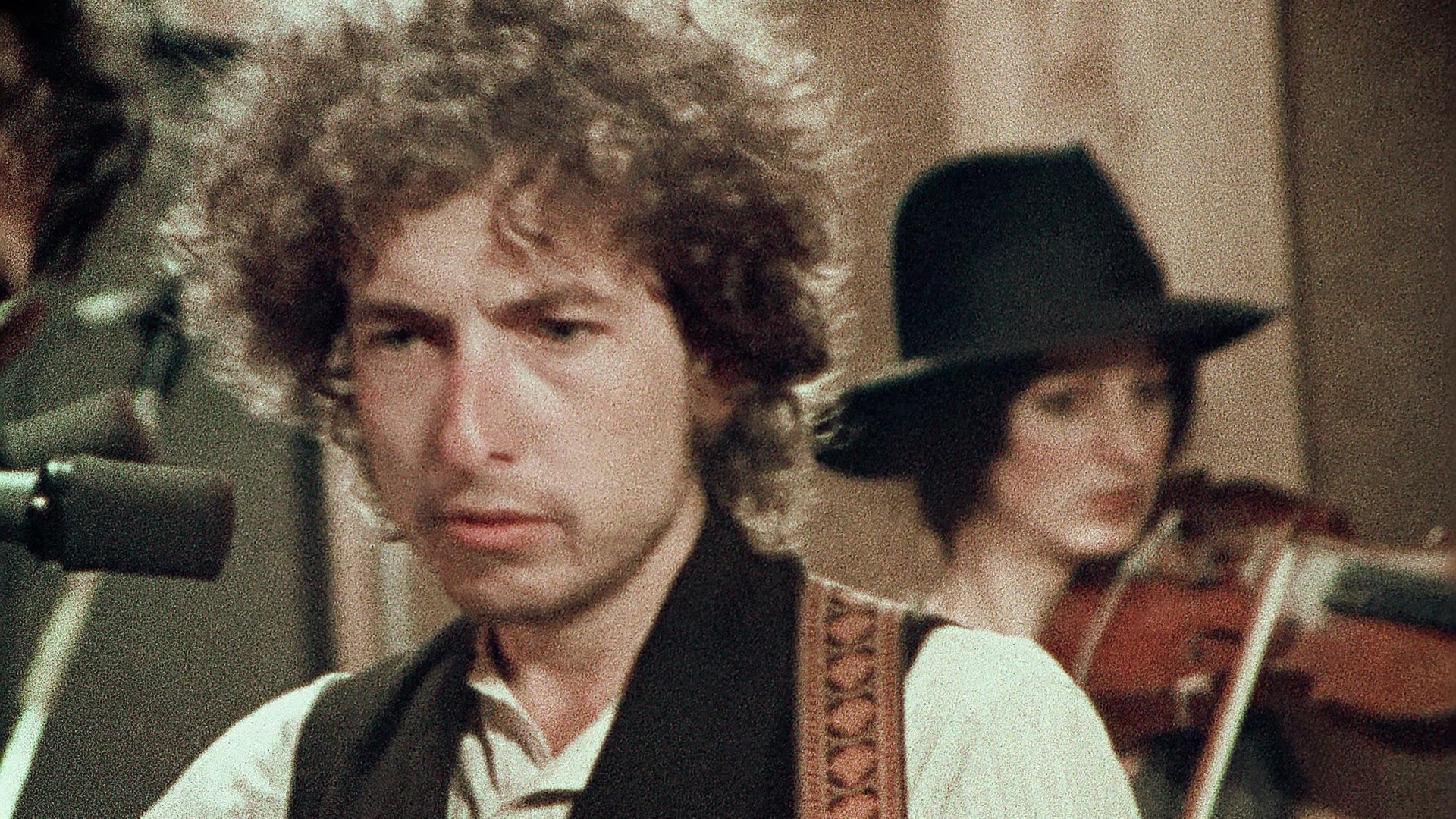
Bob Dylan doesn't remember a thing about the tour. Or at least, that’s what he tells Martin Scorsese’s camera right at the start of Rolling Thunder Revue: A Bob Dylan Story by Martin Scorsese. He’s sitting there, looking a bit weathered but sharp-eyed, claiming the whole 1975 caravan was just a bunch of people who got together to do something that ended up being nothing. He’s lying, of course. Dylan is always lying, or at least he’s always performing a version of the truth that suits the mask he’s wearing that day.
Scorsese knows this.
The film, which hit Netflix back in 2019, isn't a documentary in the way your high school history teacher would define it. It’s a "fever dream." It’s a carnival. Honestly, it’s a bit of a prank played on the audience by two of the greatest artists of the 20th century. If you went into it expecting a dry, chronological retelling of Dylan’s mid-70s comeback, you probably came out of it wondering who that congressman was or why Sharon Stone was talking about a KISS T-shirt.
The Tour That Wasn't Supposed to Happen
By 1975, Bob Dylan was a superstar who hated being a superstar. He had just come off a massive, polished arena tour with The Band in '74, and he hated the distance. He wanted the dirt. He wanted the sweat. He wanted to see the whites of the eyes of the people in the front row. So, he gathered a ragtag group of poets, musicians, and hangers-on—Joan Baez, Roger McGuinn, Ramblin' Jack Elliott, Allen Ginsberg—and hit the road in a fleet of motorhomes.
They played small halls. They played gyms. They played to a handful of people at a Mahjong parlor.
The footage Scorsese uses is breathtaking. It was originally shot for Dylan’s own four-hour experimental film Renaldo and Clara, which flopped harder than a lead balloon in 1978. But in the hands of Scorsese and his editors, this 16mm grain becomes something holy. You see Dylan in whiteface makeup, channeling some kind of Commedia dell'arte spirit, his voice sounding like a chainsaw cutting through silk.
Spotting the Fakes: Scorsese's Big Secret
Here is where it gets weird. Rolling Thunder Revue: A Bob Dylan Story by Martin Scorsese features several interviews with people who simply do not exist.
Well, the actors exist, but the characters are fictional.
Take Jack Tanner, the pompous politician who claims Jimmy Carter got him into a Dylan show. He’s played by Michael Murphy. Tanner is actually a character from a 1988 mockumentary series by Robert Altman. Then there’s Stefan van Dorp, the "original" filmmaker who supposedly shot the footage. He’s played by Martin von Haselberg. He spends his screen time complaining about Dylan’s hygiene and ego. He’s a total fabrication.
Why do this?
Because Dylan’s whole career is about the mask. "If someone's wearing a mask, he's gonna tell you the truth," Dylan says in the film. By inserting fictional characters into a "true" story, Scorsese forces the viewer to question everything. It makes you engage with the music and the feeling rather than just checking off facts on a Wikipedia page. It’s a bold move that some critics hated, but it’s the only way to capture the chaotic energy of 1975.
The Musical Peak of a Legend
Ignore the tricks for a second. Just listen to the performances.
The versions of "Isis," "Hurricane," and "A Hard Rain's A-Gonna Fall" captured in this film are arguably the best Dylan has ever sounded. He’s shouting. He’s pointing. He’s possessed. Behind him, Scarlet Rivera plays the violin like she’s trying to summon a storm. It’s aggressive folk music. It’s punk before punk had a name.
Scarlet Rivera is a key figure here. Legend says Dylan just saw her walking down the street with a violin case, pulled over his car, and asked her to join the band. That story actually seems to be true, which is the funniest part of this whole "fake" documentary—the real parts are often crazier than the inventions.
Why the Film Still Matters in 2026
We live in an era of "content." Everything is polished. Everything is branded. Rolling Thunder Revue: A Bob Dylan Story by Martin Scorsese feels like the antidote to that. It’s messy. It’s long. It’s confusing.
It reminds us that art isn't about being "correct." It’s about the spirit of the thing. When you watch Joan Baez dance on stage or see Allen Ginsberg trying to read poetry to a bunch of disinterested factory workers, you’re seeing a version of America that feels lost. It was a Bicentennial year project that didn't care about the official history of the country. It cared about the underbelly.
The film also captures the end of an era. Shortly after this tour, Dylan would pivot toward his "Gospel period." The wild, face-painted rockstar would disappear, replaced by a man looking for salvation. This was the last gasp of the 1960s counterculture, trying to find its footing in a cynical new decade.
What Most People Get Wrong About the Movie
Most people think it’s a "rockumentary." It’s not. It’s a narrative film using real elements.
If you try to use this movie as a source for a college paper on 1970s politics, you’re going to fail. But if you use it to understand the psychology of Bob Dylan, you’ll get an A+. You have to look at the way he looks at Joan Baez. There’s decades of history in those glances. They were the king and queen of folk, and here they are, middle-aged, still trying to figure out if they ever actually liked each other.
The Sharon Stone interview is another "fake" bit that people argue about. She claims she went on tour as a teenager and Dylan gave her his shirt. It’s almost certainly a lie concocted for the film. But does it matter? It adds to the mythos. It fits the "story" part of the title.
Practical Insights for the Viewer
If you’re going to watch Rolling Thunder Revue: A Bob Dylan Story by Martin Scorsese, or if you're revisiting it, keep these things in mind:
- Don't Google as you watch. Just let the weirdness wash over you. If a character feels too "perfect" or too annoying, they’re probably an actor.
- Turn the volume up. The mixing on the live tracks is incredible. It was overseen by Dylan’s long-time sound engineers and it captures the "room" sound better than any live album from that era.
- Watch for the cameos. Look for a young Patti Smith in the Greenwich Village scenes. She’s electric.
- Compare it to No Direction Home. That’s Scorsese’s other Dylan doc. It’s much more factual. Watching them back-to-back shows the two sides of Scorsese’s filmmaking brain—the historian and the dreamer.
The film is essentially a giant metaphor for the act of creation. You take some truth, you take some lies, you put on some makeup, and you hope that somewhere in the middle, the audience feels something real. Dylan has spent sixty years doing exactly that. Scorsese, a man obsessed with faith and identity, was the perfect person to document—and participate in—the deception.
To truly appreciate the film, look into the Rolling Thunder Revue: The 1975 Live Recordings box set released alongside the movie. It contains the raw, unedited performances that prove that beneath the masks and the fictional congressmen, there was a band that could have burned down any stage in America.
Understand that the "truth" of the 1970s isn't found in a textbook. It’s found in the sweat dripping off a man’s face while he screams about a boxer named Rubin Carter who was tossed into a prison cell for a crime he didn't commit. That’s the heart of it. Everything else is just a story told by a master director and a legendary songwriter.
Next steps for the curious:
- Watch the 1978 film Renaldo and Clara if you can find a bootleg copy to see the "raw" material before Scorsese edited it.
- Listen to the Hard Rain live album, which captures the second leg of the tour (though the movie focuses mostly on the first).
- Read On the Road with Bob Dylan by Larry "Ratso" Sloman. He’s a real person in the film, and his book is the definitive, non-fictional account of the tour’s chaos.