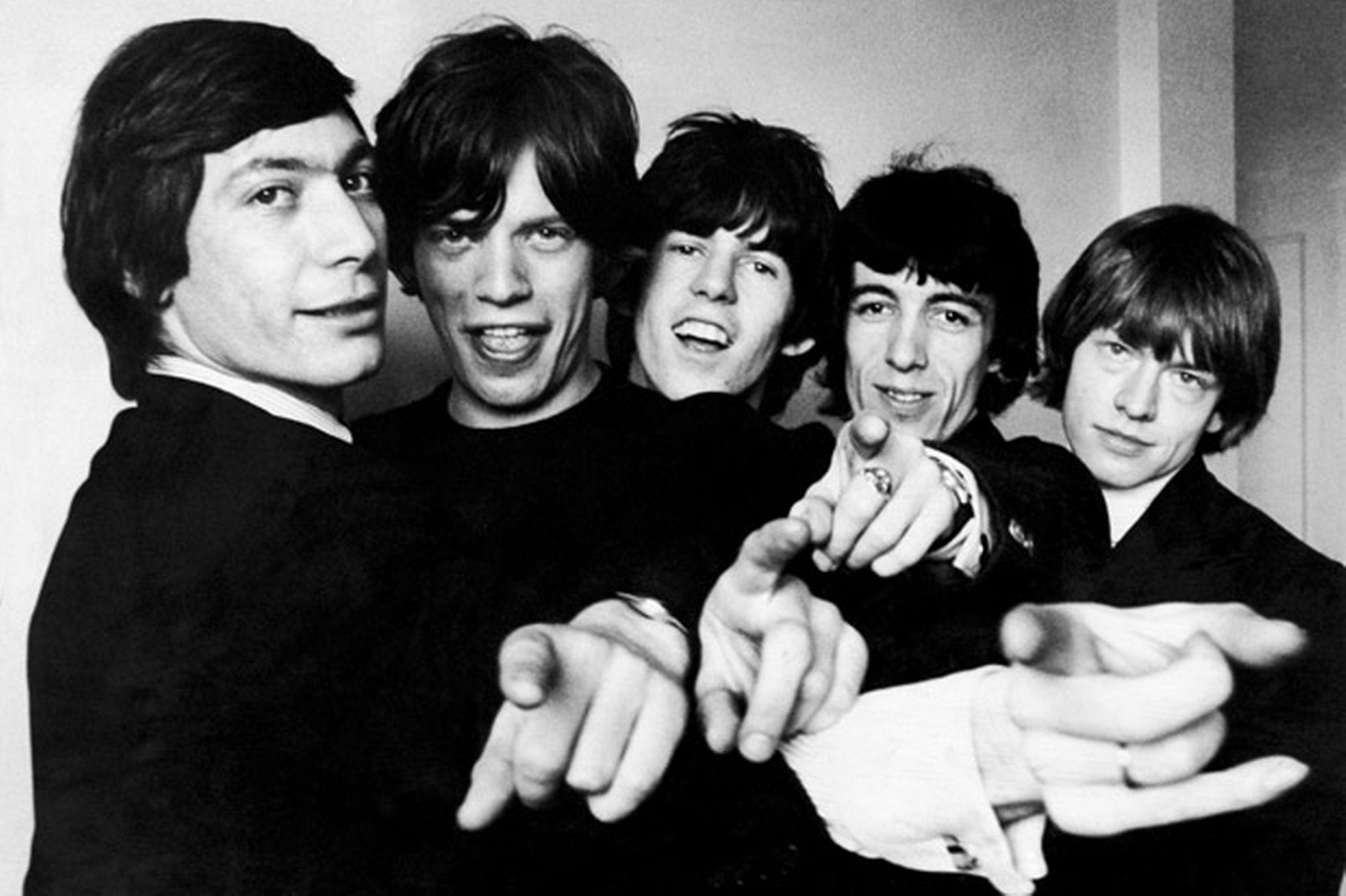
The story usually starts with a chance meeting on a train platform. Mick Jagger and Keith Richards, childhood friends who had lost touch, ran into each other at Dartford station in 1961. Mick had some rhythm and blues records under his arm. Keith had a guitar. It’s a great story. It's legendary. But honestly, it’s not the whole story of the rolling stones original band members. If you think the "original" lineup is just the guys you saw at the Super Bowl halftime show or on their latest stadium tour, you're missing the most chaotic, blues-obsessed, and tragic parts of their history.
The band didn't just appear out of thin air as a five-piece unit. It was a messy, rotating door of jazz drummers and blues purists.
The Brian Jones Factor
Before Mick was the frontman and Keith was the riff-human, there was Brian Jones. He didn't just join the band; he was the band. He placed the ad in Jazz News. He chose the name, swiping it from a Muddy Waters track. Brian was a slide guitar prodigy who could pick up basically any instrument—marimba, sitar, recorder—and make it sound like it belonged in a rock song.
He was the leader. At least, he was in the beginning.
In those early days in a freezing flat at 102 Edith Grove, the rolling stones original band members weren't rock stars. They were broke. They stole food from shops. They huddled around a single heater. Brian was the one obsessed with the Chicago blues sound, pushing the band to be authentic. But as Jagger and Richards started writing their own songs—urged on by their manager Andrew Loog Oldham—Brian’s influence began to slip. It’s a sad trajectory. By the time the band hit their psychedelic peak with Satanic Majesties Request, Brian was often a ghost in the studio, eventually being asked to leave the band in 1969 shortly before his death in a swimming pool.
The Rhythm Section That Almost Wasn't
People forget that Bill Wyman and Charlie Watts weren't the first choice. They weren't even the second.
The very first gig at the Marquee Club on July 12, 1962, featured a lineup that would look weird to a modern fan. You had Mick, Keith, and Brian, sure. But on keys was Ian Stewart. On bass? Dick Taylor. And the drummer wasn't Charlie—it was Mick Avory, who later found fame with The Kinks.
Dick Taylor eventually left to form The Pretty Things because he wanted to go to art school. This opened the door for Bill Wyman. Now, Bill was older. He was married. He had a "real" job. He also had something the rest of the guys didn't have: a huge amplifier. Keith has joked about this for decades, basically saying they only let Bill in because they needed the gear. But Wyman brought a steady, understated throb to the bass that anchored Keith’s loose timing.
Then there’s Charlie Watts.
Charlie was a jazz guy. He dressed better than them. He was polite. He actually had a job in advertising. The rolling stones original band members spent months begging him to join because they knew he was the best drummer in London. He finally relented in early 1963. With Charlie in the fold, the "classic" early lineup was set, but it was built on a foundation of jazz swing rather than heavy metal thumping. That’s why the Stones swing when other bands just bang.
The "Sixth" Stone: Ian Stewart
If we are being real, Ian "Stu" Stewart is the most important of the rolling stones original band members that casual fans have never heard of. He was there at the very first rehearsal. He played the piano like a demon. But Andrew Loog Oldham decided that six members was too many for the public to keep track of. More importantly, he didn't think Stu "looked" the part.
Stu was square-jawed and didn't have the moody, androgynous look of the others.
So, they kicked him out of the official lineup. It was brutal. Most people would have walked away, but Stu stayed. He became their road manager and played piano on almost every album until his death in 1985. When the Stones were inducted into the Rock and Roll Hall of Fame, they insisted Stu be included. He was the glue. He was the guy who told them when their songs were "rubbish." Without Stu, the band probably would have imploded under the weight of their own egos by 1967.
Why the Lineup Shifts Mattered
You can’t talk about the rolling stones original band members without acknowledging how the sound changed as people left. When Brian Jones was replaced by Mick Taylor in 1969, the Stones became a different beast. They went from a pop-blues experimental outfit to the greatest hard rock band on the planet. Taylor brought a melodic, fluid virtuosity that Brian didn't have.
Then Taylor left because, well, being a Stone is exhausting.
Enter Ronnie Wood in the mid-70s. Ronnie wasn't an "original," but he fit the "weaving" guitar style Keith loved. It’s a chemistry thing. The Stones aren't just a collection of musicians; they are a set of moving parts that somehow haven't completely broken down over sixty years.
What Most People Get Wrong
The biggest misconception is that the band was a democracy. It was Brian's band, then it was a power struggle, and then it became the Glimmer Twins show (Mick and Keith). Another myth is that they were always the "bad boys" compared to the Beatles. In reality, the Beatles were tough kids from Liverpool, while the Stones were mostly middle-class art school students. The "bad boy" image was a brilliant marketing move by Oldham to contrast with the Mop Tops.
Also, Bill Wyman's contribution is often downplayed. While Mick and Keith were the faces, Bill’s rig and his specific, non-flashy bass lines provided the floor for the songs. When he left in the early 90s, the band lost a certain "clatter" that they've spent years trying to replicate with session greats like Darryl Jones.
Actionable Insights for Fans and Collectors
If you want to truly understand the DNA of the rolling stones original band members, you have to go beyond the greatest hits. The early years are where the "real" band lived.
- Listen to the BBC Sessions: Look for recordings from 1963-1965. You can hear Brian Jones's slide guitar work much more clearly than on the muddy studio masters. It's blistering.
- Track the "Stewart" Piano: Listen to Physical Graffiti by Led Zeppelin or any classic Stones track like "Brown Sugar." That boogie-woogie piano is Ian Stewart. Once you hear his style, you'll see how he shaped the entire British rock sound.
- Study the Marquee Club Lineup: Research the July 1962 show. It helps you realize that bands are fluid. The "perfect" lineup is usually just the one that happened to get lucky.
- Watch '25x5': It’s an older documentary, but it covers the transition from Brian to Mick Taylor better than almost anything else. It shows the tension and the shift in musicality.
The Rolling Stones are often called "The World's Greatest Rock and Roll Band." They earned that title not by staying the same, but by surviving the loss, replacement, and evolution of their founding members. The 1962 version of the band wouldn't recognize the 2026 version, but the pulse—that weird, swinging, bluesy heartbeat—is exactly the same.