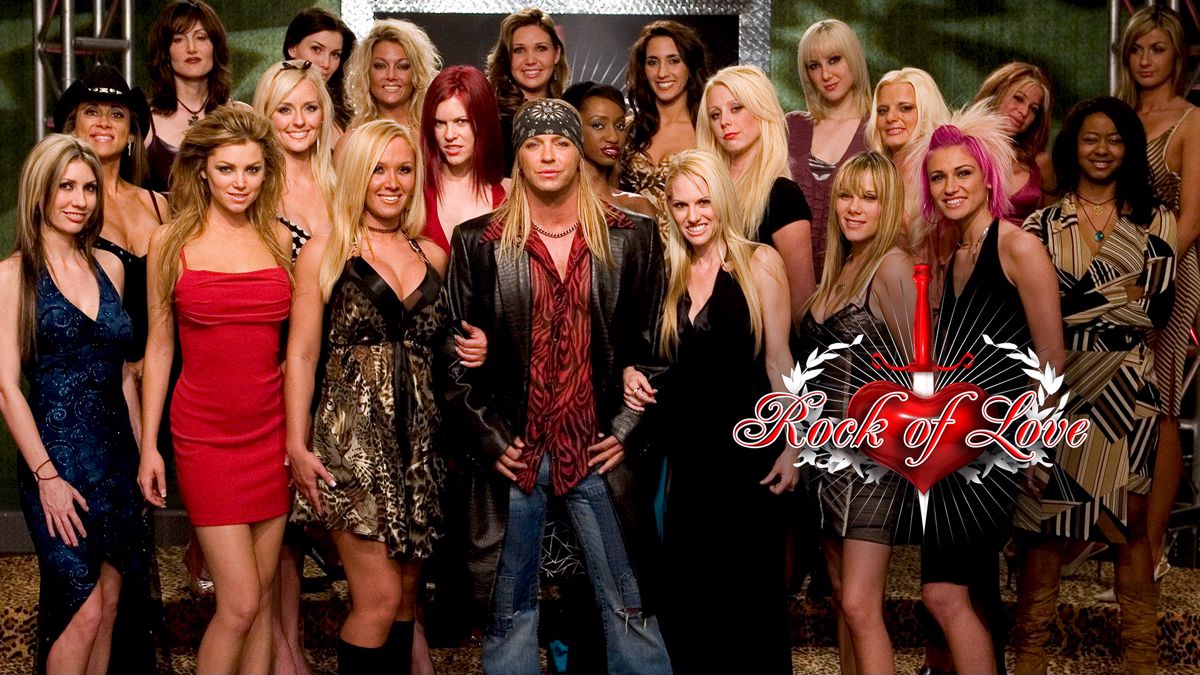
Bret Michaels stood there in his signature bandana, surrounded by a dozen women who were, quite frankly, ready to claw each other's eyes out for a chance at a washed-up hair metal god. It was 2007. Reality TV was a lawless wasteland. If you were watching VH1 back then, you remember the chaos. But what you saw on your television screen was the sanitized, FCC-approved version. The real story, the rock of love uncensored reality, was significantly more abrasive, desperate, and weirdly human than the edited episodes ever let on.
People still talk about this show. Why? Because it represents a peak of "trash TV" that simply couldn't exist in the same way today. You've got 20-somethings competing for the affection of the Poison frontman, and the producers were fueled by a "yes, and" mentality that pushed every boundary.
The Myth of the "Uncensored" DVDs
Back in the mid-2000s, "uncensored" was a massive marketing buzzword. VH1 knew they had a goldmine, so they released DVD sets that promised to show everything the cable sensors cut out. We’re talking about the fights, the swearing, and the blurred-out moments that made the broadcast version feel like a PG-13 movie.
The truth is a bit more nuanced.
Most of the "uncensored" content was just extra profanity and some brief nudity that was blurred for TV. However, for the hardcore fans, these edits changed the tone. The arguments between contestants like Lacey Sculls and Heather Chadwell felt more visceral when you could hear the actual vitriol being spewed. It wasn't just about the shock value. It was about seeing the raw, unpolished edges of people who were trapped in a house with limited sleep and an unlimited supply of "Bret’s Brew."
Lacey Sculls, who played the "villain" role to perfection, has been vocal in recent years about how the show was constructed. On her podcast, Talk of Love, she’s broken down the reality of those "uncensored" moments. She often points out that while the nudity was real, the drama was frequently a result of extreme sleep deprivation and clever editing. It makes you wonder: was the "uncensored" version more real, or just more graphic?
What the Cameras Missed (And What Producers Wanted)
Reality TV is a game of manipulation. The producers on Rock of Love were masters of the craft. They didn't just film; they orchestrated.
Imagine being stuck in a mansion in Encino. You can't leave. You can't watch TV. You can't read a book. You can only talk to other women who are competing for the same guy—and you're all drinking heavily. That's a recipe for a breakdown. The rock of love uncensored experience for the contestants was one of psychological endurance.
Former contestants have mentioned that the "dates" were often grueling 12-hour shoots for what ended up being three minutes of airtime. The tension you see during the elimination ceremonies? That wasn't just nerves about Bret. It was exhaustion. They wanted to go to bed.
The Bret Michaels Factor
Bret Michaels himself is an interesting study in celebrity survival. By the time Rock of Love premiered, Poison was a nostalgia act. Bret needed a second act. He found it by leaning into a self-aware, almost cartoonish version of a rock star.
He was actually quite savvy. He knew the show wasn't really about finding his soulmate. It was about building a brand. This is why, despite three seasons of "finding love," he never ended up in a long-term relationship with any of the winners. Jes Rickleff, the winner of Season 1, famously admitted during the reunion that she wasn't into him once the cameras stopped rolling. She saw the "uncensored" Bret—the guy who was focused on his career and his tour schedule—and realized the fantasy didn't match the reality.
The Girls Next Door (Or Not)
The casting for this show was brilliant and terrifying. You had women from all walks of life. Some were truly there because they had a crush on Bret since 1987. Others were aspiring actresses looking for a SAG card.
- Heather Chadwell: The runner-up of Season 1 who became a staple of the VH1 "Celebreality" universe. She was the heart of the show because she actually seemed to care.
- Daisy de la Hoya: The breakout star of Season 2 who was so compellingly tragic and charismatic that she got her own spin-off.
- Aubry Fisher: Remember the girl who got kicked out for not knowing who Bret was? That was a classic producer plant moment.
The "uncensored" footage of these women reveals a lot about the era's beauty standards and social dynamics. It was the era of low-rise jeans, heavy eyeliner, and a very specific type of "rocker chic" that feels like a time capsule now.
Why We Can't Look Away from the Chaos
There is a psychological phenomenon at play when we watch something like Rock of Love. It’s called Schadenfreude—finding joy in the misfortune of others. But it’s also about the "train wreck" effect. You know it's bad for you, you know it's largely fake, but you can't turn it off.
The rock of love uncensored legacy is one of honesty in its dishonesty. The show never pretended to be The Bachelor. It didn't try to be classy. It embraced the dirt, the tattoos, and the hangovers. In a world of highly polished Instagram influencers, there is something oddly refreshing about watching people be messy on a 2007 TV budget.
The Dark Side of the "Uncensored" Era
It’s not all fun and nostalgia. The VH1 "Celebreality" era had a dark ending. The tragic events surrounding Megan Wants a Millionaire (a spin-off of a spin-off) effectively killed this genre of television. When a contestant was involved in a violent crime, the network had to scrub their programming and rethink their strategy.
Looking back at Rock of Love through a 2026 lens, some of the behavior is hard to watch. The way women were pitted against each other, the casual misogyny, and the exploitation of mental health struggles are clear. But to understand the show, you have to understand the context of the time. It was a period where the "Wild West" of cable TV was testing how far it could go before the audience—or the law—pushed back.
The Actionable Takeaway for Reality Fans
If you're looking to revisit this era, don't just rely on the grainy clips on YouTube. To truly understand the rock of love uncensored history, you should look at the retrospective content created by the people who were actually there.
- Listen to "Talk of Love": Lacey Sculls’ podcast is the definitive source for behind-the-scenes truth. She interviews former cast members who have no reason to lie anymore.
- Watch for the "Edits": When re-watching, look for the "franken-bites." This is when producers stitch together different sentences to make a contestant say something they didn't. You can hear the change in tone or background noise.
- Follow the Career Trajectories: Look at where these women are now. Many have moved on to completely normal lives, while others have stayed in the entertainment industry. It’s a fascinating look at the long-term effects of "15 minutes of fame."
The "uncensored" reality of these shows is that they were a snapshot of a culture obsessed with celebrity and excess. They weren't just shows; they were social experiments with big hair and electric guitars.
To get the most out of your nostalgia trip, start by watching the Season 1 reunion special. It’s the moment the fourth wall breaks most effectively. You’ll see the winners and losers confronting Bret and the producers, providing a much clearer picture of what was real and what was "for the cameras" than any censored broadcast ever could.
Once you’ve done that, compare the "Winner’s Edit" of the final episodes with the post-show interviews. The discrepancy between the "happily ever after" shown on VH1 and the "we never spoke again" reality of the day after filming is the most uncensored look at reality TV you can get.