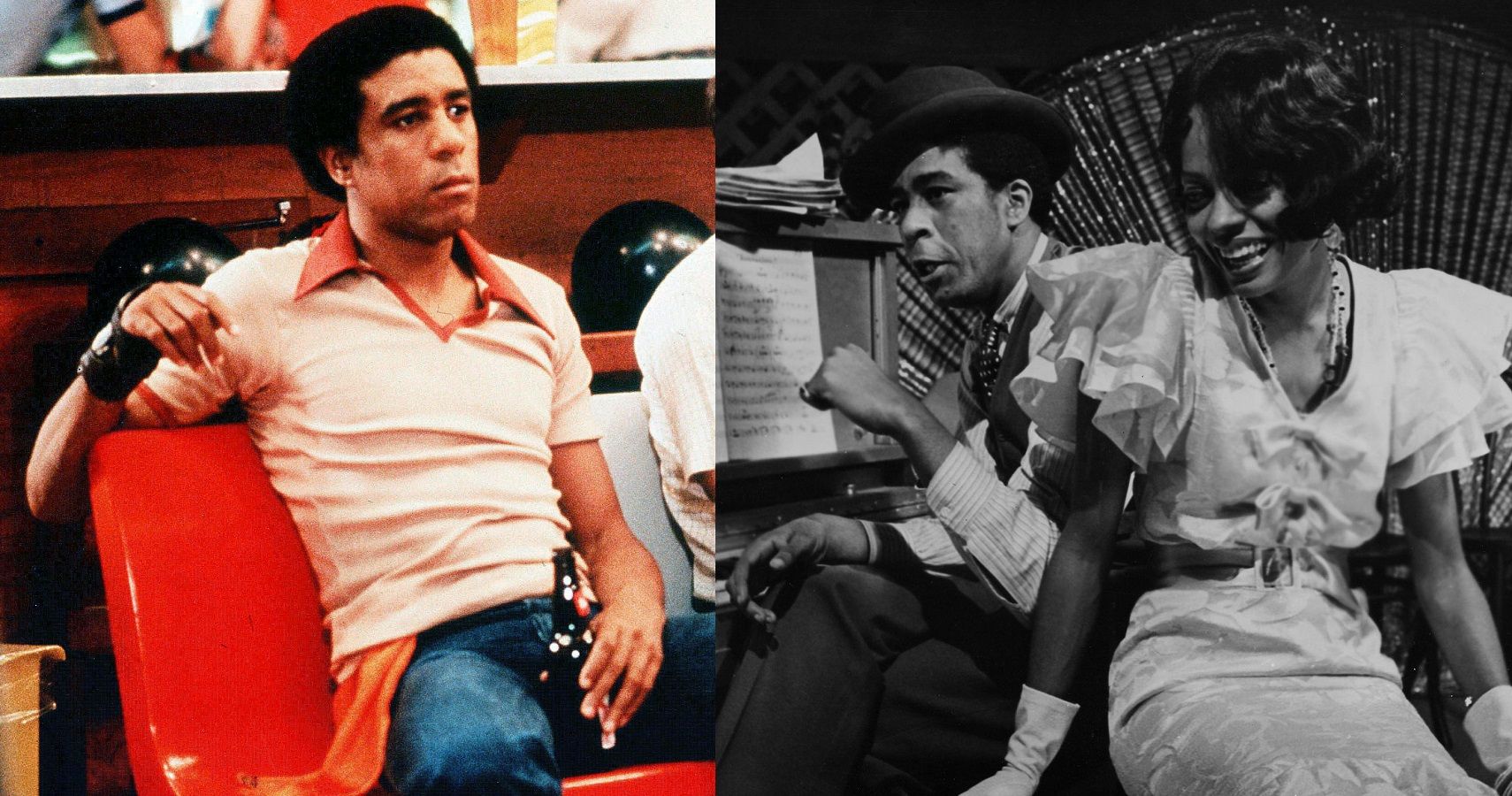
Honestly, trying to pin down a richard pryor movies list is like trying to catch lightning in a bottle. You’ve got this guy who literally reinvented what it meant to be funny on a stage, but when he stepped in front of a movie camera, things got... complicated. It wasn’t always the same fire.
He was a genius. Period.
But his filmography is this wild, uneven rollercoaster. You have these absolute masterpieces like Blue Collar where he shows dramatic chops that would make Juilliard grads weep, and then you have stuff like Superman III where he’s basically there to collect a paycheck and cash in on being "the guy from the comedy albums."
The Gene Wilder Era: Why It Still Matters
If you’re looking at a richard pryor movies list, you usually start with Gene Wilder. It’s the law of 80s comedy. They weren't actually best friends in real life—which surprises a lot of people—but on screen? Pure magic. They had this "odd couple" energy that felt completely unrehearsed.
- Silver Streak (1976): This was the spark. Pryor isn't even the lead, but he walks away with the whole movie. That scene where he tries to teach Gene Wilder how to "act Black" to sneak past the cops? It’s arguably one of the most famous moments in comedy history.
- Stir Crazy (1980): This is the one everyone remembers. Directed by Sidney Poitier (yeah, that Sidney Poitier), it features Pryor and Wilder as two guys framed for a bank robbery. The "We Bad" strut? It’s iconic. It was also a massive box office hit, proving Pryor was a global superstar.
- See No Evil, Hear No Evil (1989): By this time, Pryor’s health was starting to show signs of the multiple sclerosis that would eventually take him. Still, the chemistry was there. It's a high-concept gimmick—one guy is blind, the other is deaf—but they make it work through sheer willpower.
- Another You (1991): Their final outing. It’s a bit of a sad note to end on because both actors were past their prime and the script was thin, but for fans, it’s a necessary watch just to see them together one last time.
The Writing Genius: Blazing Saddles
Here’s a fact that trips people up: Richard Pryor is a huge reason why Blazing Saddles is the greatest Western spoof ever made. He didn't just act in movies; he shaped them. He was a co-writer on that script. Mel Brooks actually wanted Pryor to play the lead role of Sheriff Bart, but the studio (Warner Bros.) was terrified of his reputation and his drug use at the time. They wouldn't insure him.
Instead, we got Cleavon Little, who was brilliant, but you can hear Pryor’s voice in every single line of dialogue. He brought that raw, sharp-edged social commentary that made the movie more than just a bunch of fart jokes.
The Serious Side: Blue Collar and Jo Jo Dancer
A lot of people forget that Richard Pryor could actually act. Like, really act.
Take Blue Collar (1978). It’s a gritty, depressing, and incredibly powerful movie about three factory workers who try to rob their own union. It was directed by Paul Schrader (the guy who wrote Taxi Driver), and the tension on set was legendary. Pryor, Harvey Keitel, and Yaphet Kotto supposedly hated each other during filming. That real-life friction translated into some of the most intense performances of the 1970s.
Then there’s Jo Jo Dancer, Your Life Is Calling (1986). This was Pryor’s passion project. He directed it, wrote it, and starred in it. It’s semi-autobiographical, dealing with his childhood in a brothel and that infamous night he set himself on fire while freebasing cocaine. It’s not a "funny" movie, but it’s a necessary piece of the richard pryor movies list if you want to understand the man behind the mask.
The 80s Paychecks: Brewster’s Millions and The Toy
By the mid-80s, Richard Pryor was the highest-paid star in Hollywood. He was making millions, and it showed in the types of projects he took.
- The Toy (1982): This movie is... uncomfortable by modern standards. A rich kid "buys" a man to be his friend. It’s a weird premise, but Pryor’s physical comedy saves it from being totally unwatchable.
- Brewster’s Millions (1985): A classic "what would you do with the money" flick. He co-stars with John Candy. It’s light, it’s fun, and it’s peak 80s Pryor.
- Moving (1988): A relatable comedy about the horrors of moving cross-country. It’s one of those movies that always seems to be on TV on a Sunday afternoon.
The Stand-Up Films: The True Essence
If we are being 100% honest, the best "movies" Richard Pryor ever made weren't scripted. They were his concert films. If you want to see the real Richard Pryor, you watch these:
- Richard Pryor: Live in Concert (1979): Often cited as the greatest stand-up film ever made. He talks about his heart attack, his dogs, and race in America with a vulnerability that changed comedy forever.
- Live on the Sunset Strip (1982): This is where he addresses the fire. It’s harrowing and hilarious all at once.
- Here and Now (1983): Taped in New Orleans, this one shows a slightly more mellowed out, but still biting, Pryor.
Why We’re Still Talking About Him
Richard Pryor wasn't just a comedian. He was a mirror. He took all the ugly, messy, painful parts of his life and his country and forced us to laugh at them so we wouldn't have to cry.
His film career was a bit of a mixed bag. He did some great work, some okay work, and some stuff that was clearly just for the money. But even in his worst movies, he had this spark. You couldn't take your eyes off him.
If you're looking to explore his work, don't just stick to the hits. Look for the weird stuff. Look for the cameos. Look for the writing credits.
Next Steps for the Pryor Fan:
If you want to truly appreciate his legacy, start by watching Blue Collar to see his dramatic range, then immediately follow it with Live in Concert. It’ll give you the full spectrum of why he’s still the GOAT. You can find most of these on major streaming platforms or through specialty distributors like the Criterion Collection, which has given some of his more serious work the high-def treatment it deserves.