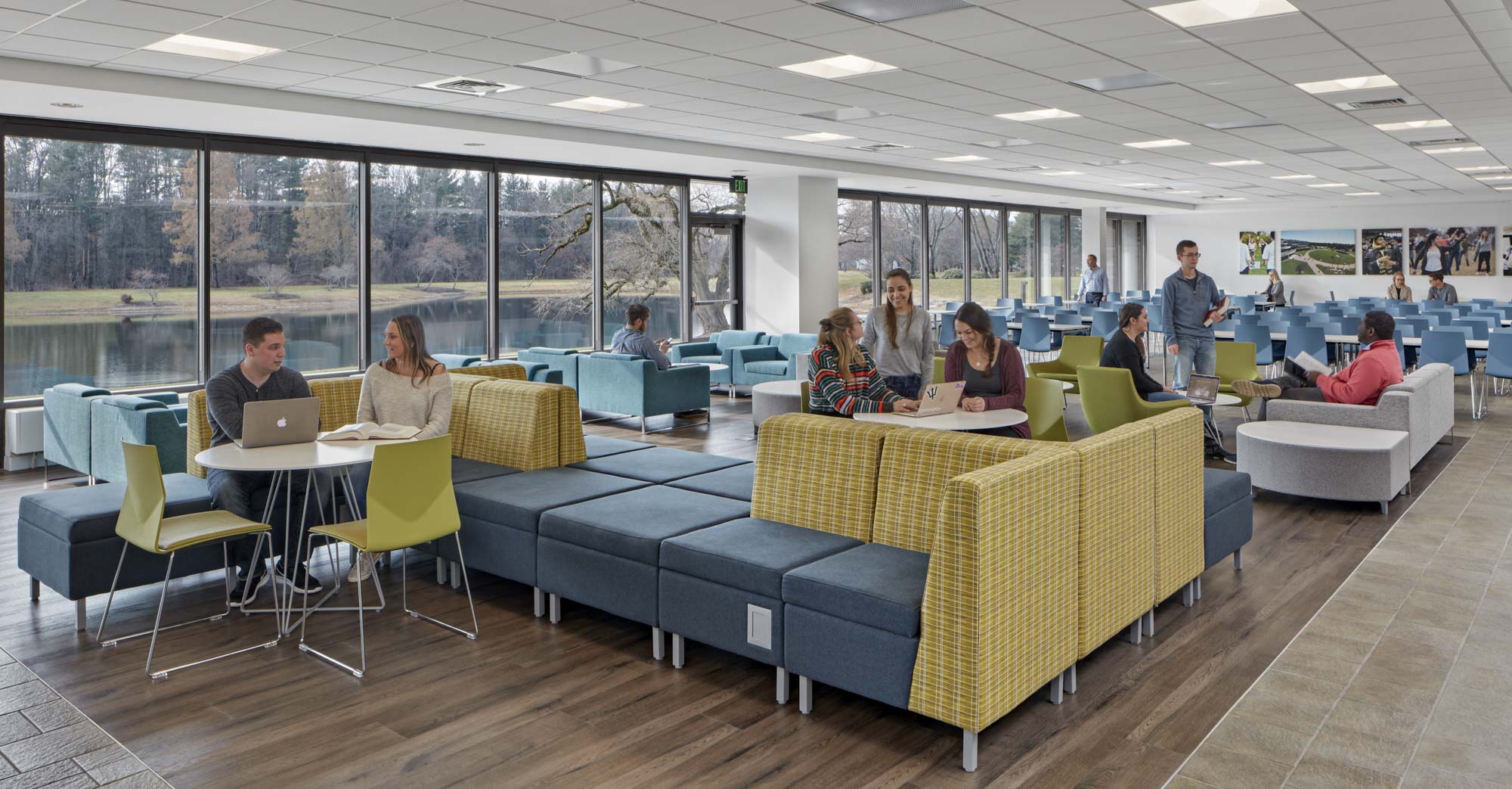
You’re driving down Bassett Road in North Haven, past the usual Connecticut trees and suburban sprawl, and suddenly there it is—a massive, sleek complex that looks more like a high-end corporate headquarters than a traditional college. That is the Quinnipiac North Haven Campus. It’s not the postcard-perfect, ivy-covered Mount Carmel campus you see on the brochures with the Sleeping Giant backdrop. This place is different. It’s quiet. It’s serious. It’s basically where Quinnipiac hides its most intense graduate students.
If you’re heading here, you’re likely not looking for a frat party. You’re looking for a cadaver lab or a mock courtroom.
Most people don't realize that the university actually transformed this site from an old Anthem Blue Cross Blue Shield office building. It was a massive gamble that paid off. By moving the heavy hitters—the Frank H. Netter MD School of Medicine, the School of Nursing, the School of Law, and the School of Health Sciences—to one centralized "graduate village," Quinnipiac created this weirdly effective professional ecosystem. It’s about 104 acres of high-stakes learning. Honestly, it feels like a mini-city dedicated entirely to people who haven't slept because they're memorizing the nervous system or prepping for the bar exam.
Why the Quinnipiac North Haven Campus changed the game
Back in the day, these programs were scattered. The School of Law used to be over in Hamden, tucked away. But when the university opened the North Haven doors around 2012-2013, everything shifted. They wanted "interprofessionalism." That’s a fancy word faculty love to use, but basically, it just means they want the future doctors to actually talk to the future nurses before they get into a real hospital.
It works because the building is designed for accidental run-ins. You’ve got the MNH building (Medicine, Nursing, and Health Sciences) and the SLE building (School of Law and Education).
The School of Law is a standout. When you walk in, there’s this massive law library that feels intimidatingly silent. It’s got these soaring ceilings and enough natural light to make you forget you’ve been reading torts for six hours straight. They even have a ceremonial courtroom that looks more official than some actual district courts in Connecticut. It isn't just for show, either; real proceedings and high-profile guest lectures happen in there.
The Medical School factor
Then there’s the Frank H. Netter MD School of Medicine. This is the crown jewel of the Quinnipiac North Haven Campus. Named after the famous medical illustrator—seriously, if you’ve seen a drawing of a human heart in a textbook, Netter probably drew it—the school focuses on primary care. That’s a big deal. There’s a massive shortage of primary care doctors in the U.S., and Quinnipiac leaned hard into fixing that.
The facilities are genuinely wild. We’re talking about a world-class anatomy lab and a "Standardized Patient" suite. This is where local actors are hired to come in and pretend they have specific illnesses so students can practice their bedside manner. It’s basically medical theater. If you’re a student, you're being recorded. Professors watch the playback to tell you that you were too blunt when telling "Mrs. Smith" her imaginary blood pressure was high. It’s stressful. It’s effective.
It isn't all stethoscopes and law books
People think this campus is just a sterile lab, but the student life here is a different breed. It’s older. You’ve got commuters, parents, and people in their late 20s or 30s who are pivoting careers.
- The Dining Situation: There is a cafeteria, and it's decent. Is it five-star dining? No. But the coffee is strong, which is the primary currency on this campus.
- The Fitness Center: They have one. It’s smaller than the one on the main campus, but it gets the job done when you need to burn off some stress between clinicals.
- The Vibe: It’s collaborative. Because the School of Nursing and the School of Health Sciences (think PT, OT, Physician Assistants) are in the same hallways, you see a lot of cross-pollination.
One thing that catches people off guard is the parking. It’s actually better than the Mount Carmel campus. Since it’s a former corporate site, the lots are expansive. You aren't fighting eighteen-year-olds in Jeeps for a spot at 8:00 AM.
Modernity vs. Tradition
Some alumni miss the old-school feel of the Hamden hills, and that’s fair. The Quinnipiac North Haven Campus feels very "now." It’s all glass, steel, and high-speed Wi-Fi. Some people find it a bit cold. But if you’re trying to learn how to operate a diagnostic imaging machine or navigate complex litigation, you probably want the best tech available, not a drafty old building with history.
The sustainability of the site is also a low-key talking point. They repurposed an existing structure rather than tearing down a forest to build from scratch. That’s a point for the "green" column.
What people get wrong about the commute
"It's so far away." I hear that all the time. It’s not. It’s about a 10-to-15-minute shuttle ride from the main campus. The university runs a pretty tight ship with the shuttles. If you’re a grad student living in Hamden, you just hop on the bus and you’re there.
That said, if you miss the shuttle and you have a practical exam, you’re going to have a bad time.
Living in North Haven itself is a bit different too. It’s quieter than Hamden. There are fewer "college bars" and more "Target runs." For a med student or a law student, that’s usually a feature, not a bug. You want the peace. You need the sleep.
The "Hidden" Resources
The Center for Interprofessional Healthcare Education (CIHE) is the brains behind the operation. They organize these massive events where students from every discipline—nursing, medicine, law, social work—sit at a table and solve a case together. It’s one of the few places in higher ed where the silos actually break down.
Think about it. A medical error often happens because of a communication breakdown. By forcing these students to talk to each other while they're still in school, the Quinnipiac North Haven Campus is trying to bake better habits into their brains before they ever hit the hospital floor. It’s smart. It’s also kinda awkward at first when a law student has to explain liability to a frustrated nursing student during a simulation.
Is it worth it?
The tuition at Quinnipiac isn't exactly cheap. We know this. But the North Haven campus is where you see exactly where that money is going. The labs are pristine. The library resources are top-tier.
If you’re looking for the "traditional" college experience—football games, quad-laying, random dorm parties—stay in Hamden. But if you’re ready to treat your education like a 9-to-5 (or a 9-to-9), North Haven is the place. It’s a professional incubator.
The networking here is also underrated. Because the faculty are often practicing professionals or retired experts in their fields, the person teaching your 2:00 PM seminar might be the one who gets you an internship at Yale New Haven Hospital or a clerkship at a major firm in Hartford.
Actionable steps for prospective students
If you’re considering the Quinnipiac North Haven Campus, don’t just look at the website. Websites are curated. Do these three things instead:
- Schedule a specific graduate tour. Don't take the general undergraduate tour. You don't need to see the freshman dorms. You need to see the specific labs for your program.
- Check the shuttle schedule. If you plan on living near the Mount Carmel campus, look at the "Quinnipiac Transit" app. See how frequent the North Haven loops are during your peak hours.
- Visit the North Haven library. Sit there for an hour. See if the energy of the place matches your study style. It’s a specific vibe—very focused, very quiet.
- Talk to the "Standardized Patient" coordinators. If you're in health sciences, ask how many clinical hours you get in the sim labs versus out in the field.
The North Haven campus represents the "grown-up" side of Quinnipiac University. It’s where the degrees that save lives and argue laws are forged. It’s a massive, repurposed monument to professional ambition, tucked away right off the highway. If you’re serious about your career, you’ll probably find yourself spending a lot of time there. Just remember to bring your own coffee if it's after hours—the cafeteria isn't open forever, and those late-night study sessions are no joke.