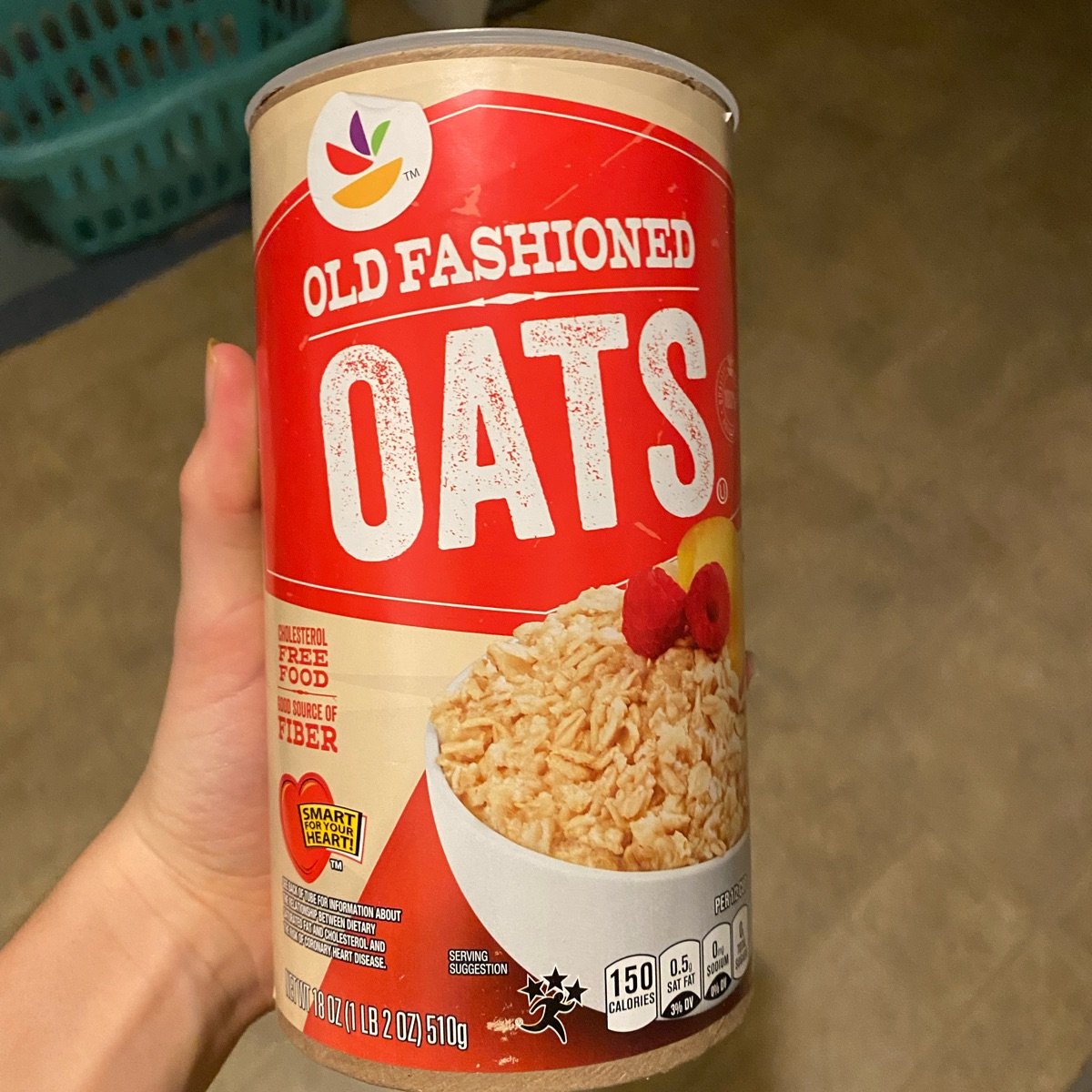
You've probably been there. It’s 7:15 AM, you’re starving, and you stare at that canister of Quaker Old Fashioned Oats. You want the chew. You want that nutty, hearty texture that steel-cut offers but without the forty-minute commitment. So you try the microwave. Five minutes later, you’re cleaning an explosive "oat-cano" off the ceiling of your appliance, and the actual porridge in the bowl is somehow both watery and gluey at the same time.
It's frustrating.
Most people think old fashioned oats microwave style is just a shortcut to mush. Honestly? They’re wrong. If you treat rolled oats like the "instant" packets, you're going to have a bad time. Rolled oats are steamed and flattened, but they still have enough integrity to hold a bite if you don't drown them or blast them into oblivion. I’ve spent years tinkering with water-to-oat ratios because, frankly, I hate washing pots in the morning. Getting it right isn't about some secret ingredient; it's about managing heat and surface area.
Why Your Microwave Oats Are Exploding (And How to Stop It)
The biggest mistake is the bowl. Most people grab a standard cereal bowl. Big mistake. Huge. When oats boil, the starches create a film on the surface. Steam gets trapped underneath that film, building pressure until—pop—you have a sticky mess everywhere.
Use a bowl twice as big as you think you need. A quart-sized glass batter bowl is my go-to. It looks ridiculous to eat out of, but the high sides are your insurance policy.
Water matters too. If you use tap water that’s ice cold, the microwave spends half its energy just getting the liquid to a simmer, which can lead to uneven hydration. I usually start with filtered water. Or, if I’m feeling fancy, a 50/50 split of water and unsweetened almond milk. Don't do 100% milk in the microwave unless you want to spend your morning scrubbing scorched lactose off the glass tray. It burns fast.
The Power Level Trick
Here is the thing no one tells you: stop using the 100% power setting.
Microwaves are blunt instruments. They cycle on and off. If you run your old fashioned oats microwave session at 50% power for double the time, you allow the heat to conduct through the grain without the violent boiling that causes the overflow. It simulates a gentle simmer on a stovetop.
- Try 2 minutes at 100% power.
- Followed by 2-3 minutes at 50% power.
- Let it sit. This is the most important part.
The "carry-over" cooking that happens during the rest period is where the magic lives. The starch molecules settle, and the liquid gets fully absorbed into the center of the oat flake. If you eat it right when the timer beeps, it'll taste like wet paper. Give it three minutes. Just three. Walk away, brush your teeth, and come back to a bowl that actually looks like food.
Texture vs. Mush: The Ratio Debate
The standard instruction on the back of the box usually says 1/2 cup oats to 1 cup water. That’s... okay. But it’s a bit safe. If you like a "soupy" oat, go for it. If you want something that has a bit of a "bounce," I recommend 1/2 cup oats to 3/4 cup liquid.
According to the Whole Grains Council, rolled oats are nutritionally identical to steel-cut, but because they are processed further, they release their starches more readily. This means the margin for error is smaller. You’re essentially managing a chemical reaction.
I’ve found that adding a pinch of salt before cooking is non-negotiable. Salt isn't just for flavor here; it actually affects how the proteins in the oats tighten up. Without it, the flavor is flat and the texture feels "slimy" rather than "creamy." There’s a biological reason for this, as sodium ions help balance the sweetness that naturally occurs when the starches break down into simple sugars during the heating process.
Real Talk About Nutrition
People ask me if microwaving kills the nutrients. Short answer: No.
In fact, some studies, like those published in the Journal of Agricultural and Food Chemistry, suggest that because microwave cooking is faster, it can actually preserve certain heat-sensitive vitamins better than long-term boiling. You’re still getting that glorious beta-glucan, which is the soluble fiber responsible for lowering LDL cholesterol. It’s the stuff that makes the oats thick. It’s also what keeps you full until lunch.
Elevated Add-ins That Don't Suck
Sugar is easy. Too easy. If you’re just dumping brown sugar on your old fashioned oats microwave creation, you’re missing out.
- The Fat Component: A tablespoon of almond butter or tahini stirred in after the cook adds a savory depth that balances the grain.
- The Acid: A squeeze of lemon or a few mashed raspberries. Sounds weird? The acidity cuts through the heavy starch.
- The Crunch: Never cook your nuts in the oats. They turn into soft, sad little nuggets. Toast some pecans in a dry pan for two minutes while the oats are resting and throw them on top at the very end.
I once tried putting frozen blueberries in before microwaving. Don't do that unless you want your breakfast to look like a grey, bruised mess. The skins burst and the juice dyes the oats a really unappetizing shade of slate. Add the frozen fruit during the "resting" phase; the residual heat will thaw the berries perfectly without ruining the aesthetics.
Solving the "My Oats Are Sticky" Problem
If your oats come out feeling like wallpaper paste, you’ve likely over-stirred them.
When you stir oats vigorously while they are hot, you’re mechanically breaking the starch granules. This releases more amylopectin. Great for risotto, terrible for breakfast. Mix your oats and water once at the beginning, maybe once halfway through, and then leave them alone.
Also, check your oats. Are they actually "old fashioned"? Sometimes stores mislabel "quick oats" or "instant oats." Quick oats are just old fashioned oats that have been cut into smaller pieces. Because they have more surface area, they cook in about 60 seconds and turn to mush almost instantly. If your grains look like tiny shards rather than whole, flat discs, you’ve got quick oats. Adjust your timing downward or you’ll be eating paste.
Variations for the Bored Palate
Savory oats are a hill I will die on.
Instead of water, use chicken or vegetable broth. After the microwave timer goes off, stir in a handful of spinach and a splash of soy sauce. Top it with a jammy soft-boiled egg. It’s basically a deconstructed congee that takes five minutes. It’s a game-changer for people who don't have a sweet tooth in the morning.
Practical Steps for Tomorrow Morning
Stop overthinking it. You don't need a culinary degree to use a microwave, but you do need a little patience.
Step 1: Grab a huge glass bowl. Use 1/2 cup of real-deal old fashioned rolled oats.
Step 2: Add 3/4 cup liquid and a heavy pinch of kosher salt. Stir once.
Step 3: Microwave on High for 2 minutes.
Step 4: Drop the power to 50% (or Level 5) and go for another 2 minutes. Watch through the glass. If it starts to climb the walls of the bowl, hit pause for 5 seconds, then resume.
Step 5: This is the most critical. Let the bowl sit inside the microwave with the door closed for 3 full minutes.
Step 6: Add your fats and toppings. If it’s too thick, add a splash of cold milk now to bring it to the temperature you actually want to eat at.
By changing the power level and respecting the "rest" period, you bridge the gap between "sad office microwave food" and a legitimate, cafe-quality breakfast. It turns out the microwave wasn't the problem—it was just the way we were using it.