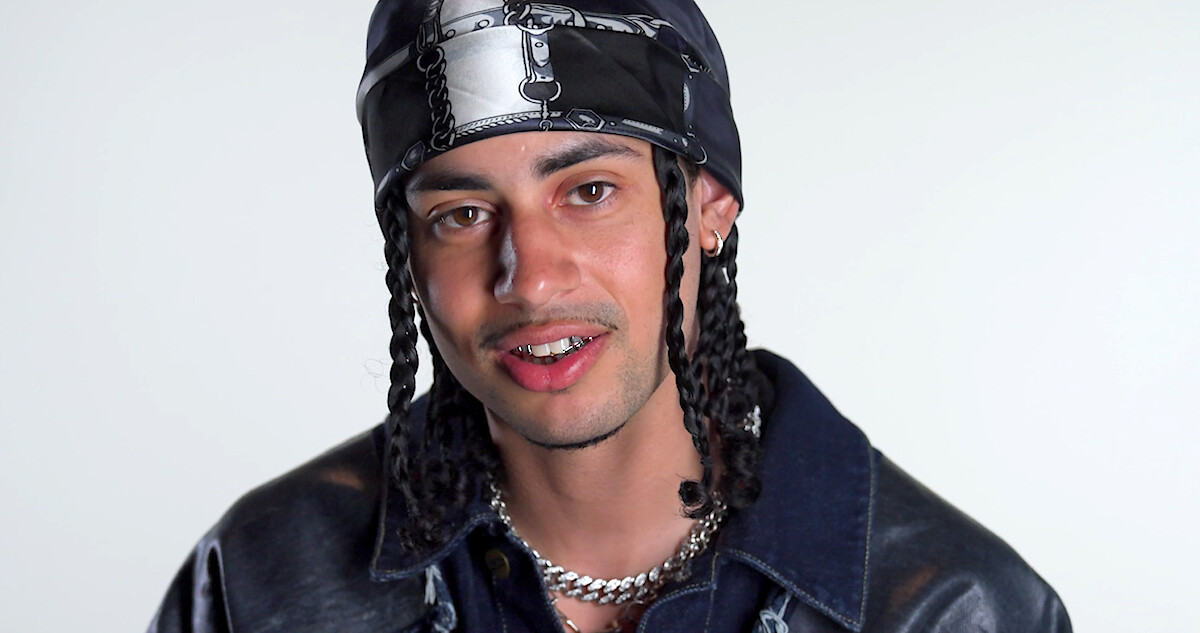
You probably remember the moment. Gigi Hadid and Tan France standing there, looking genuinely stressed, before finally announcing that the "Wizard of Denim" had taken the crown. When Nigel Xavier won Next in Fashion Season 2, it felt like a shift in the tectonic plates of streetwear. People weren't just cheering for a winner; they were cheering for a guy who made $200,000 look like a side quest compared to his actual mission of making upcycling cool.
But here is the thing. Most people think reality show winners just disappear into a cloud of Instagram sponsorships and "gifted" luxury hotel stays.
With Nigel, it’s been different.
Honestly, he didn’t just take the check and run. He moved his entire operation from Atlanta to Los Angeles, rebranded the "patchwork king" title into a legitimate business empire, and started working with everyone from Meta to Dr Pepper. If you thought he was just the "denim guy," you’ve been missing the bigger picture of what he’s actually been building since the cameras stopped rolling.
Why Nigel Xavier Was Never Just a "Denim Guy"
There’s a massive misconception that Nigel’s win was just about being good with a sewing machine and some old Levi’s. If you watch the show back, the judges—especially Donatella Versace and Bella Hadid—weren’t just looking at the stitches. They were looking at the vibe.
Nigel brought a specific '90s and Y2K nostalgia that felt authentic because it wasn't a trend for him. It was a necessity. Growing up, he couldn't always afford the high-end streetwear he saw in music videos. So, he did what any kid with a vision and no budget does: he went to the thrift store. He started ripping things apart. He figured out that if you sew three pairs of cheap jeans together, you get something that looks like it costs four figures.
The "Thrift" Episode Was a Turning Point
That episode where they had to use pre-loved items? That was basically Nigel’s home turf. He created an oversized puffer jacket that looked like it belonged on a 2026 runway, not a pile of discarded clothes.
- The Technique: It’s called textile manipulation. He isn't just "fixing" clothes; he's destroying them to create something better.
- The Influence: You can see the heavy Atlanta influence—baggy silhouettes, 21 Savage-esque grit, and that "one-of-one" energy that rappers crave.
- The Result: He proved that "sustainable fashion" doesn't have to look like a beige linen sack. It can be loud, colorful, and aggressive.
The Post-Netflix Boom: Beyond the $200,000
Winning a Netflix show is great for the bank account, but it's the Rent the Runway deal that really tested his ability to scale. How do you take a guy who makes "one-of-one" handmade pieces and put him in a rental rotation for thousands of people?
He figured it out by leaning into the imperfection. His Rent the Runway collection brought those signature tie-dye and patchwork aesthetics to a massive audience. But he didn't stop at denim. By early 2025, Nigel was hitting the New York fashion scene with his Tapestry Collection. We’re talking puffer jackets and trousers made from literal upcycled tapestries featuring wolves, eagles, and angels. It was weird. It was bold. It sold out.
The Gigi Hadid Connection
One of the coolest things to happen post-show wasn't just a shoutout. It was the Guest in Residence x Nigel Xavier collaboration. In April 2025, Nigel teamed up with his former judge, Gigi Hadid, to create a limited-edition capsule of upcycled cashmere.
They took scraps from Gigi’s brand and turned them into $1,000 one-of-a-kind hoodies. This wasn't just two famous people shaking hands for a photo op. Nigel was actually in the flagship store on Bond Street, sorting through fabric weights and textures. It proved he could play in the "luxury" sandbox without losing his streetwear soul.
How He’s Using AI to Save Time (Yes, Really)
This is where it gets a bit futuristic. You might think a guy who spends hours hand-sewing scraps would hate technology.
Actually, Nigel has been one of the first major designers to openly use Meta AI in his workflow. He’s been seen wearing those Ray-Ban Meta glasses to help visualize how different fabrics will look together before he even touches a pair of scissors.
Basically, he uses AI as a digital "mood board" that talks back. In a collaboration for the University of Texas, he used AI to design a "Super Fan" sweatsuit that combined sports culture with his patchwork style. It’s a smart move. Hand-making clothes is slow. If AI can cut down the "thinking" time, Nigel can produce more of the "doing."
The Business of Being Nigel in 2026
If you try to buy a Nigel Xavier original today, be prepared to wait. He still does one-of-one commissions for celebrities—he's worked with 2 Chainz, Tyga, and Summer Walker. His pricing now reflects his status, with pieces ranging from $135 for accessories to well over $900 for the intricate jackets.
The move to LA was strategic. Atlanta gave him his heart and his style, but LA gave him the manufacturing connections he needed to grow. He’s admitted in interviews that scaling is his biggest hurdle. It’s hard to teach a factory how to "accidentally" make something look perfectly distressed.
What Most People Get Wrong
People think Nigel is just a "sustainable" designer because it's a buzzword.
He actually hates the "sustainable" label if it's used as a gimmick. To him, upcycling is just fashion. It’s about the story the fabric already has. When he uses vintage True Religion jeans or old basketball jerseys, he's keeping that history alive. It’s not just about saving the planet; it’s about making sure your outfit doesn't look like everyone else's.
Actionable Insights for Aspiring Designers
If you’re looking at Nigel and thinking, "I want to do that," here is the reality of how he did it. It wasn't just the show.
- Build a Signature Before You Need It: Nigel had been doing patchwork for seven years before he even applied for Next in Fashion. He didn't invent a style for the cameras; he brought his life's work to the screen.
- Learn the Fundamentals: He’s a SCAD (Savannah College of Art and Design) grad. He knows color theory and construction. You can't break the rules of fashion unless you actually know what they are first.
- Community is Currency: He didn't just stay in his studio. He built relationships with photographers like Shamaal Bloodman and worked with local stylists in the Atlanta rap scene. By the time he won, he already had a network ready to push his brand.
- Embrace the "One-of-One" Model: In a world of fast fashion, the most valuable thing you can own is something nobody else has. Nigel leaned into that scarcity. Even his mass-market collaborations feel "limited."
The "Next in Fashion Nigel" we see today is a lot more than a reality TV winner. He's a blueprint for how modern designers can balance high-tech tools like AI with the old-school grit of thrifting and sewing. He’s managed to stay relevant by refusing to "tone down" his ideas for the sake of making things easy.
To keep up with his latest drops, you’ll want to watch his official site and his "Archive" collections, which usually feature the most experimental pieces he's been working on between his big corporate partnerships. If you're looking to start your own upcycling journey, start by looking at what’s already in your closet—not as old clothes, but as raw materials for something better.