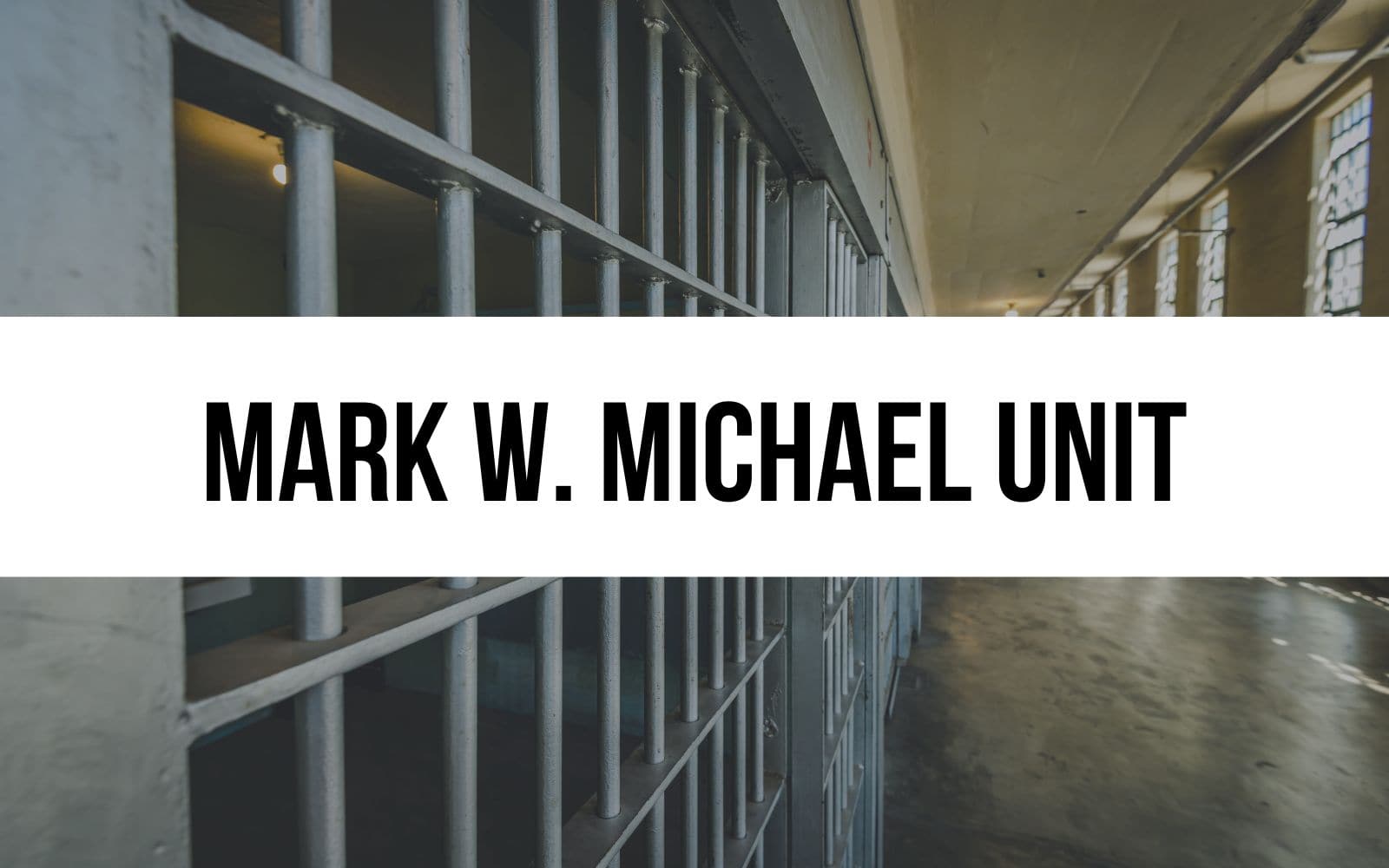
When you drive south from the tiny, unincorporated town of Tennessee Colony on FM 2054, you eventually hit a stretch of East Texas that feels heavy. It’s not just the humidity or the dense piney woods. It’s the massive brick-and-steel footprint of the Mark W. Michael Unit, known to locals and inmates simply as the Michael Unit. Honestly, if you aren't looking for it, you might miss the turnoff, but for the 3,000-plus men living inside, it’s the center of the universe.
The Michael Unit isn't just another Texas prison.
It was designed to be the "model for the future" when it opened in 1987. But as anyone who follows the Texas Department of Criminal Justice (TDCJ) knows, "model" and "reality" often take two different paths.
The Reality of Michael Unit Tennessee Colony TX
You’ve probably heard people call this place "Texas Tough." It’s a label that author Robert Perkinson used to describe the rise of the state’s prison empire, and he specifically pointed to Michael as one of the meanest lockups in the system. Why? Because of how it’s built. Before Michael came along, Texas prisons used the old "telephone-pole" layout—long hallways where it was hard for guards to see what was happening.
Michael changed the game with the pod design.
Basically, it uses modular pods that allow for better riot control and constant visual surveillance. It was also modeled after the USP Marion, a federal facility known for its "supermax" style lockdowns. If things go south at Michael, the staff can shut down specific sections without stopping the whole machine.
Life Inside the Pods
For the men living there, the days are structured but often unpredictable. The facility houses everything from G1 (minimum security) to G5 (maximum security) and administrative segregation. You’ve got a mix of guys just trying to finish their time and some of the most high-security risks in the state.
- Capacity: Roughly 2,984 in the main unit plus 321 at the trusty camp.
- Security: High-security detention and safekeeping are major components here.
- Acreage: It sits on over 20,000 acres, a massive territory it shares with the Coffield, Beto, and Powledge units.
One of the weirdest—and most unique—things about the Michael Unit is the pork processing plant. Yeah, you read that right. The facility is a major hub for the TDCJ’s agricultural operations. While many prisons just have fields of cotton or corn, Michael has a full-blown swine farrowing operation and a pork slaughterhouse. If you're eating pork in a Texas prison, there’s a good chance it passed through Tennessee Colony.
Breaking Down the Programs and Education
It’s easy to focus on the "shithouse" reputation—a nickname given to the administrative segregation wing where "shit-chunking" (yes, it’s exactly what it sounds like) became a notorious form of protest among inmates. But there is another side. The unit actually has some of the more robust vocational programs in East Texas.
I’m talking about real skills. They offer Piping Trades and Plumbing, Sheet Metal work, and an Automotive Specialization program that focuses on electronics. For guys looking for a degree, Trinity Valley Community College runs vocational courses in Air Conditioning and Refrigeration.
Mental Health and Solitary
In recent years, the Michael Unit became a primary site for the Mental Health Therapeutic Diversion Program. This was a big deal. The goal was to take men out of solitary confinement—where their minds were basically rotting—and put them into a more therapeutic environment.
Did it work? Well, it’s complicated.
While the TDCJ reports that the number of people in solitary has dropped significantly since 2008, many inmates have written letters to the Texas Tribune claiming the program is just "solitary with a new name." They still spend 22 hours a day in a cell, just with a few more therapy workbooks. It’s a nuance often lost in the official press releases.
Visiting the Mark W. Michael Unit
If you’re planning a trip to see someone at Michael Unit Tennessee Colony TX, don’t just wing it. This isn't a "show up and sign in" kind of place anymore. Everything is digital.
- The Portal: You have to use the TDCJ Online Visitation Portal to schedule.
- The Schedule: Visitation usually happens on Saturdays and Sundays, 8:00 a.m. to 5:30 p.m.
- The Money: You can bring up to $35 in coins (in a clear Ziploc bag) for vending machines. No paper money. None.
- The Dress Code: This is where most people get turned away. No sleeveless shirts, no shorts above the knee, and nothing "provocative." Just dress like you're going to a very conservative church.
Video and Tablet Visits
Since the pandemic, things have shifted toward remote options. You can do a 60-minute video visit through Securus for about $10, or if the inmate has a tablet, there are sometimes free options available. But honestly, nothing replaces being there in person, even if it’s through a glass partition.
What Most People Get Wrong About Tennessee Colony
People hear "Tennessee Colony" and they think of a quaint historical village. In reality, the prison is the town's biggest employer. The relationship between the facility and the community is deep. There are 504 employees here—over 330 of them are security staff.
The Michael Unit also houses a significant hospice program. With 22 hospice beds, it’s one of the places where Texas inmates go to die when they have terminal illnesses. It’s a somber part of the operation that doesn't make the news as often as a riot or an escape attempt, but it’s a constant reality for the staff and the chaplains who work there.
Actionable Insights for Families and Researchers
If you are dealing with the Michael Unit today, here are the most important things to keep in mind:
- Check the Status: Prisons in Texas go into "lockdown" frequently for searches or staffing shortages. Before you drive to Tennessee Colony, check the TDCJ website or call the unit at (903) 928-2311 to make sure visitation hasn't been canceled.
- JPay is Your Friend: For sending money or messages, the JPay system is the standard. It’s faster than snail mail, though every message is still screened.
- Education Records: if you’re trying to help an inmate get into a program, encourage them to reach out to the Windham School District representatives on-site. They handle the GED and literacy programs that are the first step toward the better vocational jobs.
- Medical Concerns: Medical services at Michael are managed by UTMB (University of Texas Medical Branch). If a loved one isn't getting the care they need, you can file a formal grievance, but it’s often more effective to contact the TDCJ Family Liaison Coordinator, currently listed as Kimberly Reese.
The Michael Unit remains a polarizing fixture of the Texas landscape. It’s a place of both extreme tension and legitimate rehabilitation efforts, stuck in the middle of the East Texas woods. Whether you're a family member or just curious about the system, understanding the layout—both physical and bureaucratic—is the only way to navigate it.
To stay updated on current unit conditions or policy changes, regularly monitor the TDCJ's official unit directory or the Texas Prison Reform social media groups, which often provide real-time updates from families on the ground.