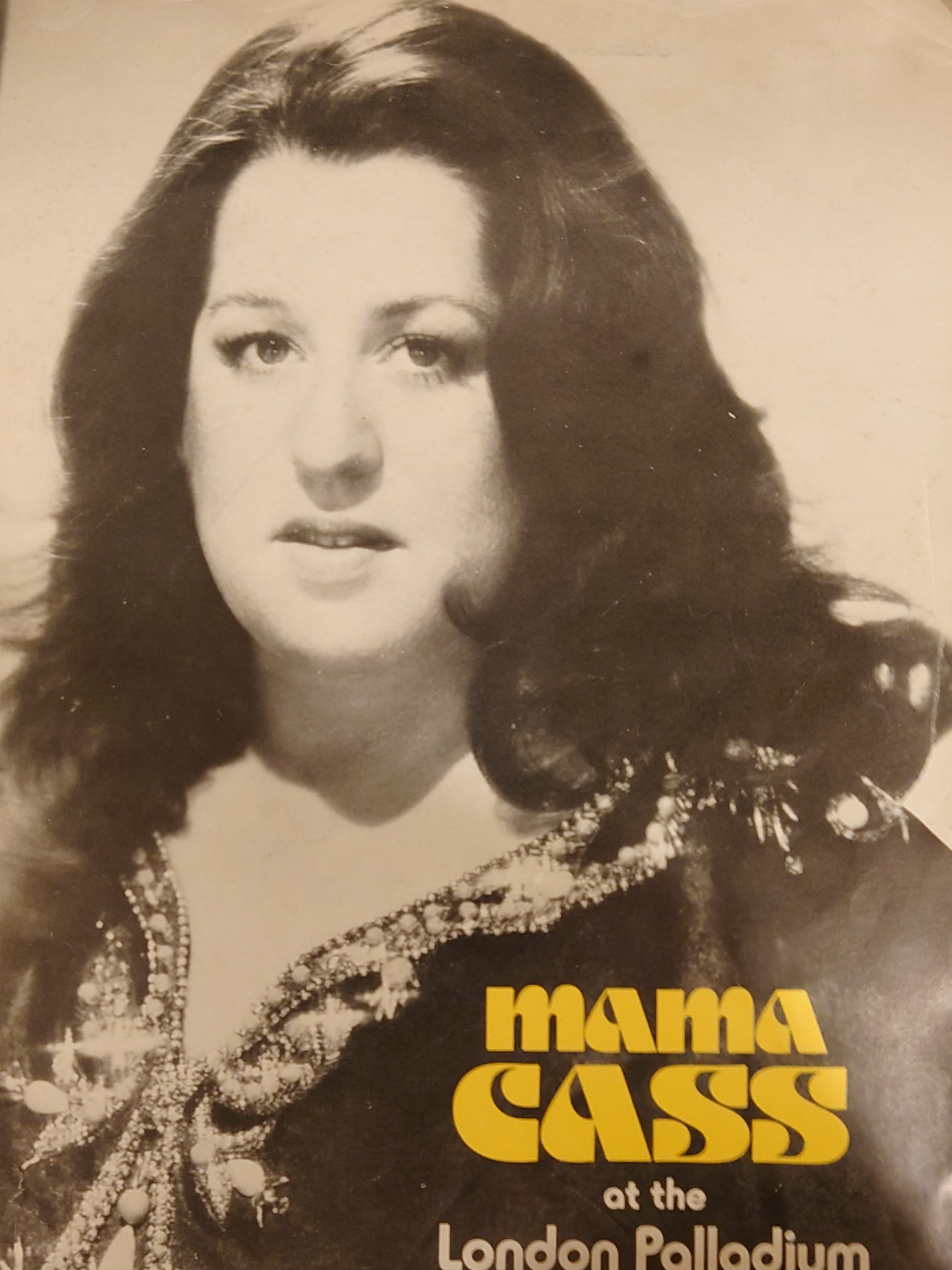
If you close your eyes and listen to the opening harmonies of "California Dreamin'," you aren't just hearing a song. You’re hearing a tectonic shift in pop culture. At the center of that wall of sound was Ellen Naomi Cohen, the woman the world eventually knew as Mama Cass Elliot. Honestly, the story of The Mamas and the Papas Mama Cass is usually reduced to a few cruel urban legends and a tragic ending in a London flat, but that does a massive disservice to one of the most sophisticated vocalists of the 20th century. She wasn't just "the big girl in the band." She was the glue. Without her, the group would have been just another folk act lost in the Laurel Canyon fog.
Cass Elliot had this crystalline contra-alto voice that could pierce through the thickest arrangements. It was pure. It was effortless. While John Phillips was the mastermind behind the intricate, Bach-inspired vocal arrangements, Cass was the one who gave those arrangements their soul. She had a stage presence that John, Michelle Phillips, and Denny Doherty couldn't quite match. She was funny, sharp, and possessed an IQ that was reportedly off the charts. People loved her.
But the road to becoming a counter-culture icon wasn't exactly a smooth ride.
The Rough Start and That Famous "Blow to the Head" Legend
The Mamas and the Papas didn't just happen overnight. Before the hits, there was The Mugwumps. This was a mid-60s folk group that included Cass and Denny Doherty, along with future Lovin' Spoonful founder Zal Yanovsky. They were talented, sure, but they were broke. When John and Michelle Phillips teamed up with Denny to form a new group, John famously didn't want Cass in the band.
He didn't think she fit the "look." It’s a harsh reality of the 1960s music industry that still feels gross today. John wanted a specific aesthetic—skinny, bohemian, ethereal. Cass was none of those things. She was a powerhouse who didn't apologize for her size.
There is a long-standing myth—one that Cass herself used to tell in interviews—that she only gained her incredible vocal range after being hit on the head by a copper pipe at a construction site in the Virgin Islands. The story goes that the "concussion" somehow expanded her range by a third.
It's a great story. It's also totally fake.
Cass later admitted she just wanted to give John Phillips a reason to let her in the band that saved his ego. The truth is far more impressive: she worked for it. She was a seasoned performer who had been singing in New York clubs for years. She didn't need a pipe to the head; she just needed a microphone and a chance. By the time they recorded "If You Can Believe Your Eyes and Ears" in 1966, her voice was the unmistakable signature of the group.
Why the Harmonies Worked (And Why They Broke)
The Mamas and the Papas were a mess behind the scenes. You had John and Michelle married, then Michelle having an affair with Denny, then John firing Michelle and replacing her with Jill Gibson for a hot minute, only to bring Michelle back because the fans revolted. It was a soap opera set to some of the most beautiful music ever recorded.
Through it all, The Mamas and the Papas Mama Cass remained the emotional anchor for the audience.
Listen to "Monday, Monday." The way her voice reinforces the low end of the harmony provides a floor for the others to dance on. In "Creeque Alley," which is basically a musical autobiography of the band, the lyrics explicitly mention how "everybody's gettin' fat except Mama Cass." It was a joke, but it also highlighted her role as the mother figure of the group, a role she didn't always enjoy.
The Solo Pivot
When the group inevitably imploded in 1968, most people thought Cass was done. They were wrong. Her solo career kicked off with "Dream a Little Dream of Me," which was actually released as a Mamas and Papas track but credited to "Mama Cass with The Mamas and the Papas." It was a massive hit.
She transitioned from a psychedelic folk-rocker to a sophisticated cabaret and pop singer. She was a regular on variety shows, hosted her own specials, and became a fixture in the Las Vegas circuit. She was proving that she didn't need the "Papas" to sustain a career. She was a star in her own right, paving the way for artists who didn't fit the "traditional" pop star mold.
Debunking the Ham Sandwich Myth
We have to talk about it because, unfortunately, it’s what many people think of first. For decades, a persistent and cruel urban legend suggested that Cass Elliot died by choking on a ham sandwich.
Let's be clear: This is 100% false.
The rumor started because a doctor at the scene saw a sandwich on a nightstand and made a premature comment to the press. The actual coroner's report confirmed that Cass died of a heart attack in her sleep on July 29, 1974. She was only 32 years old. Her heart had been weakened by years of extreme "crash dieting" and the intense pressure of her performance schedule.
She died in the same London apartment where Keith Moon of The Who would die four years later. It's a grim coincidence that often overshadows her musical legacy. When we repeat the sandwich joke, we participate in the same body-shaming that Cass fought her entire career. It’s time to retire that narrative and focus on the fact that she was a single mother, a business-savvy performer, and a vocal genius.
The Cultural Impact of Mama Cass in 2026
Why are we still talking about her? Because her influence is everywhere. You can hear her DNA in the lush arrangements of Weyes Blood or the vocal confidence of Adele. Cass was one of the first female stars to own her personality on screen. She was witty. She was self-deprecating but never a victim.
The music of The Mamas and the Papas Mama Cass wasn't just about the Summer of Love. It was about technical precision. The group used "tracking," where they would layer their voices multiple times to create that massive, shimmering sound. Cass’s ability to hit her marks perfectly every single time allowed those recordings to age like fine wine.
If you look at the Billboard charts today, the "folk-pop" revival is still borrowing her blueprints.
Actionable Ways to Appreciate Her Legacy
If you really want to understand why Cass Elliot was a force of nature, don't just stick to the "Greatest Hits" album. You need to dig a little deeper into the discography and her live performances.
- Listen to "Words of Love": Pay attention to the bridge. The power in her voice during those solo lines is a masterclass in breath control and dynamics.
- Watch the Monterey Pop Festival footage: Look at her face when she watches Janis Joplin perform. There’s a famous clip of Cass sitting in the audience, mouth agape, saying "Wow." It shows her genuine love for the craft and her lack of ego when it came to other talented women.
- Find her solo album "Bubblegum, Lemonade, and... Something for Mama": It's a weird, wonderful mix of pop and psych-pop that shows her versatility beyond the Laurel Canyon sound.
- Check out her TV specials: You can find clips on YouTube of her hosting The Mama Cass Television Program. Her comedic timing was actually incredible. She could have easily had a second career as a sitcom star or a talk show host.
Cass Elliot was a woman ahead of her time. She navigated a sexist and weight-obsessed industry with a level of grace that most people couldn't muster. She was the "Mama" not because she was a maternal figure to the band, but because she had the biggest spirit in the room.
When you listen to "California Dreamin'" now, don't just hear the flute solo or the acoustic guitar. Listen for that golden thread in the harmony. That’s Cass. She’s the reason those songs feel like sunshine, even when the lyrics are about a cold winter's day. Her death was a tragedy, but her life was a massive, loud, beautiful victory.
To truly honor her, stop the jokes. Listen to the records. Understand that she was a musician first, an icon second, and a legend forever.
Next Steps for Music History Fans:
To get a better sense of the technical side of her career, look into the Wrecking Crew. They were the session musicians who played on almost all of the Mamas and Papas tracks. Understanding how Cass’s vocals interacted with those legendary players—like bassist Carol Kaye—gives you a much deeper appreciation for how those 60s hits were actually constructed in the studio. Take a moment to listen to the isolated vocal tracks of "Dedicated to the One I Love" if you can find them; the sheer precision of Cass’s pitch will change how you hear pop music forever.